A Day That United an Entire State
There are moments when an entire community pauses together—not because of politics, sports, or celebration, but because a single life has reminded people what courage truly looks like.
For the people of Alabama, August 1 became one of those rare days.
Families gathered, churches prayed, flags and hearts seemed to lower together in quiet remembrance, and countless people reflected on the remarkable journey of a 15-year-old boy whose battle against cancer inspired thousands far beyond the borders of his hometown.
As Will Roberts was laid to rest in Tuscaloosa County, Alabama did more than mourn the loss of a young life. The state chose to recognize the extraordinary impact he had made during his brief but unforgettable journey.
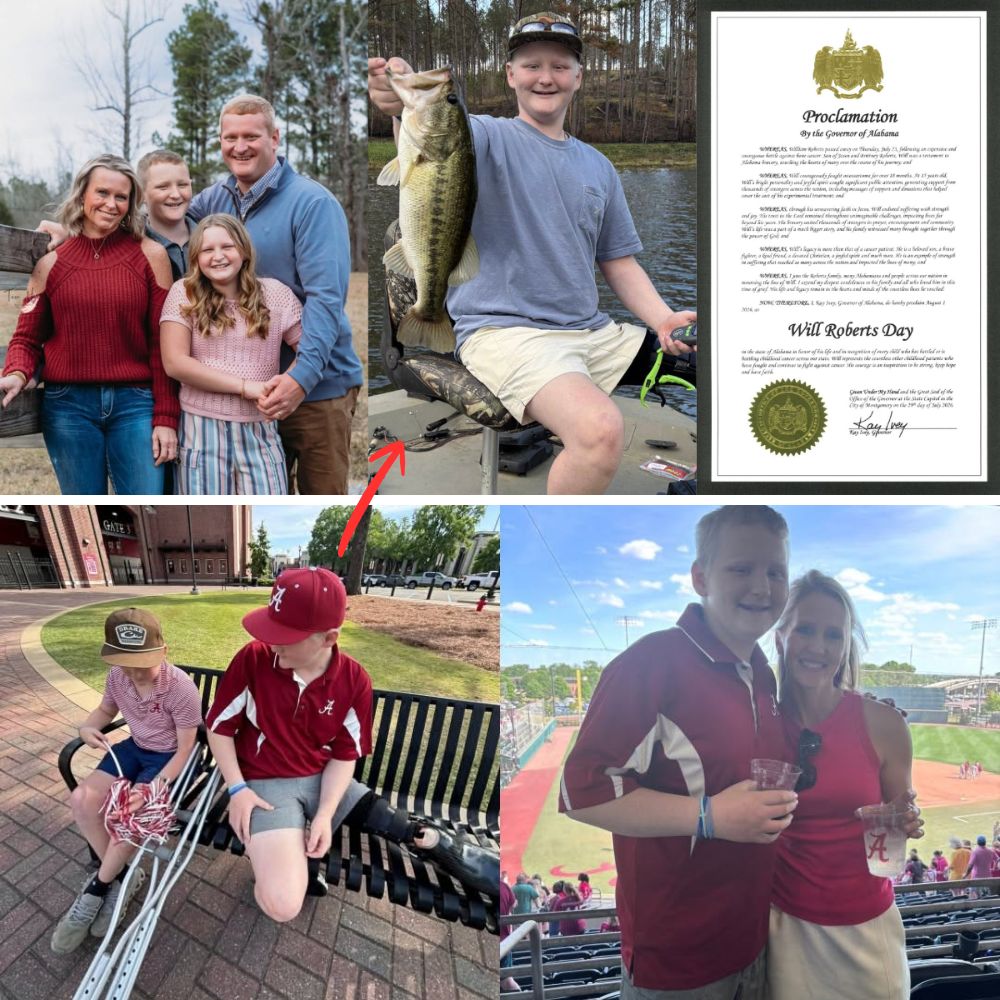
Governor Kay Ivey proclaimed August 1 as Will Roberts Day, transforming what could have been remembered only as a day of sorrow into a lasting symbol of courage, compassion, and unwavering faith.
For many who followed Will’s story, the proclamation represented something far greater than an official declaration. It was a reminder that some people leave behind a legacy measured not by the number of years they lived, but by the number of lives they touched.
A Battle That Inspired Thousands
Cancer is a word no family ever wants to hear.
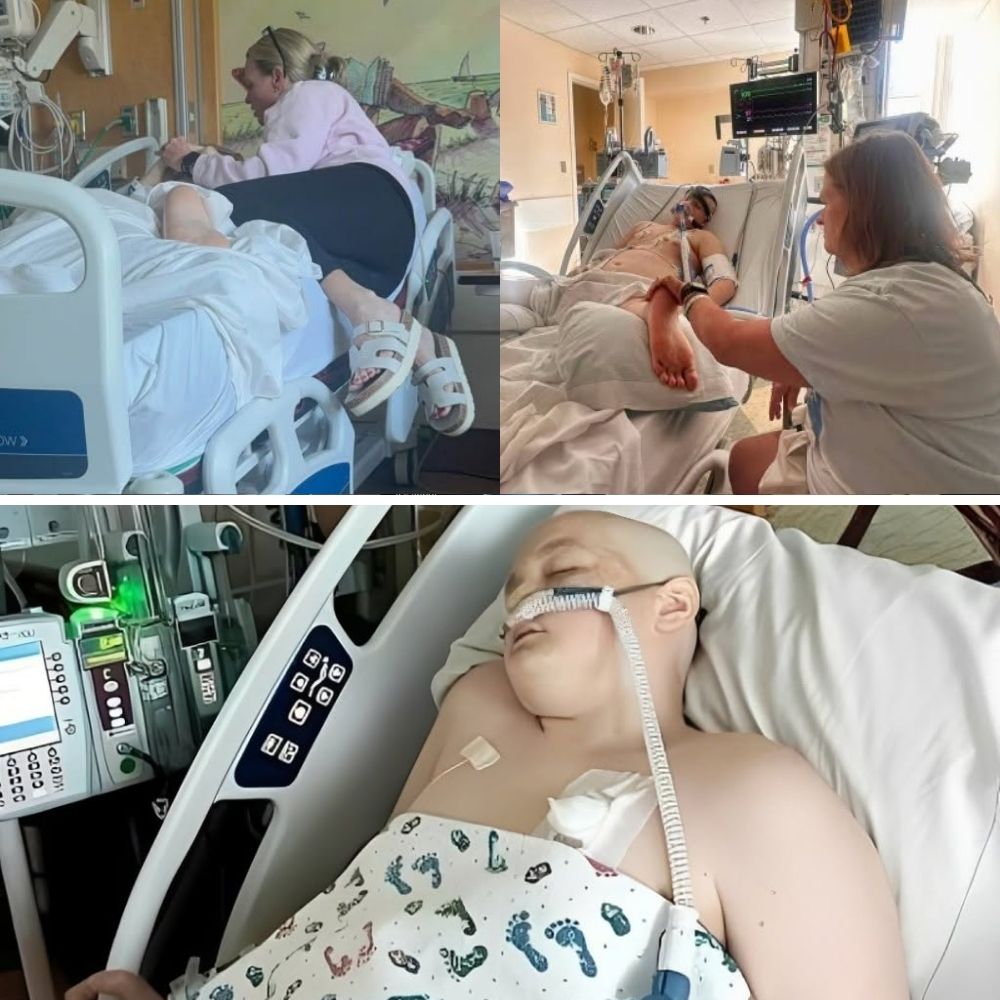
For the Roberts family, it marked the beginning of a journey filled with hospital visits, difficult treatments, uncertain diagnoses, and countless moments where hope became their strongest medicine.
Yet those who came to know Will Roberts rarely described him as a patient.
Instead, they remembered a teenager whose determination refused to be defined by illness.
Friends spoke of his smile.
Teachers remembered his kindness.
Neighbors admired his quiet strength.
Even during the most difficult stages of treatment, Will reportedly continued encouraging the people around him, reminding others that every day still carried meaning.
His courage was never about pretending he wasn’t afraid.
It was about choosing hope despite having every reason to surrender to fear.
That quiet resilience became the reason so many strangers began following his journey, offering prayers, sharing encouragement, and supporting his family from communities across Alabama and throughout the United States.
Faith Became the Center of His Story
Every inspiring story has something that gives it lasting power.
For Will Roberts, many people found that strength in his faith.
Throughout his illness, his family’s message consistently reflected gratitude, perseverance, and belief rather than bitterness.
Even during heartbreaking moments, those closest to Will emphasized love over anger and hope over despair.
That attitude resonated deeply with countless supporters.
Churches organized prayer services.
Schools encouraged students to send cards and messages.
Communities collected donations and organized acts of kindness inspired by Will’s example.
For many families facing their own medical battles, his story became a reminder that courage is not the absence of suffering.
Sometimes courage is simply choosing to believe tomorrow is still worth facing.
That message spread far beyond one hospital room or one hometown.
It became something people carried into their own lives.
A Farewell Filled With Gratitude Rather Than Despair
Funerals often mark the end of a story.
For many who gathered in Tuscaloosa County, this one felt different.
There was grief.
There were tears.
There was the painful reality of saying goodbye to a teenager whose life ended far too soon.
Yet alongside that sorrow was overwhelming gratitude.
Family members, friends, neighbors, educators, medical professionals, and supporters gathered to remember not merely how Will died, but how he chose to live.
Stories were shared about moments that revealed his character.
People remembered his compassion toward others.
They recalled the encouragement he gave to children facing their own challenges.
They spoke about the hope he offered during conversations that many never expected to become lifelong memories.
Those gathered understood something profound.
While cancer had claimed his life, it had never defeated his spirit.
That distinction mattered.
Because illness may shape a chapter of someone’s story, but it does not have the final authority over the legacy they leave behind.
An Official Recognition With Lasting Meaning
Government proclamations are often reserved for moments that reflect the values a community wishes to preserve.
By proclaiming August 1 as Will Roberts Day, Alabama acknowledged that Will’s influence reached beyond his own family and friends.
His story had become part of the state’s shared memory.
Such recognition sends a powerful message, especially to young people.
It reminds them that greatness is not reserved only for athletes, celebrities, or political leaders.
Sometimes a teenager quietly fighting an impossible battle can inspire more courage than anyone standing on a public stage.
The proclamation also serves another purpose.
Years from now, many people who never had the opportunity to meet Will may still ask why the day bears his name.
When they learn the answer, another generation will hear the story of a young man whose courage inspired an entire state.
That is how legacies continue.
Not only through monuments or official documents, but through stories that people continue telling long after the headlines have faded.
Why His Story Resonated Beyond Alabama
Every year, countless families face illnesses that test their strength in unimaginable ways.
Most of those stories remain known only within hospitals and local communities.
Will Roberts’ journey became different because it reflected something universally human.
People recognized pieces of their own lives in his story.
Parents saw the fierce love they would have for their own children.
Teenagers saw someone their own age confronting challenges no young person should ever face.
Cancer survivors recognized the emotional and physical battles that accompany treatment.
Faith communities found encouragement in the Roberts family’s unwavering belief.
Healthcare workers saw the resilience that reminds them why they continue serving patients despite difficult days.
In many ways, Will’s story stopped belonging to one family.
It became a story about perseverance itself.
That explains why messages of support arrived from people who had never met him.
Sometimes the most meaningful connections are formed not through personal acquaintance but through shared humanity.
The Legacy That Continues Beyond One Day
No proclamation can erase grief.
No ceremony can replace the presence of a beloved son.
No words can completely heal the pain of loss.
Yet meaningful remembrance ensures that a life continues influencing others.
Will Roberts’ legacy now extends beyond photographs, memories, and family stories.
It lives in the people who choose kindness because of his example.
It lives in families who continue believing during difficult medical journeys.
It lives in communities that remember compassion matters.
It lives in every act of encouragement offered to someone facing seemingly impossible circumstances.
For young people especially, his story demonstrates that influence has little to do with age.
Fifteen years may seem far too short.
Yet within those years, one teenager inspired conversations about courage, faith, resilience, and hope that continue touching lives long after his passing.
That is an extraordinary achievement for any life.
Remembering a Young Life That Changed Countless Others
History often remembers famous names because of positions they held or accomplishments they achieved.
Occasionally, however, history remembers someone for something far simpler.
The ability to inspire hope.
As Alabama honors Will Roberts through the proclamation of August 1 as Will Roberts Day, the recognition stands as more than an official gesture.
It represents the gratitude of countless people who found strength in watching one young man face extraordinary hardship with dignity.
His battle with cancer has ended.
His earthly journey has come to a close.
But the compassion, courage, and faith that defined his life continue moving forward through everyone who chooses to carry those values into their own communities.
Perhaps that is the greatest measure of a legacy.
Not the number of years someone lived.
Not the titles they earned.
Not the wealth they accumulated.
But whether their life encouraged others to become stronger, kinder, and more hopeful.
For many across Alabama and beyond, that is exactly what Will Roberts accomplished.
Though his voice has fallen silent, the example he left behind continues speaking.
And because of that, August 1 will forever remind countless people that even the shortest lives can leave the deepest impact.
💔 STELLA PARTON BREAKS HER SILENCE — What She Said About Dolly’s Health Has Fans Looking Back
Dolly Parton’s Sister Breaks Silence What Really Happened - GMT - G1
Stella Parton was born May 4, 1949, the sixth of twelve children raised by Robert Lee and Avie Lee Parton in Sevierville, Tennessee — a household defined by noise, limited money, and almost no privacy, the kind of environment that produced strong, determined personalities.
Stella was one of them.
By seven, she was appearing alongside her older sister Dolly on a Knoxville television program; by her teens, she was writing her own songs, though marriage and motherhood pulled music to the margins of her life for a stretch.
The dream never fully disappeared.

In 1967, she recorded a gospel album with her mother and sisters, and later worked clubs in Washington, D.C., before founding her own record label in 1975 and releasing “I Want to Hold You in My Dreams Tonight,” which climbed to number nine on the country charts.
Long before any of that commercial success, Stella had already shown a willingness to take positions others avoided.
At 26, amid backlash against Australian singer Olivia Newton-John for winning recognition in country music, Stella recorded “Ode to Olivia” in her defense — a stand that offered her no career benefit and real risk of criticism, but one she took anyway simply because she believed staying silent was the wrong choice.
That instinct defined the rest of her career: hits like “The Danger of a Stranger” and “Steady as the Rain” (written by Dolly) built a genuine, independent following, including in the U.K., while Stella also worked in New York theater and spoke openly, often controversially, about poverty, domestic violence, and the treatment of women in the music industry.
She was named the Christian Country Music Association’s Female Vocalist of the Year in 2004.
Through all of it, she remained defined publicly, more often than not, as simply “Dolly’s little sister” — a label she spent five decades quietly proving didn’t tell the full story.
That same directness is why her comments in the fall of 2025 carried real weight.
Stella had never positioned herself as the family’s image manager or spokesperson; she was, by reputation, someone who believed difficult truths shouldn’t stay hidden indefinitely.
What she described wasn’t dramatic or accusatory — it was a portrait of a woman who had spent years prioritizing everyone else’s needs over her own.
The context mattered.
Carl Dean, Dolly’s husband of nearly sixty years, died in March 2025 at 82, after a long illness during which Dolly had devoted herself almost entirely to his care.
She later acknowledged that in the process, she’d neglected her own health significantly.
The loss reverberated through the whole extended family — the Partons had lost three brothers in the years surrounding this period, compounding grief that, for a family that had once crowded twelve children into a single small home, meant losing pieces of a shared childhood one after another.
Stella herself went seven years without releasing new music during this stretch, later describing the period simply as one shaped by sorrow, while still speaking about the importance of finding moments of laughter within it.
Looking back, one moment reads very differently in hindsight than it did at the time: in late September 2025, Dolly postponed her planned Las Vegas residency, citing health challenges — a rare cancellation for a performer whose six-decade career had included very few of them.
At the time, most fans treated it as a minor, temporary setback.
Stella’s later reflections suggested the signs had actually been building for some time, visible to family in ways the public smile made easy to miss.
That concern crystallized publicly not long after, when Dolly’s younger sister Frieda posted a simple request on Facebook asking fans to pray for Dolly.
What looked at first like an ordinary, well-meaning gesture spread rapidly, sparking widespread speculation about how serious Dolly’s condition actually was.
Dolly herself responded directly within days, appearing in a video from a Grand Ole Opry commercial shoot, insisting with her familiar humor that she wasn’t finished yet — the now widely remembered “I ain’t dead yet” moment that briefly quieted public concern.
In the months that followed, the pattern repeated: reassuring updates about kidney stones, dehydration, and treatment, paired with continued work on new projects, right up until Dolly Parton’s death on August 25, 2026, at 80.
Looking back across that full timeline — the postponed residency, the family’s public worry, Stella’s own account of a sister who consistently deprioritized her own wellbeing — it becomes easier to see what the people closest to Dolly understood well before the rest of the world did: that the warmth and resilience the public saw every time she appeared on camera came at a real, largely invisible cost.