A Community United in Grief and Gratitude
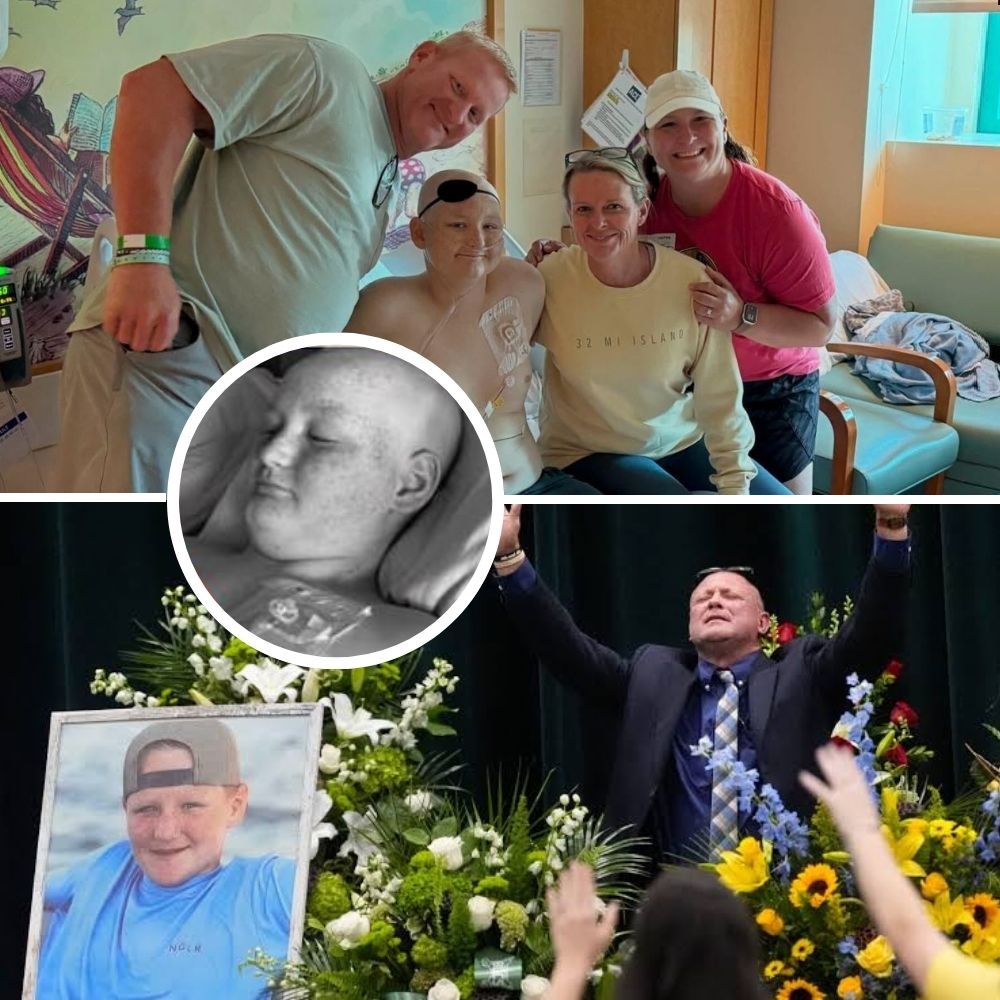
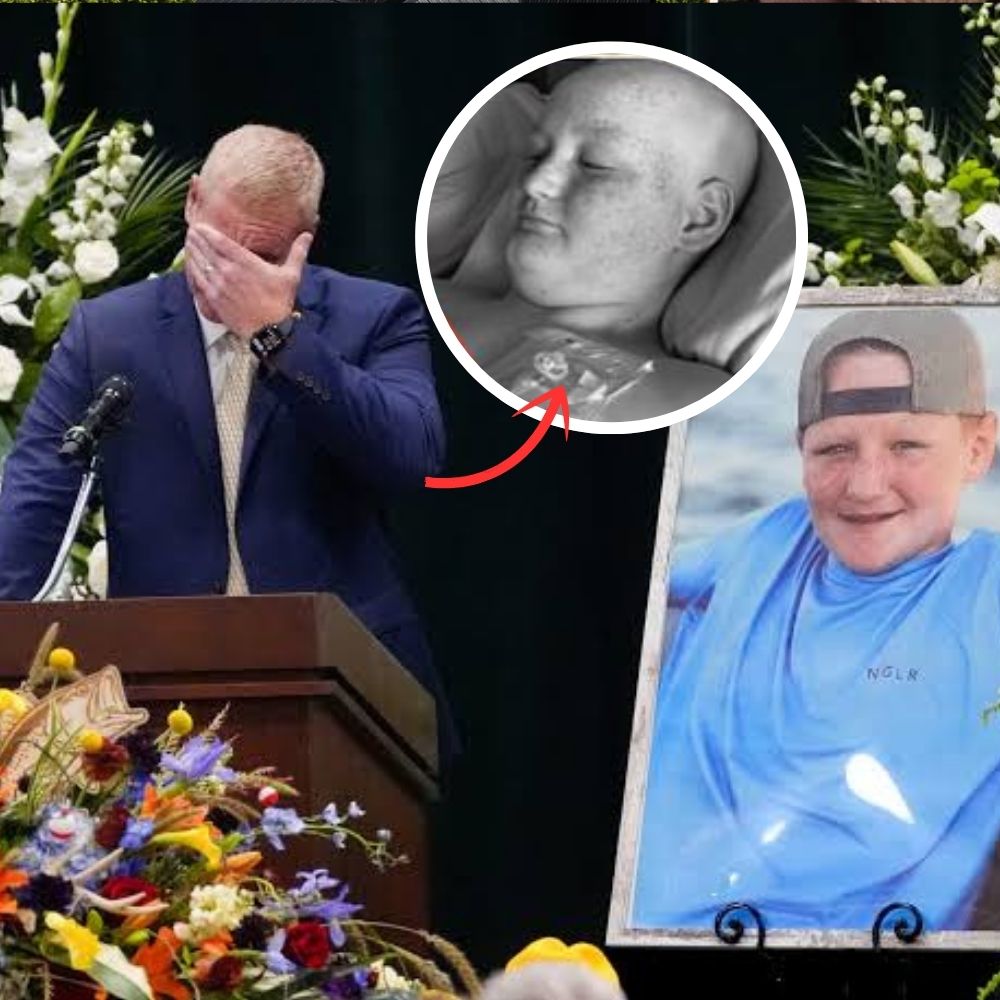
Tuscaloosa County stood still today as residents gathered to honor Will Roberts, a young Alabamian whose courage, faith, and determination inspired people far beyond his hometown. What began as one family’s painful journey through childhood cancer grew into a story embraced by an entire state.
Government representatives, community leaders, first responders, teachers, church members, athletes, and local families joined the memorial observances. Many had followed Will’s 18-month battle from a distance. Others had prayed beside his family, attended fundraising events, or supported them during long periods of treatment.
Despite the size of the gathering, the atmosphere remained deeply personal. People embraced quietly, held photographs of Will, and shared memories in low voices. Some wore ribbons representing cancer awareness, while others carried handwritten signs bearing messages of faith and gratitude.
The memorial was not simply a farewell. It was an acknowledgment that although Will’s life was painfully brief, it carried a weight and meaning that could not be measured in years.
The Young Man Behind the Public Story
For many people, Will became known as a “cancer warrior.” It was a title that recognized the strength he showed throughout months of treatment, uncertainty, and physical pain. Yet those closest to him wanted the community to remember that he was much more than his diagnosis.
Will was a son, a friend, a student, and a young man who loved the ordinary pleasures of life. He enjoyed football, fishing, spending time outdoors, and being surrounded by the people he trusted. Muddy boots, sports equipment, and fishing gear told as much about him as hospital photographs ever could.
Those details mattered to his family. Cancer occupied the final 18 months of his life, but it did not erase the years that came before it. Nor did it take away his humor, curiosity, stubborn determination, or capacity to care for others.
At the memorial, speakers repeatedly returned to that fuller picture. They spoke not only about how Will faced illness, but also about the way he lived: openly, faithfully, and without allowing fear to define every moment.
Eighteen Months That Changed Thousands of Lives
Will’s battle began with a diagnosis no family is ever prepared to receive. The months that followed brought medical appointments, procedures, long drives, changing treatment plans, and anxious waits for test results.
His parents learned to live between hope and uncertainty. A promising day could be followed by devastating news. Small improvements became reasons to celebrate, while setbacks required the family to find strength they did not know they possessed.
Throughout the ordeal, support spread across Tuscaloosa County. Churches organized prayer circles. Local groups raised funds to help with travel and medical expenses. Schools and athletic organizations found ways to remind Will that he remained part of the community even when treatment kept him away.
As his story reached more people, messages arrived from outside Alabama. Strangers who had never met Will began following his progress and praying for his recovery. Some were cancer survivors. Others were parents who understood the terror of seeing a child seriously ill.
What connected them was not tᩚraɢedy alone. People were drawn to Will because of the hope he continued to show, even when his circumstances offered him every reason to give up.
State Leaders Join the Tribute
The presence of Alabama officials gave the memorial a broader significance, but speakers were careful not to allow ceremony to overwhelm the family’s loss. Their role was not to turn Will’s story into a political occasion. It was to recognize a young citizen whose influence had crossed communities and generations.
State and local leaders offered condolences to the Roberts family and praised the generosity shown by Tuscaloosa County throughout Will’s illness. They also acknowledged the medical teams, volunteers, educators, and faith communities that stood beside him.
One tribute described Will’s courage as a reminder that leadership is not determined by age or official position. Sometimes, it is demonstrated by a teenager who faces extraordinary hardship while continuing to encourage the adults around him.
That idea resonated throughout the service. Will never held public office, commanded an organization, or stood behind a formal podium. Nevertheless, he brought people together. His struggle inspired action, and his faith encouraged people who were fighting private battles of their own.
Several officials also emphasized that honoring Will must involve more than kind words spoken on a single day. His legacy, they said, should strengthen support for families facing childhood cancer and renew attention to research, treatment access, and practical assistance.
Faith at the Center of the Farewell
Prayer had been central to the Roberts family during Will’s illness, and it remained at the heart of the memorial. Before the formal service began, groups gathered in small circles, holding hands and bowing their heads.
Some prayed for comfort. Others gave thanks for Will’s life. Many admitted that they could not understand why a child with so much still ahead of him had been taken so soon.
The service did not offer easy explanations for that pain. Instead, it created room for sorrow and faith to exist together. Speakers acknowledged the anger, confusion, and emptiness that can follow the dєatᩚh of a child. They also spoke of a love they believed dєatᩚh could not destroy.
For Will’s family, faith had never meant pretending the illness was not frightening. It meant continuing through each frightening day without believing they were entirely alone.
That same conviction carried the community through the memorial. Tears were not treated as weakness, and grief was not presented as a failure of belief. Each tear reflected a relationship, a memory, or a future that those who loved Will had once imagined.
Small Details That Carried the Greatest Meaning
The most emotional moments came not from official declarations, but from personal memories. A former teacher recalled Will’s kindness toward a classmate. A friend remembered a joke he repeated whenever a room became too serious. A neighbor spoke about seeing him outdoors before cancer changed the rhythm of his days.
Items associated with Will were displayed with care. Photographs showed him smiling with family, standing outside, and enjoying moments that had nothing to do with hospitals. Nearby were reminders of his interests, including football and fishing.
Each object helped tell the story of a real young person behind the public tributes.
To strangers, an old pair of muddy boots might have appeared unremarkable. To his family, the dried earth on them represented places he had walked, afternoons spent outside, and a body once free to move without illness.
A fishing hook carried memories of patience beside the water. A football recalled energy, friendship, and competition. These simple belongings reminded those gathered that a legacy is often preserved through ordinary things made precious by absence.
Supporting the Roberts Family Beyond the Memorial
The large turnout demonstrated how deeply the community cared, but those closest to the family understood that the most difficult period might begin after the public ceremonies ended.
During treatment, families often live in a state of constant motion. There are medications to organize, appointments to attend, decisions to make, and emergencies to manage. When the battle ends in loss, that activity suddenly stops, leaving a silence that can feel overwhelming.
The Roberts family will continue facing birthdays, holidays, familiar places, and daily routines transformed by Will’s absence. Their grief will not end when visitors return home or memorial flowers begin to fade.
Community organizations therefore encouraged supporters to remain present in the months ahead. Practical assistance, meals, respectful messages, and continued prayer can provide meaningful comfort. Those wishing to contribute were asked to use channels confirmed by the family or trusted local organizers.
Residents were also encouraged to honor Will by supporting childhood cancer initiatives, donating to family-assistance programs, or volunteering with organizations that help young patients maintain connections to school, friends, and community life during treatment.
True support is not measured only by the number of people who attend a memorial. It is revealed by who remains when public attention has moved elsewhere.
A Legacy Measured in Changed Hearts
Near the conclusion of the service, the focus shifted from what cancer had taken to what Will had left behind.
He left a family whose love for him remains unchanged. He left friends who will carry his memory into adulthood. He left a community that learned how powerfully people can unite around a child in need.
He also left a challenge.
If a teenager enduring cancer could continue offering hope, then those inspired by him could respond with greater compassion in their own lives. They could call someone who was grieving, help a family facing medical hardship, donate to research, or refuse to let another frightened child feel forgotten.
Will’s story demonstrated that influence is not always loud. Sometimes it begins in a hospital room, on a football field, beside a fishing pond, or during a quiet prayer shared by people who do not know what tomorrow will bring.
As the memorial ended, attendees did not rush to leave. Many remained near the family, waiting patiently to offer condolences. Others stood silently before the photographs, reluctant to accept that the young face looking back at them now belonged to memory.
Outside, the roads of Tuscaloosa County gradually filled with departing vehicles. Government representatives returned to their duties, neighbors went back to their homes, and volunteers began the quiet work of clearing the gathering space.
Yet something had changed.
The people who came to mourn Will carried pieces of his story away with them. His courage would be repeated in churches, classrooms, family conversations, and future community events. Children who never met him might one day benefit from programs supported in his name.
Cancer ended Will’s 18-month battle, but it did not erase the meaning of his journey.
The most powerful tribute Alabama can offer is not simply to remember how Will died. It is to remember how fully he lived, how deeply he was loved, and how strongly one young person brought an entire community together.
Will Roberts may no longer stand among those who gathered in his honor, but his place within Tuscaloosa County has not disappeared. It now lives in every prayer spoken for his family, every act of kindness inspired by his example, and every promise that another family facing childhood cancer will not have to stand alone.
💔 STELLA PARTON BREAKS HER SILENCE — What She Said About Dolly’s Health Has Fans Looking Back
Dolly Parton’s Sister Breaks Silence What Really Happened - GMT - G1
Stella Parton was born May 4, 1949, the sixth of twelve children raised by Robert Lee and Avie Lee Parton in Sevierville, Tennessee — a household defined by noise, limited money, and almost no privacy, the kind of environment that produced strong, determined personalities.
Stella was one of them.
By seven, she was appearing alongside her older sister Dolly on a Knoxville television program; by her teens, she was writing her own songs, though marriage and motherhood pulled music to the margins of her life for a stretch.
The dream never fully disappeared.

In 1967, she recorded a gospel album with her mother and sisters, and later worked clubs in Washington, D.C., before founding her own record label in 1975 and releasing “I Want to Hold You in My Dreams Tonight,” which climbed to number nine on the country charts.
Long before any of that commercial success, Stella had already shown a willingness to take positions others avoided.
At 26, amid backlash against Australian singer Olivia Newton-John for winning recognition in country music, Stella recorded “Ode to Olivia” in her defense — a stand that offered her no career benefit and real risk of criticism, but one she took anyway simply because she believed staying silent was the wrong choice.
That instinct defined the rest of her career: hits like “The Danger of a Stranger” and “Steady as the Rain” (written by Dolly) built a genuine, independent following, including in the U.K., while Stella also worked in New York theater and spoke openly, often controversially, about poverty, domestic violence, and the treatment of women in the music industry.
She was named the Christian Country Music Association’s Female Vocalist of the Year in 2004.
Through all of it, she remained defined publicly, more often than not, as simply “Dolly’s little sister” — a label she spent five decades quietly proving didn’t tell the full story.
That same directness is why her comments in the fall of 2025 carried real weight.
Stella had never positioned herself as the family’s image manager or spokesperson; she was, by reputation, someone who believed difficult truths shouldn’t stay hidden indefinitely.
What she described wasn’t dramatic or accusatory — it was a portrait of a woman who had spent years prioritizing everyone else’s needs over her own.
The context mattered.
Carl Dean, Dolly’s husband of nearly sixty years, died in March 2025 at 82, after a long illness during which Dolly had devoted herself almost entirely to his care.
She later acknowledged that in the process, she’d neglected her own health significantly.
The loss reverberated through the whole extended family — the Partons had lost three brothers in the years surrounding this period, compounding grief that, for a family that had once crowded twelve children into a single small home, meant losing pieces of a shared childhood one after another.
Stella herself went seven years without releasing new music during this stretch, later describing the period simply as one shaped by sorrow, while still speaking about the importance of finding moments of laughter within it.
Looking back, one moment reads very differently in hindsight than it did at the time: in late September 2025, Dolly postponed her planned Las Vegas residency, citing health challenges — a rare cancellation for a performer whose six-decade career had included very few of them.
At the time, most fans treated it as a minor, temporary setback.
Stella’s later reflections suggested the signs had actually been building for some time, visible to family in ways the public smile made easy to miss.
That concern crystallized publicly not long after, when Dolly’s younger sister Frieda posted a simple request on Facebook asking fans to pray for Dolly.
What looked at first like an ordinary, well-meaning gesture spread rapidly, sparking widespread speculation about how serious Dolly’s condition actually was.
Dolly herself responded directly within days, appearing in a video from a Grand Ole Opry commercial shoot, insisting with her familiar humor that she wasn’t finished yet — the now widely remembered “I ain’t dead yet” moment that briefly quieted public concern.
In the months that followed, the pattern repeated: reassuring updates about kidney stones, dehydration, and treatment, paired with continued work on new projects, right up until Dolly Parton’s death on August 25, 2026, at 80.
Looking back across that full timeline — the postponed residency, the family’s public worry, Stella’s own account of a sister who consistently deprioritized her own wellbeing — it becomes easier to see what the people closest to Dolly understood well before the rest of the world did: that the warmth and resilience the public saw every time she appeared on camera came at a real, largely invisible cost.