THUNCHANOK DONHOMLA CASE BOMBSHELL: CLAIMS OF ‘SECRET TOXIN REPORT’ SPARK OUTRAGE — BUT THE REAL EVIDENCE AGAINST SIMON PETER CARMAN TELLS A DIFFERENT STORY
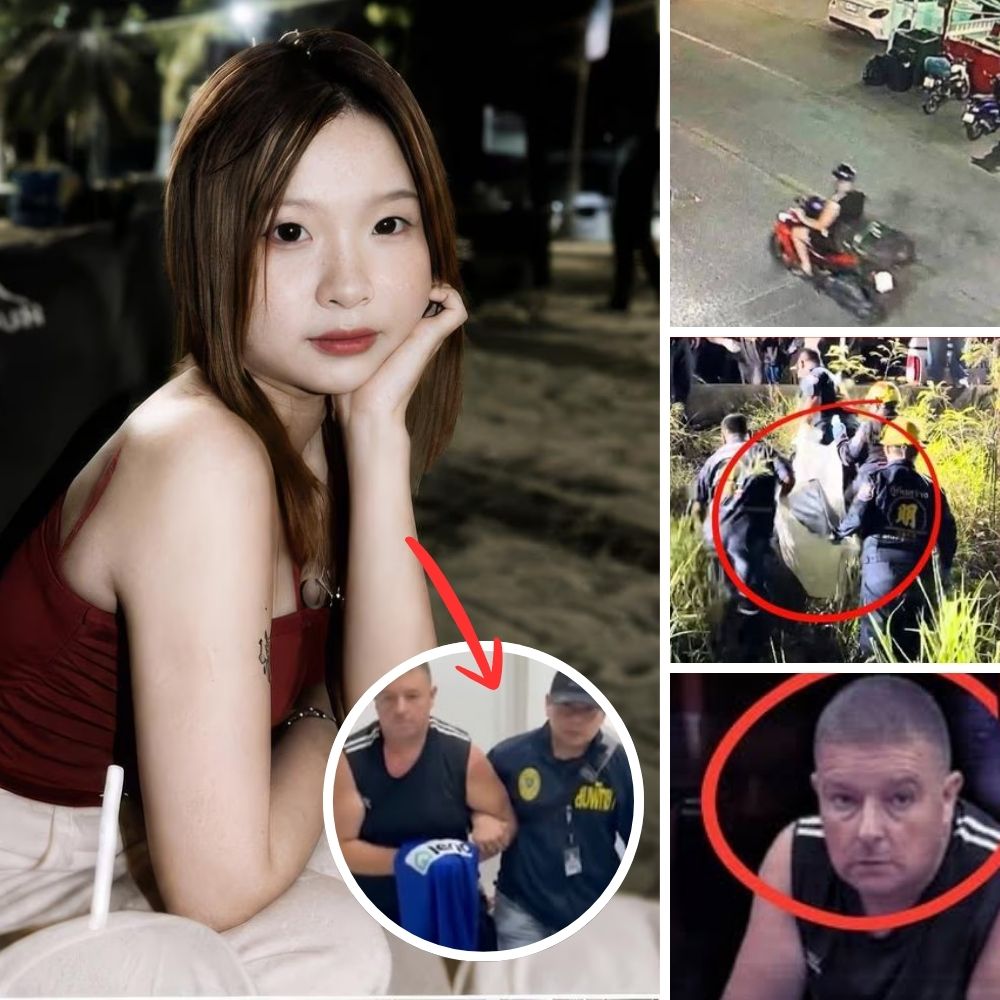
A chilling murder investigation that has gripped Thailand and Australia has taken another dramatic turn online after sensational claims began circulating about a supposed “secret forensic report” involving a mysterious toxin.
According to viral posts spreading across social media, investigators allegedly discovered that Simon Peter Carman had tested positive for a powerful chemical substance matching a white powder recovered from the scene.
The claim suggested a terrifying new possibility:
Was the teenage victim, Tunchanok Donhomla, rendered helpless by a hidden chemical before her dєatᩚh?
Did investigators uncover a secret weapon that changed everything?
The allegations immediately triggered public outrage.
But there is a major problem.
No verified police statement, court document or official forensic announcement confirms that Simon Peter Carman tested positive for any toxin linked to the dєatᩚh of 17-year-old Tunchanok Donhomla.
No authenticated laboratory report has been publicly released identifying a mysterious powder.
And no official investigation has announced that a chemical substance was responsible for the tᩚraɢedy.
The real case, however, remains deeply disturbing.
Authorities allege that Australian man Simon Peter Carman m𝑢rdєred Tunchanok after she entered his apartment in Pattaya.
Police say CCTV footage captured the pair entering the building together in the early hours of the morning, and later showed Carman leaving with a suitcase believed to have contained her body.
Carman denies the murder allegations and has claimed he acted in self-defense.
The investigation has already revealed a series of haunting details — without the need for an unverified toxin theory.
THE NIGHT TUNCHANOK DISAPPEARED
Tunchanok Donhomla was 17 years old when she disappeared in Pattaya, a major tourist city on Thailand’s eastern coast.
According to police, she was seen entering a condominium building with Simon Peter Carman during the early hours of the morning.
Security footage became a key part of the investigation.
Police allege the footage showed Tunchanok entering the building with Carman but not leaving afterward.
Investigators later focused on Carman after her disappearance was reported by friends.
The case quickly became a national shock.
A young woman was missing.
A foreign suspect was identified.
And investigators were racing to understand what happened inside the apartment.
THE SUITCASE DISCOVERY THAT CHANGED THE CASE
The investigation took a devastating turn when Tunchanok’s body was found inside a suitcase near railway tracks in Pattaya.
Police alleged that the suitcase had been moved from the apartment area and abandoned.
Authorities said CCTV footage showed Carman leaving the condominium with a suitcase and later returning without it.
That footage became one of the most significant pieces of evidence in the investigation.
Police allege the suitcase contained Tunchanok’s body.
Carman has denied murdering her.
He has claimed that events unfolded differently and that he acted in self-defense.
The case remains a legal matter, and allegations against him must be proven in court.
THE REAL FORENSIC QUESTIONS
While online rumors focus on a mysterious toxin, investigators have reportedly focused on far more direct evidence.
The timeline.
The CCTV footage.
The apartment.
The suitcase.
Physical evidence.
Witness statements.
The movements of the suspect before and after Tunchanok disappeared.
These are the elements prosecutors would typically rely on in a case involving an alleged homicide.
A chemical discovery would be significant if proven.
But no such discovery has been publicly confirmed.
WHY THE TOXIN STORY SPREAD SO QUICKLY
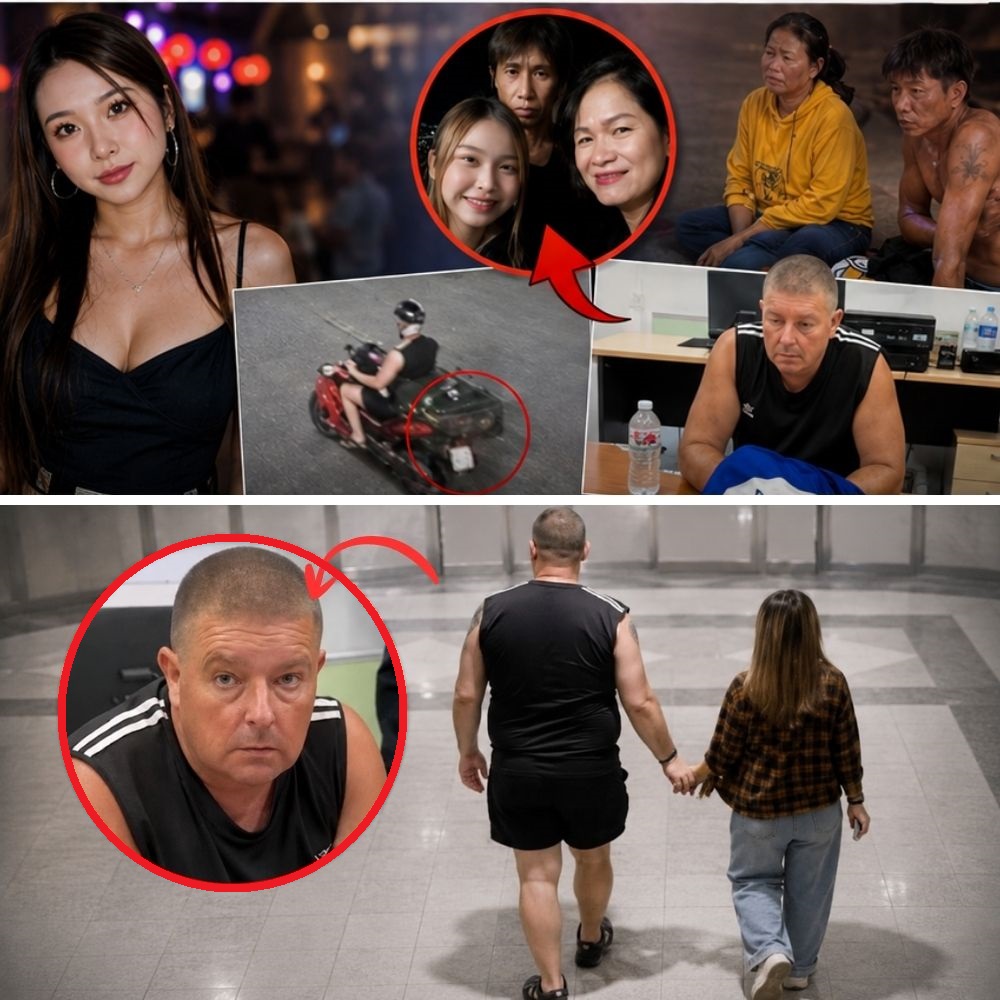
The idea of a secret poison or chemical weapon has a powerful effect on public imagination.
It transforms a murder investigation into something even more frightening.
A hidden substance.
A scientific mystery.
A criminal plan that appears more calculated.
These details create a dramatic narrative.
But criminal investigations require something more important than a dramatic narrative:
Evidence.
A claim that a suspect tested positive for a toxin would require confirmation from forensic laboratories, investigators or court records.
Without that, the claim remains speculation.
WHAT POLICE HAVE ACTUALLY ALLEGED
According to reports, police believe Carman was connected to Tunchanok’s disappearance after CCTV footage placed them together before she vanished.
Authorities have said they believe she entered his accommodation and did not leave.
Police also allege Carman later moved a suitcase from the location.
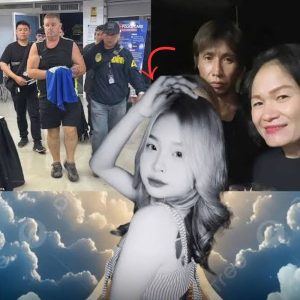
Investigators arrested Carman at Bangkok’s Suvarnabhumi Airport as he was preparing to leave Thailand.
He was subsequently charged with offenses including murder, concealing a body and offenses relating to the alleged taking of a minor for an indecent purpose.
Carman has denied the charges.
THE SELF-DEFENSE CLAIM
One of the most important developments in the case is Carman’s own explanation.
Reports say he has claimed he acted in self-defense following a confrontation.
That claim directly conflicts with the prosecution theory.
The court will eventually have to examine:
What happened inside the apartment?
Was there a struggle?
What evidence supports either version?
Did the suspect’s actions before and after the dєatᩚh indicate guilt or something else?
Those questions cannot be answered through online speculation.
THE VICTIM BEHIND THE HEADLINES
As the investigation continues, attention must also remain on Tunchanok herself.
Friends described her as a young woman with her own dreams and relationships.
Her dєatᩚh has caused grief among people who knew her and anger among those demanding justice.
Her family has publicly expressed a desire for the strongest possible legal consequences if Carman is convicted.
Behind every forensic debate and courtroom argument is a 17-year-old whose life ended tragically.
THE POSSIBILITY OF OTHER CASE CONNECTIONS
The investigation has also attracted attention because Thai authorities have examined whether the case could be connected to other unsolved deaths involving women found in unusual circumstances.
However, officials have emphasized that no confirmed connection has been established.
This distinction is important.
Investigators often examine possible links during major cases.
But suspicion is not proof.
Each case must be supported by evidence.
THE ROLE OF CCTV EVIDENCE
One of the strongest publicly discussed elements of the investigation is surveillance footage.
CCTV reportedly showed Carman and Tunchanok entering the building together.
Later footage allegedly showed Carman leaving with luggage.
For investigators, this type of evidence can help establish a timeline.
It does not automatically answer every question.
The court must still determine exactly what happened and whether the evidence proves criminal responsibility.
WHY ONLINE “LEAKS” ARE DANGEROUS
High-profile criminal cases often attract false claims.
A dramatic headline can spread faster than verified information.
Words like:
“secret report”
“DNA bombshell”
“hidden toxin”
“forensic leak”
immediately attract attention.
But those phrases also create expectations that may not match reality.
A genuine forensic breakthrough would normally appear through official legal channels.
Court filings.
Expert testimony.
Police statements.
Laboratory evidence.
Not anonymous social-media posts.
WHAT THE PUBLIC RECORD CURRENTLY SHOWS
The confirmed picture is already serious.
A 17-year-old girl disappeared in Pattaya.
Police allege she was killed.
Her body was found inside a suitcase.
An Australian man, Simon Peter Carman, has been charged.
He denies the allegations and claims self-defense.
The investigation continues.
But there is currently no verified evidence of a toxin matching a white powder seized at the scene.
THE REAL MYSTERY IS STILL THE TIMELINE
The most important unanswered questions remain focused on the timeline.
What happened after Tunchanok entered the apartment?
How did she die?
What evidence supports the competing versions of events?
Why did Carman allegedly leave with a suitcase?
What exactly happened during those critical hours?
Those answers will come from investigators, forensic experts and the courts.
Not from unverified leaks.
A CASE THAT WILL BE DECIDED BY EVIDENCE
The public understandably wants answers.
The circumstances are horrifying.
A young woman is dead.
A suspect is facing serious charges.
A family is demanding justice.
But the justice system depends on verified facts.
If forensic evidence later proves that a substance played a role, authorities will need to present that evidence openly through proper channels.
Until then, claims about mystery toxins remain unconfirmed.
THE FINAL REVELATION
The most shocking truth in the Thanchanok Donhomla case is not a secret chemical.
It is the documented chain of events already under investigation:
A teenager entered a building with a man she knew.
She did not leave.
A suitcase became the center of a murder investigation.
A suspect was arrested while attempting to leave Thailand.
And a family was left searching for justice.
The world may continue searching for a hidden substance or a dramatic forensic revelation.
But the real answers will come from the evidence already gathered.
From the courtroom.
From investigators.
And from the truth of what happened during those final hours inside a Pattaya apartment.
💔 STELLA PARTON BREAKS HER SILENCE — What She Said About Dolly’s Health Has Fans Looking Back
Dolly Parton’s Sister Breaks Silence What Really Happened - GMT - G1
Stella Parton was born May 4, 1949, the sixth of twelve children raised by Robert Lee and Avie Lee Parton in Sevierville, Tennessee — a household defined by noise, limited money, and almost no privacy, the kind of environment that produced strong, determined personalities.
Stella was one of them.
By seven, she was appearing alongside her older sister Dolly on a Knoxville television program; by her teens, she was writing her own songs, though marriage and motherhood pulled music to the margins of her life for a stretch.
The dream never fully disappeared.

In 1967, she recorded a gospel album with her mother and sisters, and later worked clubs in Washington, D.C., before founding her own record label in 1975 and releasing “I Want to Hold You in My Dreams Tonight,” which climbed to number nine on the country charts.
Long before any of that commercial success, Stella had already shown a willingness to take positions others avoided.
At 26, amid backlash against Australian singer Olivia Newton-John for winning recognition in country music, Stella recorded “Ode to Olivia” in her defense — a stand that offered her no career benefit and real risk of criticism, but one she took anyway simply because she believed staying silent was the wrong choice.
That instinct defined the rest of her career: hits like “The Danger of a Stranger” and “Steady as the Rain” (written by Dolly) built a genuine, independent following, including in the U.K., while Stella also worked in New York theater and spoke openly, often controversially, about poverty, domestic violence, and the treatment of women in the music industry.
She was named the Christian Country Music Association’s Female Vocalist of the Year in 2004.
Through all of it, she remained defined publicly, more often than not, as simply “Dolly’s little sister” — a label she spent five decades quietly proving didn’t tell the full story.
That same directness is why her comments in the fall of 2025 carried real weight.
Stella had never positioned herself as the family’s image manager or spokesperson; she was, by reputation, someone who believed difficult truths shouldn’t stay hidden indefinitely.
What she described wasn’t dramatic or accusatory — it was a portrait of a woman who had spent years prioritizing everyone else’s needs over her own.
The context mattered.
Carl Dean, Dolly’s husband of nearly sixty years, died in March 2025 at 82, after a long illness during which Dolly had devoted herself almost entirely to his care.
She later acknowledged that in the process, she’d neglected her own health significantly.
The loss reverberated through the whole extended family — the Partons had lost three brothers in the years surrounding this period, compounding grief that, for a family that had once crowded twelve children into a single small home, meant losing pieces of a shared childhood one after another.
Stella herself went seven years without releasing new music during this stretch, later describing the period simply as one shaped by sorrow, while still speaking about the importance of finding moments of laughter within it.
Looking back, one moment reads very differently in hindsight than it did at the time: in late September 2025, Dolly postponed her planned Las Vegas residency, citing health challenges — a rare cancellation for a performer whose six-decade career had included very few of them.
At the time, most fans treated it as a minor, temporary setback.
Stella’s later reflections suggested the signs had actually been building for some time, visible to family in ways the public smile made easy to miss.
That concern crystallized publicly not long after, when Dolly’s younger sister Frieda posted a simple request on Facebook asking fans to pray for Dolly.
What looked at first like an ordinary, well-meaning gesture spread rapidly, sparking widespread speculation about how serious Dolly’s condition actually was.
Dolly herself responded directly within days, appearing in a video from a Grand Ole Opry commercial shoot, insisting with her familiar humor that she wasn’t finished yet — the now widely remembered “I ain’t dead yet” moment that briefly quieted public concern.
In the months that followed, the pattern repeated: reassuring updates about kidney stones, dehydration, and treatment, paired with continued work on new projects, right up until Dolly Parton’s death on August 25, 2026, at 80.
Looking back across that full timeline — the postponed residency, the family’s public worry, Stella’s own account of a sister who consistently deprioritized her own wellbeing — it becomes easier to see what the people closest to Dolly understood well before the rest of the world did: that the warmth and resilience the public saw every time she appeared on camera came at a real, largely invisible cost.