
For Brittney, plugging in her late son’s old phone was supposed to be a small, ordinary act.
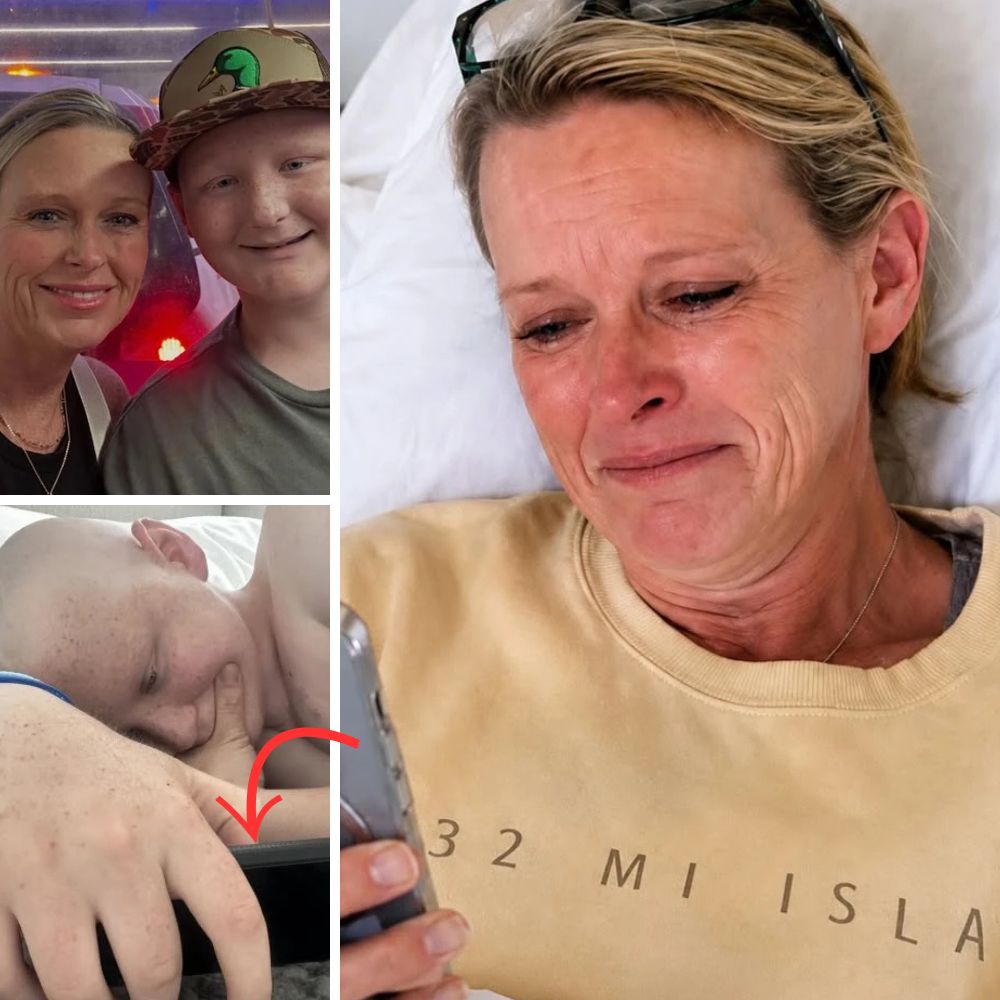
She expected memories.
Maybe a few forgotten photographs. Old videos. Messages from friends. The familiar pieces of a 15-year-old boy’s life that had been left behind in a device no one had touched in some time.
What she did not expect was to find something that felt as though Will Roberts had been speaking directly to his family from a place they could never have imagined.
On the phone was a folder with a simple title:
“For the Family.”
Inside were recordings Will had apparently made during his time in the hospital.
They were private moments—quiet, intimate pieces of a young boy’s life captured while his parents were nearby, exhausted from the long days and nights of watching over him.
And in those recordings, Will was not simply talking about himself.
He was thinking about everyone else.
That discovery reportedly left Brittney facing a kind of grief that is difficult to put into words: the realization that while his family had been fighting desperately to keep him close, Will had also been thinking about what he might want to leave behind.
A SON SPEAKING WHEN NO ONE WAS LISTENING
The recordings were not described as grand speeches.
They were much more personal than that.
Will spoke to his younger sister, Charlie, leaving words meant specifically for her. He reminded his father to take care of himself. And he expressed gratitude toward his mother for something she had done throughout his battle—never letting go of his hand.
Those details made the recordings especially painful for the family.
Because they revealed something that parents often discover only after losing a child: children notice far more than adults realize.
Will had seen the sleepless nights.
He had seen the fear.
He had seen his parents sitting beside his hospital bed, trying to remain strong even when they were exhausted.
And somehow, in the middle of his own suffering, he was still thinking about them.
That is what makes the recordings so difficult to watch.
They are not simply memories of a teenager.
They are pieces of Will’s voice, his personality and his love—preserved at a time when his family had no idea how important those recordings might eventually become.
For Brittney, the phone became more than an old device.
It became a time capsule.
THE RECORDINGS HIS PARENTS NEVER KNEW EXISTED
There is something uniquely heartbreaking about hearing a person speak when they do not know whether anyone will ever hear them.
Will appeared to be making the recordings privately.
His parents were nearby, but the moments belonged to him.
Perhaps that was why he was able to say things he might never have been able to say face-to-face.
He could speak without watching his mother’s expression change.
He could tell his father what he wanted him to remember without seeing the pain in his eyes.
He could speak to Charlie without having to confront the possibility that these might be among his final words to his little sister.
The recordings reportedly carried that quiet intimacy.
There was no audience.
No camera crew.
No carefully prepared statement.
Just a teenager, a phone and thoughts he apparently wanted his family to have someday.
And then came the final recording.
THE MOMENT EVERYTHING CHANGED
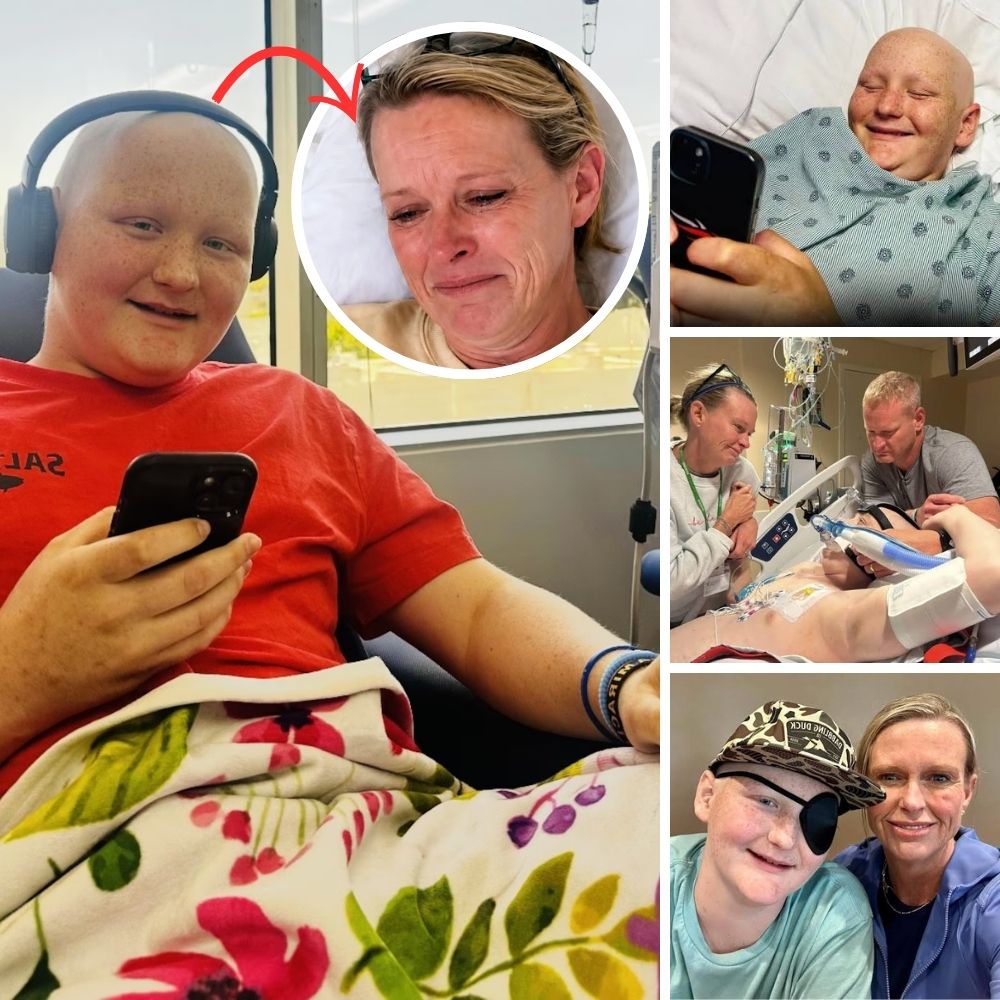
According to the account surrounding the discovery, the final video began much like the others.
Will was there.
He was speaking.
At one point, he even smiled.
But near the end, something changed.
His expression suddenly became serious.
The warmth disappeared from his face.
He slowly turned the camera toward a dark corner of the room.
For several seconds, the image reportedly remained focused there.
It was not immediately clear why Will had chosen to show that particular part of the room.
But the deliberate movement of the camera raised a question that has stayed with anyone who hears the story:
What did Will want his family to notice?
Was there an object?
A message?
Something he had intentionally placed there?
Or was the meaning of that final moment something only Will himself understood?
That unanswered question is precisely what makes the recording so haunting.
A FINAL MESSAGE—OR A FINAL MEMORY?
It is tempting, when confronted with an emotional discovery like this, to search for a hidden meaning.
Families often do the same after a devastating loss.
They replay videos.
They reread messages.
They listen to old voicemails.
They examine photographs that once seemed ordinary and suddenly become priceless.
Every detail can feel significant.
Every pause can feel like a message.
Every smile can become something worth holding onto.
For Brittney and her family, Will’s recordings appear to have become part of that process.
Whatever the final recording was intended to show, the larger message inside the phone may have been even more powerful.
Will had remembered his family.
He had remembered his sister.
He had remembered his father.
And he had remembered his mother’s hand.
Those are not small memories.
They are the kinds of memories that remain when everything else has been stripped away.
WHAT WILL LEFT BEHIND
A child’s death leaves a family with an impossible contradiction.
They desperately want to move forward because life demands it.
But at the same time, they want to stay exactly where they were—to return to the last ordinary moment before everything changed.
For Brittney, that old phone may have offered something in between.
She could not bring Will back.
She could not stop the passage of time.
But she could press play.
She could hear his voice again.
She could hear the way he spoke to the people he loved.
And perhaps most importantly, she could discover that the love she gave him had never gone unnoticed.
The title of the folder—“For the Family”—may ultimately be the simplest explanation for why these recordings matter so much.
They were not created for strangers.
They were not created for the internet.
They were created for the people Will loved most.
And now, after everything, they may be among the most precious things he ever left behind.
The final image of the dark corner remains unexplained in the story as presented.
But perhaps the most powerful part of Will’s final recording is not what appeared on the screen.
It is the fact that, even in the middle of an unimaginable fight, a 15-year-old boy was thinking about what his family would need after he was gone.
He wanted them to remember him.
Not only as a patient.
Not only as a child who became sick.
But as their son.
Their brother.
Their family.
And in those recordings, his voice is still there—quietly reminding them that love can survive even the moments we never believed we would have to face.
Sometimes, the smallest things become the most important things.
An old phone.
A forgotten folder.
A few recordings made in the quiet of a hospital room.
And a voice that a family thought they had lost forever.