
INSIDE OHIO’S ‘HOUSE OF HORRORS’: WHAT INVESTIGATORS FOUND AFTER 16 CHILDREN WERE REMOVED FROM A HAMDEN HOME
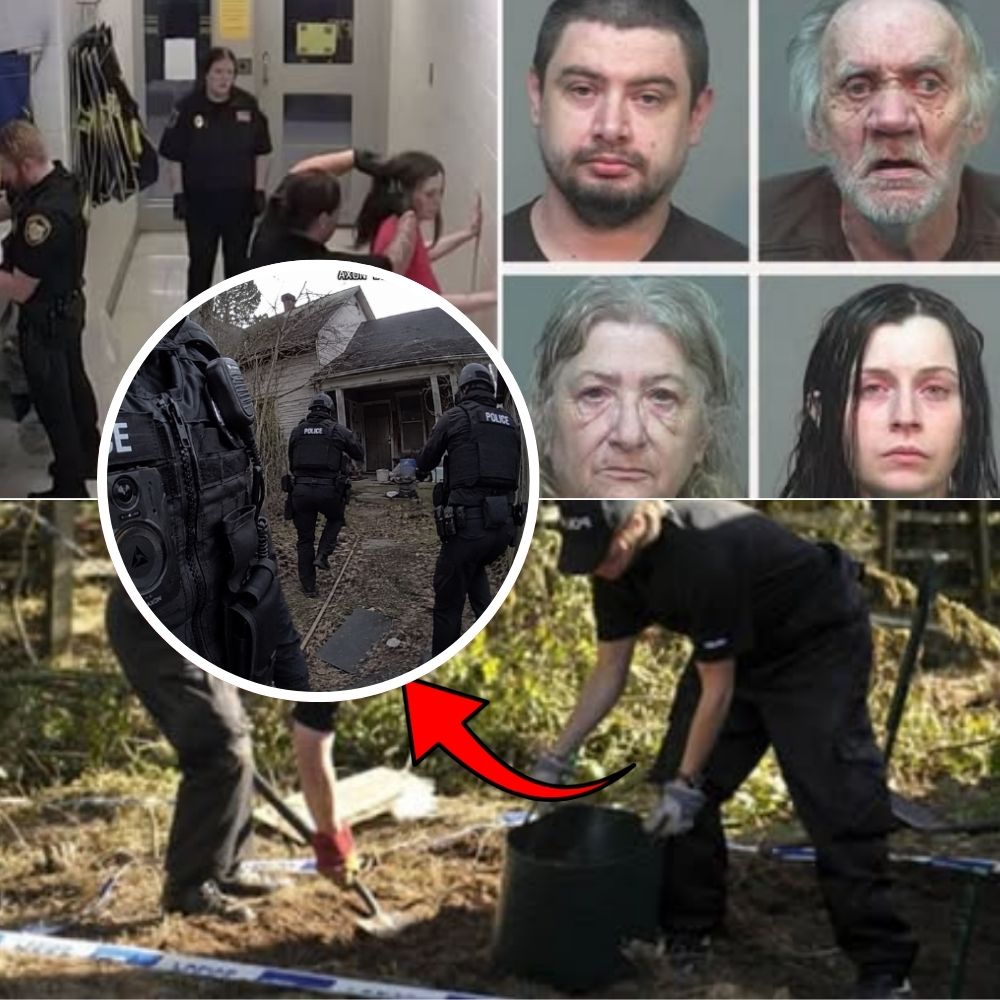
The disturbing Ohio case that became known as the “House of Horrors” has returned to the spotlight after sensational claims that previously unseen police footage and confidential investigative material have emerged from the operation that led authorities to 16 children inside a Hamden home.
Online posts have described dramatic body-camera footage supposedly showing officers entering the property for the first time, while other accounts have promised “classified files” containing details allegedly withheld from the public.
Some versions go even further, claiming the criminal proceedings have already ended with sentences imposed on all four members of the Siders family.
But the extraordinary online narrative requires an important warning.
The existence, provenance and context of any newly circulated footage must be independently authenticated before it can responsibly be described as official police body-camera evidence from the raid.
Likewise, claims about convictions or sentences must match the latest court record rather than being inferred from the charges.
What has already been publicly reported about the case, however, is disturbing enough.
Authorities said 16 children were discovered living at a property in the tiny village of Hamden, Ohio, after officials entered the home.
Four adults — Elizabeth Siders, her husband Gary Siders Jr., his father Gary Siders Sr., and his mother Christina Siders — were subsequently charged with child endangerment.
They pleaded not guilty.
And the allegations surrounding what investigators found inside the property immediately transformed an obscure house in a village of only a few hundred residents into the centre of national attention.
THE DAY AUTHORITIES ENTERED THE HOUSE
For neighbours, the scale of what authorities said they discovered was almost impossible to comprehend.
Hamden is not a sprawling city where residents can easily disappear into anonymity.
It is a small village in Vinton County in southeastern Ohio.
People notice cars.
They recognise houses.
They see neighbours outside.
Yet officials said 16 children had been living at the property.
Some neighbours later expressed astonishment that such a large number of children could have been inside without the wider community understanding the full situation.
When authorities entered, investigators said the conditions immediately raised serious concerns.
The children ranged from very young children to teenagers.
Officials alleged that many were confined for substantial periods to a remarkably small room.
The descriptions that followed were grim.
A ROOM THAT BECAME CENTRAL TO THE CASE
One of the most disturbing allegations concerned a room reported to measure approximately 12 feet by 12 feet.
Authorities alleged numerous children spent significant periods inside the confined space.
Officials described deeply unsanitary conditions.
Reports concerning human waste inside the home intensified public outrage.
But the physical appearance of the property was only one part of the investigation.
Authorities also had to determine the condition of each child.
Were they receiving adequate food?
Had they received medical treatment?
Had they attended school?
How long had they been living under those circumstances?
Who was responsible for their care?
Those questions would become far more important than the shocking first impression of the house.
CHILDREN TAKEN FOR MEDICAL ASSESSMENT
Following the intervention, children were removed from the property and evaluated.
Several reportedly required hospital treatment.
Authorities and medical professionals then faced a difficult task.
A child removed from a potentially neglectful environment may have needs that are not immediately obvious.
There can be physical problems.
Nutritional concerns.
Dental issues.
Developmental delays.
Educational gaps.
Psychological trauma.
Social difficulties.
The process of determining what each child needed could not be completed in a single night.
Their removal from the house was therefore the beginning of another process rather than the end of the story.
FOUR ADULTS ARRESTED
The investigation quickly turned toward the adults connected with the household.
Elizabeth Siders and Gary Siders Jr. were arrested.
Gary’s parents, Gary Siders Sr. and Christina Siders, were also taken into custody.
Each faced multiple child-endangerment allegations.
The scale of the charges reflected the number of children involved.
But criminal charges are allegations, not convictions.
The defendants were entitled to defend themselves in court, challenge evidence and require prosecutors to prove their cases.
That distinction remains essential when discussing supposed “final sentences” unless those outcomes can be established from current court records.
WHY BODY-CAM FOOTAGE WOULD MATTER
It is easy to understand why the possibility of genuine body-camera footage has generated such intense interest.
Written descriptions can be challenged.
Photographs capture individual moments.
Body-camera video can potentially preserve a sequence of events as officers experienced them.
If authentic footage from the operation were officially released, it could help establish several important facts.
It might show the condition of areas officers entered.
It could reveal how authorities encountered the occupants.
It might establish the sequence in which children were located and removed.
It could preserve spontaneous comments.
And it could provide timestamps relevant to investigators.
But body-camera footage also requires context.
A clip uploaded online is not automatically complete.
Editing matters.
The minutes before and after a viral segment matter.
The identity of the releasing agency matters.
The date matters.
And whether footage has been lawfully obtained through a public-records request matters.
‘CLASSIFIED’ IS NOT THE SAME AS CONFIDENTIAL
The phrase “classified documents” should also be used cautiously.
In the United States, “classified” ordinarily refers to national-security information assigned formal classification levels.
A local Ohio child-endangerment investigation would not normally produce national-security classified documents.
Some investigative records could be confidential, sealed, redacted or exempt from immediate disclosure.
Those are different concepts.
Court documents can also be sealed.
Juvenile information may receive particular protection.
Medical records are subject to privacy rules.
The identities of minors can be protected.
Calling all such material “classified files” may make a headline sound dramatic, but it can give readers a misleading impression of what the records actually are.
THE SCHOOL RECORDS THAT DEEPENED THE MYSTERY
Perhaps some of the most consequential records connected with the family were not secret at all.
They involved school attendance.
Previous reporting revealed that six children connected to Gary Jr. and Elizabeth had been the subject of truancy complaints years earlier.
The records indicated extensive unexcused absences.
Then came a troubling development.
Those cases were reportedly dismissed after authorities could not locate the parents.
That discovery produced one of the central questions surrounding the entire case.
Could someone have intervened earlier?
Schools are among society’s most important safeguards for children.
Teachers see students repeatedly.
Nurses notice medical problems.
Counsellors recognise behavioural changes.
Attendance systems flag prolonged absence.
When children disappear from school, that network of observation disappears with them.
HOW DID 16 CHILDREN BECOME SO ISOLATED?
This may ultimately be the most important question arising from the case.
Sixteen children represent a very large household.
Ordinarily, a family of that size creates an extensive paper trail.
Birth records.
School records.
Medical appointments.
Dental visits.
Benefits.
Addresses.
Interactions with government agencies.
Neighbours.
Landlords or property records.
Investigators therefore faced the enormous task of reconstructing the family’s history.
Where had they lived?
Which children attended which schools?
When did attendance stop?
Which doctors had seen them?
Had previous welfare concerns been reported?
Did different agencies possess separate pieces of information without recognising the broader pattern?
The answers could reveal whether the case involved only alleged wrongdoing inside one family or whether institutional gaps also contributed.
ELIZABETH SIDERS’ BACKGROUND ADDED ANOTHER LAYER
Elizabeth’s attorney has presented aspects of her history that complicate the public picture.
She reportedly married Gary Jr. when she was only 15.
Her lawyer has suggested investigators should examine whether she herself had been living for years within an unusually controlling or isolated environment.
That argument does not resolve the child-endangerment allegations.
Nor does it establish that Elizabeth lacked responsibility for the children.
But it could become relevant to understanding the dynamics of the household.
Cases involving large isolated families can involve complicated hierarchies.
Who controlled money?
Who controlled transportation?
Who decided whether children attended school?
Who interacted with outsiders?
Who had authority inside the home?
Those questions may matter when responsibility is assessed individually.
MENTAL COMPETENCY ENTERED THE COURTROOM
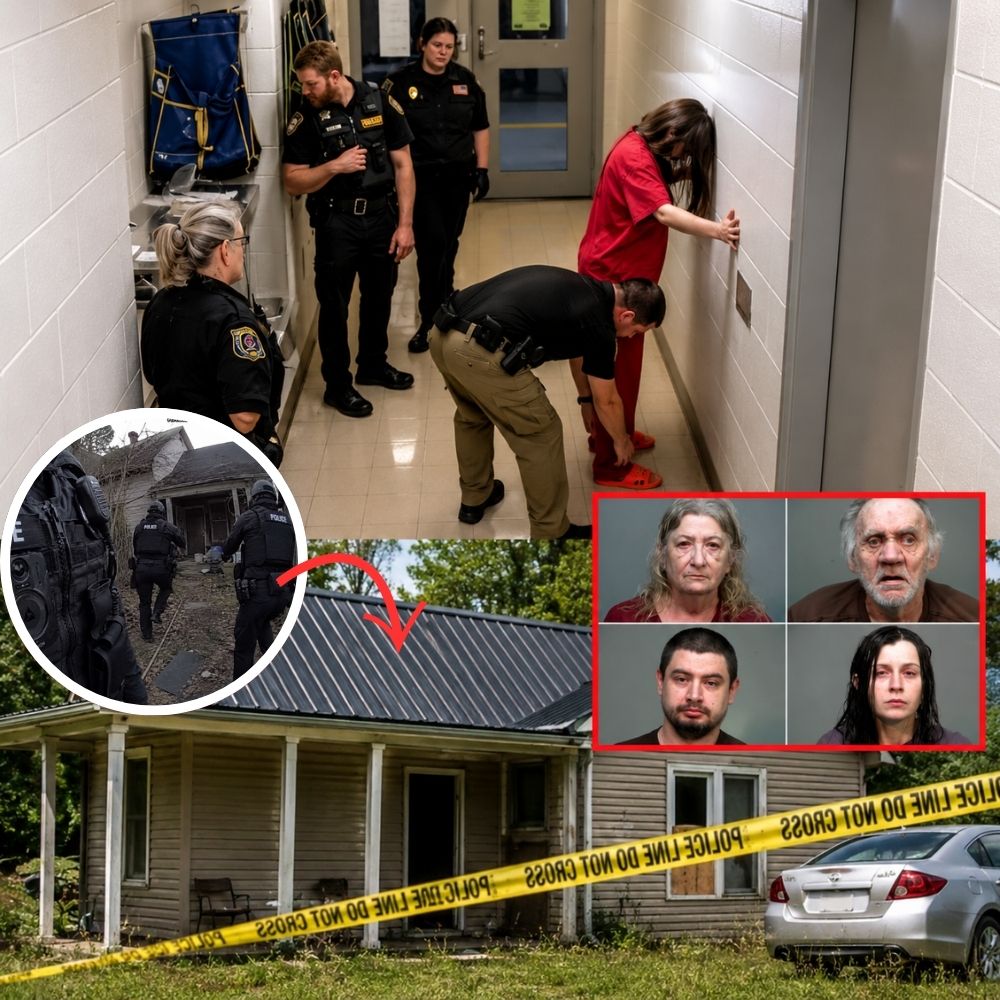
Another significant development concerned the mental competency of defendants.
Competency evaluations have become part of the proceedings surrounding members of the family.
Elizabeth’s lawyer also sought an evaluation concerning her ability to participate meaningfully in her defence.
Competency is frequently misunderstood.
A finding that a defendant is not competent to stand trial does not mean that person has been acquitted.
It does not determine guilt.
And it is not identical to an insanity defence.
The question is whether the defendant currently understands the proceedings and can assist counsel.
If competency is disputed, criminal proceedings can slow dramatically while evaluations and potential treatment occur.
That is another reason claims that the entire case has already reached a neat conclusion with “fitting sentences” require careful verification.
WHAT AUTHENTIC FOOTAGE COULD — AND COULD NOT — PROVE
Suppose genuine body-camera footage is eventually released.
It could become powerful evidence of what officers observed.
But it would not answer every question.
Video cannot automatically establish how long a condition existed.
It cannot determine which adult was responsible for a particular decision months earlier.
It cannot diagnose a child.
It cannot replace medical records.
And it cannot determine criminal guilt.
Those issues belong to investigators, experts, lawyers, judges and potentially jurors.
The public often experiences criminal cases in reverse.
A shocking video appears.
People decide immediately what happened.
The legal system must proceed differently.
It must establish each element of each charge against each defendant.
THE CHILDREN ARE NOT EVIDENCE FOR PUBLIC ENTERTAINMENT
There is another consideration if footage from inside the property becomes public.
Sixteen children are at the centre of this case.
Their privacy matters.
Images showing their faces, medical conditions, sleeping areas or humiliating circumstances could follow them online for years.
Public interest does not automatically require publishing every available image.
News organisations routinely blur minors’ faces or omit identifying details precisely for that reason.
The most sensational frame is not necessarily the most responsible one to publish.
HAMDEN WAS LEFT SEARCHING FOR ANSWERS
For residents, the case transformed how they viewed an otherwise ordinary property.
Neighbours asked how much they should have noticed.
Could someone have heard something?
Should the number of children have been obvious?
Was the family deliberately avoiding attention?
These questions often emerge after alleged neglect is discovered.
They are also painful.
Hindsight makes warning signs appear clearer than they may have been at the time.
A quiet house does not automatically indicate abuse.
Children being homeschooled does not automatically indicate neglect.
A family keeping to itself is not evidence of a crime.
The challenge for investigators is identifying the point at which privacy became dangerous isolation.
THE SYSTEM ITSELF MAY FACE QUESTIONS
If authorities ultimately establish that children were kept away from education or adequate medical care for extended periods, agencies may face scrutiny over missed opportunities.
The earlier truancy cases are particularly significant.
Someone noticed the absences.
Complaints were filed.
But authorities reportedly could not locate the parents.
What happened next?
Were addresses checked?
Were other agencies notified?
Did the family move?
Was there a mechanism for escalating the concern?
Those questions are not accusations against individual workers.
They are questions about systems.
Child-protection failures often occur not because nobody possesses information, but because different institutions possess different fragments.
One school knows about absences.
A hospital knows about a previous visit.
Another county has an old address.
A court has a dismissed truancy case.
Nobody sees the entire picture.
WHY THE INTERNET WANTS THE ‘FIRST REAL IMAGES’
The obsession with body-camera footage reflects something broader about modern true-crime culture.
Readers increasingly want to see the moment themselves.
They do not want only an officer’s description of a room.
They want the video.
They want the reaction.
They want the raw audio.
They want the door opening.
That material can provide legitimate public accountability.
Body cameras exist partly to document law-enforcement interactions.
But the desire for transparency can quickly become voyeurism when vulnerable children are involved.
The question should not simply be, “Can this footage be published?”
It should also be, “What does publishing it accomplish?”
THE CASE IS BIGGER THAN ONE SHOCKING VIDEO
Even the most dramatic footage could capture only minutes of a story that may have developed over years.
The important evidence is likely scattered across thousands of pages.
School attendance records.
Medical histories.
Property records.
Electronic communications.
Witness interviews.
Financial information.
Photographs.
Expert evaluations.
Court filings.
Statements from the defendants.
The conditions inside the house on one particular day are obviously important.
But prosecutors would need to establish much more to prove the allegations against individual adults.
WHAT HAPPENS TO THE CHILDREN AFTER A RESCUE?
Public attention frequently fades after children are removed from a dangerous environment.
For the children themselves, that is when another difficult journey begins.
They may enter foster placements.
Siblings can face separation depending on available accommodation.
Education assessments may be required.
Medical treatment can continue.
Therapy may be offered.
Children who spent significant periods isolated from ordinary social environments can require substantial support.
Their progress will appropriately remain largely private.
That means the public may never know the most important ending to the story: what happens to them years later.
FOUR DEFENDANTS, FOUR SEPARATE LEGAL QUESTIONS
Another danger of describing the “Siders family” as a single defendant is that criminal responsibility is individual.
Prosecutors must establish what each adult allegedly did or failed to do.
One defendant’s knowledge does not automatically prove another’s.
One person’s statement may not apply equally to everyone.
Mental competency could differ between defendants.
Defence strategies could diverge.
Family members could eventually provide evidence relevant to one another.
That complexity rarely fits comfortably into viral headlines.
But it matters enormously in court.
THE TRUTH ABOUT THE SUPPOSED ‘LEAK’
At present, any newly circulated video should be traced back to its original source before being described as official body-camera footage.
Was it released by a law-enforcement agency?
Obtained through a public-records request?
Filed as a court exhibit?
Published by a reputable news organisation that authenticated it?
Or simply uploaded to social media?
The same questions apply to documents.
A screenshot labelled “CONFIDENTIAL” is not automatically genuine.
A redacted page is not necessarily classified.
And an anonymous account promising “the file police didn’t want you to see” is not a substitute for provenance.
THE FACTS ARE ALREADY DISTURBING ENOUGH
The Hamden case does not require exaggeration.
Authorities reported finding 16 children at a property that raised severe welfare concerns.
Multiple children required medical assessment and treatment.
Four adults were charged.
Earlier school records raised troubling questions about prolonged absences.
Investigators began reconstructing how such a large family could apparently remain so isolated.
And legal proceedings subsequently encountered questions involving defendants’ mental competency.
Every one of those elements deserves scrutiny.
None requires invented classified files.
THE MOST IMPORTANT QUESTION REMAINS UNANSWERED
The public naturally wants to know what officers saw when they first entered the property.
If authenticated body-camera footage is lawfully released, it may provide part of that answer.
But the larger question is far more important.
How could so many children allegedly reach such circumstances before intervention occurred?
That answer will not be found in a single dramatic video.
It lies in the years before the door opened.
In missed school days.
In addresses.
In medical records.
In family relationships.
In agency decisions.
In conversations neighbours may now remember differently.
And ultimately, in evidence tested through the courts.
Until then, dramatic claims that secret files have been leaked or that every defendant has already received a final sentence should be treated with caution unless supported by current official records.
The first images from inside a notorious house may command enormous attention.
But the real story is not the moment authorities entered.
It is what allegedly happened before they arrived — and whether anyone could have reached those 16 children sooner.