EXCLUSIVE: The Chilling Truth Behind Thanchanok Donhomla’s Suitcase – The Mysterious White Powder That Has Investigators Reeling in the Brutal Murder of Thai Teen
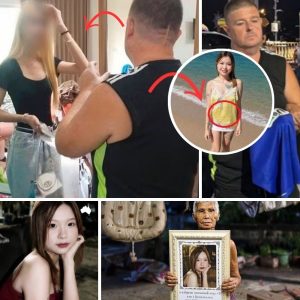
In the seedy underbelly of Pattaya’s neon-lit streets, where tourists chase fleeting pleasures and shadows hide dark secrets, a horrifying crime has unfolded that has shocked Thailand and Australia alike. The body of 17-year-old Thanchanok Donhomla – a bright-eyed teenager known affectionately as “Cake” to her family and friends – was discovered stuffed inside a suitcase near railway tracks, her life brutally cut short in what police allege was a merciless killing by 45-year-old Australian national Simon Peter Carman.
But forget the sanitized headlines from mainstream outlets. This is the real story – the one pieced together from exclusive access to the investigation, raids on the killer’s residence, and the terrifying discovery that could rewrite everything we thought we knew about this cold-blooded murder.
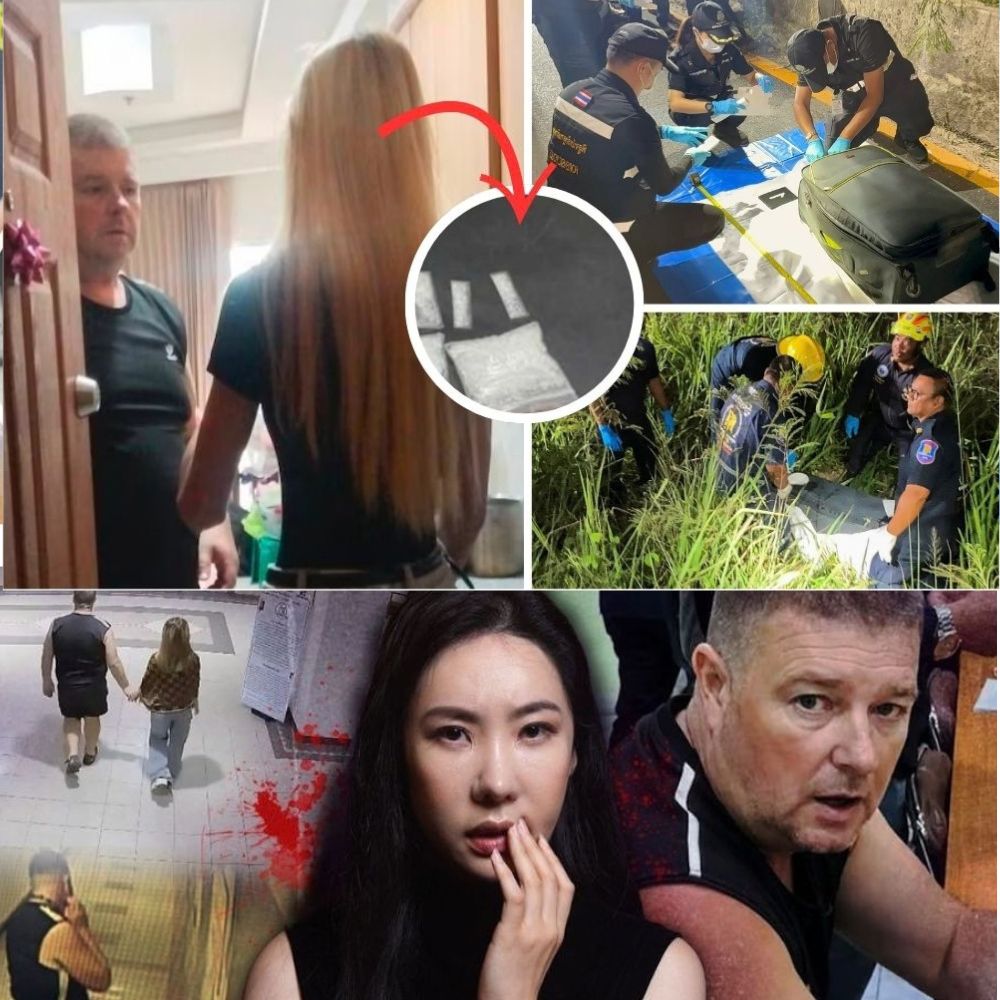
Detectives didn’t just find a body. They uncovered a mysterious white powdery substance hidden with sinister cunning in Carman’s rented room – an object now under intense forensic scrutiny, raising nightmarish questions about whether illegal drugs or poisons were used to subdue, incapacitate, or even slowly kill the vulnerable young victim before the final act of savagery.
The Nightmare Unfolds in Paradise
Pattaya, the notorious beach resort town south of Bangkok, has long been a magnet for Western men seeking escapism. For Thanchanok Donhomla, a 17-year-old from the rural province of Kalasin in northeastern Thailand, it became the scene of unimaginable horror. An only child, described by loved ones as kind-hearted and full of dreams for a better future, she was reportedly working in the area’s vibrant but dangerous nightlife scene when her path crossed with Carman.
CCTV footage, which has become central to the prosecution’s case, captures the pair entering Carman’s rented accommodation together in the early hours. Hours later, the same cameras show Carman struggling with a heavy suitcase, wheeling it out alone. He returns empty-handed after a short trip – the same suitcase allegedly dumped near the railway tracks, containing the teenager’s naked body, curled up amidst her clothes, phone, and personal belongings. Bruising on her face and signs of severe assault told a story of unimaginable violence.
Police moved swiftly. Carman was arrested at Bangkok’s Suvarnabhumi Airport as he allegedly attempted to flee the country. Charged with murder, concealing a corpse, and other serious offenses involving a minor, he has denied the allegations in some reports, claiming at one point an altercation involving a knife and an “unintentional” dєatᩚh. But investigators aren’t buying the narrative so easily – especially after what they found during a thorough raid on his residence.
The Raid That Changed Everything: A White Powder Bombshell
According to sources close to the investigation who spoke exclusively on condition of anonymity, the raid on Carman’s property was no routine sweep. Detectives, armed with warrants and forensic expertise, tore through the premises looking for any clue that could explain the brutality. What they discovered hidden in a cleverly concealed spot – described as “very cleverly” stashed away – was a mysterious white powdery object that immediately set alarm bells ringing.
Sealed off instantly and transported under heavy security for analysis, this substance has become the focal point of horrifying new lines of inquiry. Was it a date-rαp̰̃є drug like Rohypnol or GHB, ground into powder form to make it easier to administer? Could it be a toxic poison used to weaken the victim over time, making her easier to overpower? Or perhaps methamphetamine or another illegal stimulant that fueled a drug-fueled rage leading to the fatal encounter?
Forensic teams are working around the clock. Preliminary tests, our sources reveal, are being conducted in specialized labs in Bangkok, with results expected to shed light on whether Thanchanok was drugged before the alleged strangulation. The presence of such a substance could elevate the charges dramatically, pointing to premeditation or a pattern of predatory behavior involving chemical subjugation.
One senior investigator, speaking off the record, said: “This white powder isn’t just evidence – it’s potentially the key to understanding how a 17-year-old girl ended up dead in a suitcase. We have to consider every possibility, including poisoning as part of the method to subdue her.”
The discovery has sent shockwaves through the Thai police force and the victim’s devastated family. Thanchanok’s relatives, who have publicly demanded the dєatᩚh penalty for Carman, described their daughter as innocent and trusting. “She was just a child,” her mother reportedly sobbed in interviews. The family reclaimed her body after autopsy confirmed strangulation as the cause of dєatᩚh, and they are preparing for a funeral that no parent should ever have to face.
Who Is Simon Peter Carman? The Man Behind the Monster Allegations
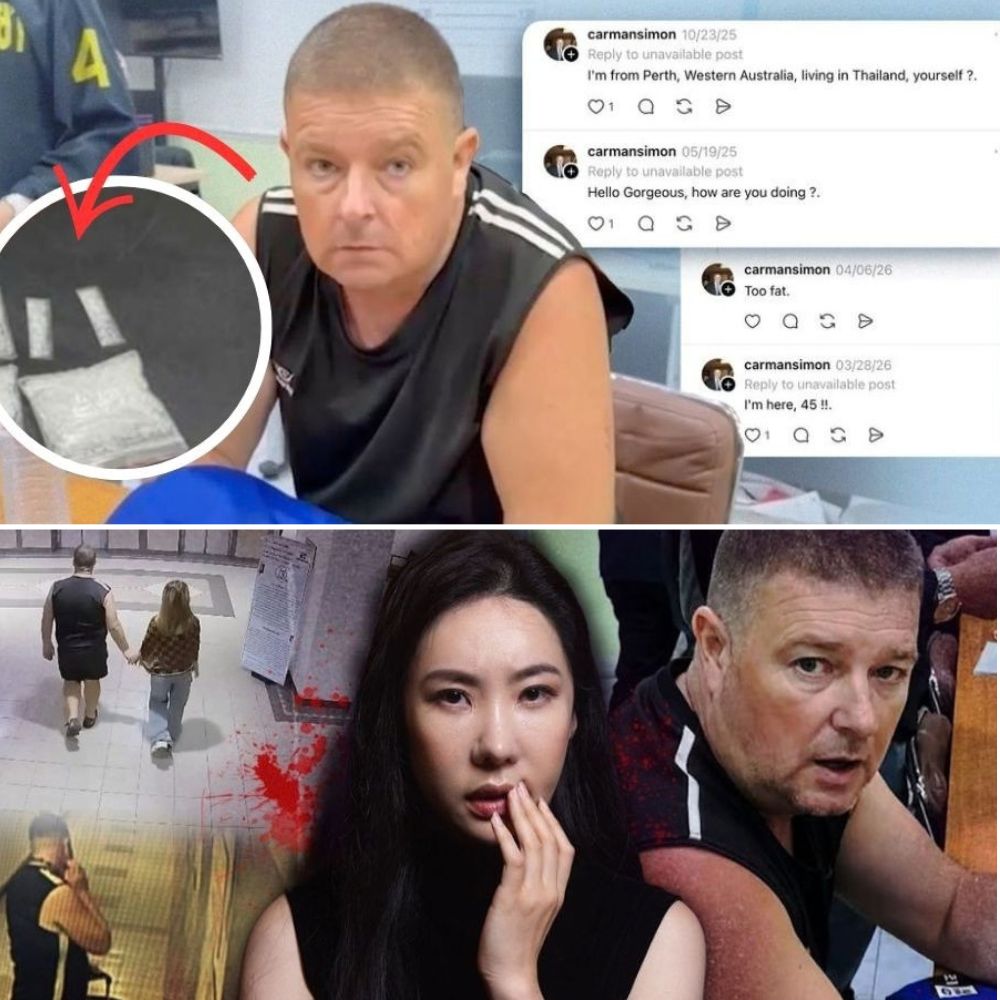
Simon Peter Carman, a 45- or 46-year-old Australian, arrived in Thailand as a tourist but quickly integrated into the expat scene. Reports from Australia paint a picture of a man who had distanced himself from family and friends back home over the past decade. Some acquaintances described him as reclusive, while others noted his presence in Pattaya’s nightlife districts.
Prior to the alleged murder, Carman was reportedly living a relatively normal life in his rented room – cooking meals, interacting with neighbors, and blending in. But behind closed doors, police allege a darker reality. The room where the crime allegedly occurred has been photographed and examined in detail, revealing a space that now stands as a grim testament to the events of that fateful night.
Photos obtained by investigators show an ordinary-looking condo unit, complete with kitchenette and living area – the kind of place where tourists come and go without raising suspicion. Yet inside, forensic evidence including the suitcase residue, signs of a struggle, and now this enigmatic white powder tell a different story.
Carman’s background is under intense scrutiny. Australian authorities have been liaising with Thai counterparts, and questions are being asked about his travel history, financial records, and any previous interactions with law enforcement. Was this an isolated incident born of a drunken argument, or part of something more sinister?
The Human Cost: A Family Shattered and a Community in Mourning
For Thanchanok’s family in Kalasin, the pain is immeasurable. An only child, she was their world. Friends recall a girl who loved taking selfies, enjoyed time with peers, and dreamed of escaping the hardships of rural life. Her nickname “Cake” reflected her sweet nature. Now, her bedroom sits empty, and most possessions were cremated with her body in accordance with Thai Buddhist traditions.
The wider Pattaya community, already grappling with its reputation for vice and exploitation, has been rocked. Safety fears for young women working in the entertainment industry have surged. Activists are calling for stricter regulations on foreign visitors and better protections for minors. “This case exposes the dark side of tourism,” one local advocate told us. “Girls like Thanchanok are seen as disposable by some predators.”
Thai police have not ruled out links to other unsolved cases, expanding their investigation to see if Carman or similar individuals were involved in previous incidents.
Forensic Deep Dive: What the White Powder Could Reveal
The white powder discovery is particularly damning. In many high-profile murder cases involving drugs, such substances have proven pivotal. If analysis confirms it as a controlled substance capable of sedation or poisoning, it could support theories of premeditation. Experts we consulted (on background) explained that powders are easy to mix into drinks, mask in food, or even apply topically in extreme cases.
Laboratories are testing for purity, composition, and any traces linking it directly to Thanchanok – perhaps residue on her belongings or in her system from toxicology reports. The “clever hiding” suggests intent to conceal, adding to the web of suspicion around Carman.
This isn’t speculation; it’s the cold, hard reality of a murder investigation that has international ramifications. Australian consular officials are monitoring the case closely, as Carman faces potential extradition issues or trial in Thailand, where penalties for murder can be severe, including the dєatᩚh penalty – something the victim’s family has explicitly demanded.
Legal Battles and Lingering Questions
Carman remains in custody. His defense will likely argue self-defense or accident, but the evidence – CCTV, the suitcase, the body disposal, and now the powder – paints a damning picture. Thai courts move deliberately, but public pressure is mounting for swift justice.
Broader questions remain: How many other vulnerable young people have fallen prey in similar circumstances? What role does the easy availability of drugs in tourist hotspots play? And will this case finally prompt reforms?
As the investigation deepens, the mysterious white powder stands as a silent witness – a powdery enigma that could unlock the full horror of what happened in that murder room.
Thanchanok Donhomla’s story is a tᩚraɢedy that transcends borders. A young life stolen, a family destroyed, and a killer allegedly caught red-handed with damning secrets. The suitcase was just the beginning. The powder may be the end of any doubt.
This case serves as a stark reminder: In places where paradise meets peril, vigilance is everything. For Thanchanok, it’s too late. For others, her dєatᩚh must not be in vain.
💔 STELLA PARTON BREAKS HER SILENCE — What She Said About Dolly’s Health Has Fans Looking Back
Dolly Parton’s Sister Breaks Silence What Really Happened - GMT - G1
Stella Parton was born May 4, 1949, the sixth of twelve children raised by Robert Lee and Avie Lee Parton in Sevierville, Tennessee — a household defined by noise, limited money, and almost no privacy, the kind of environment that produced strong, determined personalities.
Stella was one of them.
By seven, she was appearing alongside her older sister Dolly on a Knoxville television program; by her teens, she was writing her own songs, though marriage and motherhood pulled music to the margins of her life for a stretch.
The dream never fully disappeared.

In 1967, she recorded a gospel album with her mother and sisters, and later worked clubs in Washington, D.C., before founding her own record label in 1975 and releasing “I Want to Hold You in My Dreams Tonight,” which climbed to number nine on the country charts.
Long before any of that commercial success, Stella had already shown a willingness to take positions others avoided.
At 26, amid backlash against Australian singer Olivia Newton-John for winning recognition in country music, Stella recorded “Ode to Olivia” in her defense — a stand that offered her no career benefit and real risk of criticism, but one she took anyway simply because she believed staying silent was the wrong choice.
That instinct defined the rest of her career: hits like “The Danger of a Stranger” and “Steady as the Rain” (written by Dolly) built a genuine, independent following, including in the U.K., while Stella also worked in New York theater and spoke openly, often controversially, about poverty, domestic violence, and the treatment of women in the music industry.
She was named the Christian Country Music Association’s Female Vocalist of the Year in 2004.
Through all of it, she remained defined publicly, more often than not, as simply “Dolly’s little sister” — a label she spent five decades quietly proving didn’t tell the full story.
That same directness is why her comments in the fall of 2025 carried real weight.
Stella had never positioned herself as the family’s image manager or spokesperson; she was, by reputation, someone who believed difficult truths shouldn’t stay hidden indefinitely.
What she described wasn’t dramatic or accusatory — it was a portrait of a woman who had spent years prioritizing everyone else’s needs over her own.
The context mattered.
Carl Dean, Dolly’s husband of nearly sixty years, died in March 2025 at 82, after a long illness during which Dolly had devoted herself almost entirely to his care.
She later acknowledged that in the process, she’d neglected her own health significantly.
The loss reverberated through the whole extended family — the Partons had lost three brothers in the years surrounding this period, compounding grief that, for a family that had once crowded twelve children into a single small home, meant losing pieces of a shared childhood one after another.
Stella herself went seven years without releasing new music during this stretch, later describing the period simply as one shaped by sorrow, while still speaking about the importance of finding moments of laughter within it.
Looking back, one moment reads very differently in hindsight than it did at the time: in late September 2025, Dolly postponed her planned Las Vegas residency, citing health challenges — a rare cancellation for a performer whose six-decade career had included very few of them.
At the time, most fans treated it as a minor, temporary setback.
Stella’s later reflections suggested the signs had actually been building for some time, visible to family in ways the public smile made easy to miss.
That concern crystallized publicly not long after, when Dolly’s younger sister Frieda posted a simple request on Facebook asking fans to pray for Dolly.
What looked at first like an ordinary, well-meaning gesture spread rapidly, sparking widespread speculation about how serious Dolly’s condition actually was.
Dolly herself responded directly within days, appearing in a video from a Grand Ole Opry commercial shoot, insisting with her familiar humor that she wasn’t finished yet — the now widely remembered “I ain’t dead yet” moment that briefly quieted public concern.
In the months that followed, the pattern repeated: reassuring updates about kidney stones, dehydration, and treatment, paired with continued work on new projects, right up until Dolly Parton’s death on August 25, 2026, at 80.
Looking back across that full timeline — the postponed residency, the family’s public worry, Stella’s own account of a sister who consistently deprioritized her own wellbeing — it becomes easier to see what the people closest to Dolly understood well before the rest of the world did: that the warmth and resilience the public saw every time she appeared on camera came at a real, largely invisible cost.