The Carney Doctrine: Canada’s Bold Departure from the Old Guard
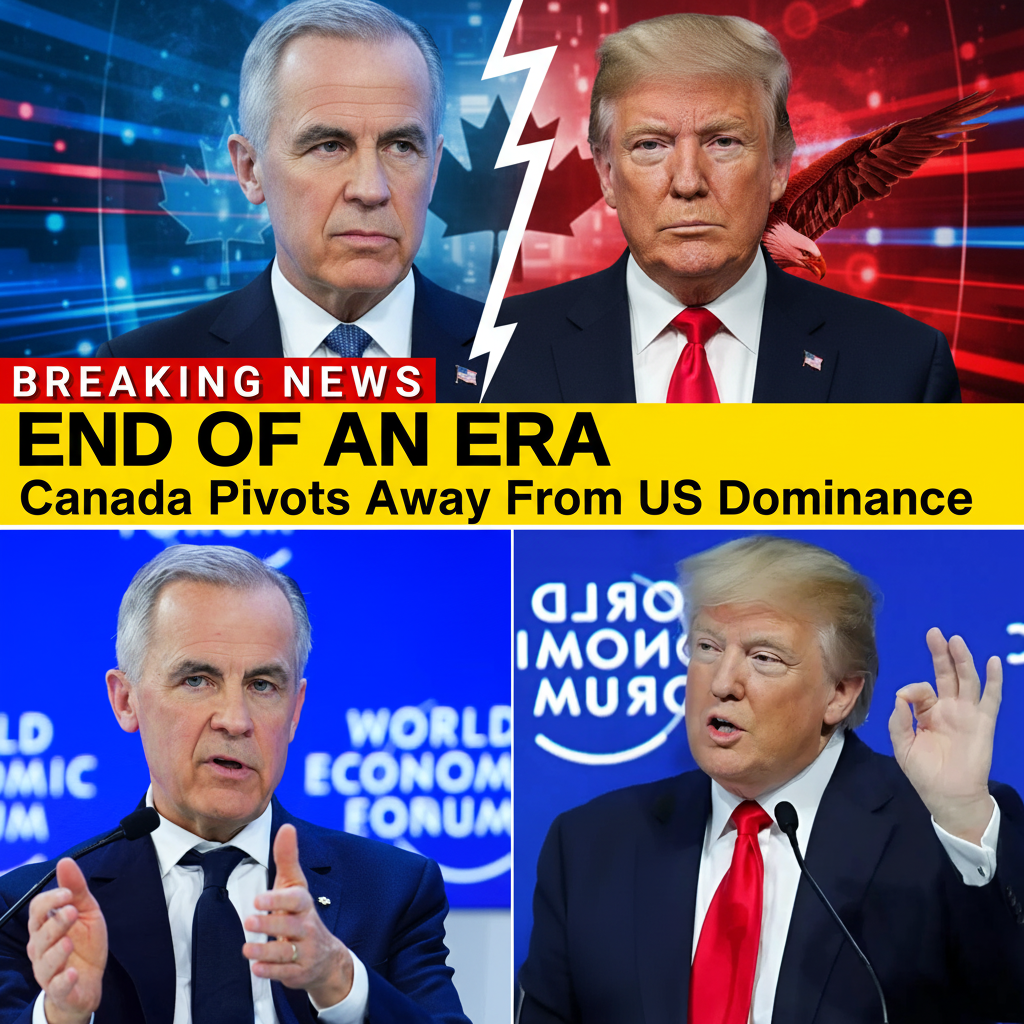
In a landmark address at the World Economic Forum in Davos, Switzerland, Canadian Prime Minister Mark Carney has signaled a fundamental shift in global geopolitics. Declaring the era of a single superpower ‘decisively finished,’ Carney introduced what is being called the Carney Doctrine, a strategic manifesto that moves Canada away from its traditional reliance on the United States toward a more autonomous and multipolar future.
A New Architecture for Global Trade
Carney’s speech highlighted the weaponization of the old economic order, where tariffs and financial systems are increasingly used as tools of conflict. To counter this volatility, Canada has initiated a series of high-level diplomatic and economic moves:
- The Atlantic Bridge: Finalizing advanced trade and security pacts with the European Union focused on green technology and digital governance.
- The Asia Pivot: Securing strategic mineral partnerships with China while simultaneously expanding trade negotiations with India and ASEAN nations.
- Energy Diversification: Establishing long-term LNG investment agreements with Qatar and formalizing talks with the South American trading bloc, Mercosur.
Strategic Autonomy and National Survival
The Prime Minister emphasized that reliability in global partnerships can no longer be assumed. With the political landscape in Washington becoming increasingly unpredictable, Canada is taking proactive steps to protect its national infrastructure and supply chains. This shift is not merely philosophical but a matter of ‘fiduciary duty’ to ensure Canadian stability in a fractured world.
Implications for the Multipolar World
The impact of Canada’s decision is expected to resonate far beyond its borders. As a key G7 and NATO member, Canada’s pivot grants a form of ‘geopolitical permission’ for other middle powers to seek their own strategic autonomy. The blueprint for this new era is already being built, signaling that the world is no longer waiting for a single leader to define the terms of engagement.