Jason Roberts had spent weeks trying not to dream about his son.
Sleep had become dangerous after Will died.
During the day, reality was painful but predictable. Jason knew which rooms would hurt to enter. He knew which photographs to avoid and which songs might force him to pull the car over because he could no longer see through his tears.
Night was different.
In dreams, Will was sometimes healthy again. He walked through the house, called from another room, or appeared beside the kitchen counter as though nothing had happened.
For a few seconds after waking, Jason believed his son was still alive.
Then memory returned.
Will was gone.
The loss happened again every morning.
That was why Jason began resisting sleep. He stayed awake long after the rest of the house became quiet, sitting alone with the television muted and the lights turned low.
But on one cold, silent night, exhaustion finally overcame him.
What happened next did not feel like an ordinary dream.
Jason would later describe it as the closest he had come to holding his son again.
The Void No Father Could Prepare For
Jason had always believed a father’s purpose was to protect his children.
He checked doors before bed.
He fixed broken things.
He drove through storms to pick Will up when plans changed.
When illness entered their family, Jason brought that same instinct into the hospital.
He asked questions.
He researched treatments.
He remembered medication schedules and wrote down the names of specialists.
He inspected every option as though the correct answer might be hidden somewhere others had overlooked.
But there are battles a parent cannot solve through effort.
That truth tormented him.
Jason could repair a damaged engine, replace a leaking pipe, and build almost anything with his hands.
He could not remove the disease from his son’s body.
After Will died at fifteen, Jason’s identity as a father felt broken.
The instinct to protect remained.
The child he wanted to protect was no longer physically there.
Grief Without Instructions
People came to the family with condolences and advice.
They told Jason to take care of Brittney.
They told him to stay strong for the family.
They said time would soften the pain.
Jason listened politely.
Inside, he felt angry.
Time had not saved Will.
Why should he trust it now?
He did not know what “strong” meant after losing a child.
Was strength returning phone calls?
Was it hiding tears?
Was it walking into Will’s bedroom without collapsing?
Some mornings, Jason stood in the hallway and stared at the closed door.
He wanted to enter.
He also feared that touching Will’s belongings would make the dєatᩚh more permanent.
His son’s shoes remained beside the wall.
A jacket hung from the back of a chair.
A half-finished notebook sat on the desk.
Everything appeared to be waiting.
The Questions Jason Could Not Stop Asking
Grief rarely arrived alone.
It brought guilt.
Jason replayed Will’s final months, searching for decisions he might have changed.
Should he have asked for another medical opinion sooner?
Should he have pushed harder when treatment stopped working?
Had he shown enough hope?
Had he hidden too much fear?
He remembered moments when he left the hospital room because he could not bear to let Will see him cry.
At the time, Jason believed he was protecting his son.
After the funeral, he wondered whether Will had mistaken that distance for emotional absence.
The questions followed him into every quiet moment.
They had no answers.
Still, Jason asked them repeatedly because guilt offered the illusion that the tᩚraɢedy might have been controllable.
If he could identify a mistake, perhaps the world would make sense again.
The Last Conversation He Remembered Clearly
During one of Will’s final nights, Jason had sat beside the bed while Brittney rested nearby.
Will’s voice had become weak.
The medications made it difficult for him to remain awake for long.
Jason held his hand and talked about ordinary things.
A neighbor’s dog.
A television show they had once watched together.
A project in the garage they never finished.
Will listened with his eyes partly closed.
Then he asked:
“Dad, are you scared?”
Jason wanted to lie.
He wanted to say fathers were never afraid.
Instead, he answered:
“Yes.”
Will squeezed his fingers faintly.
“Me too.”
Jason leaned closer.
“I wish I could take it from you.”
Will opened his eyes.
“I know.”
Those two words became one of Jason’s most painful memories.
Will had understood that his father wanted to save him.
He had also understood that Jason could not.
The Night the Dream Came
The dream happened several weeks after the funeral.
That day had been especially difficult.
Jason had entered Will’s room for the first time alone.
He sat on the edge of the bed and found an old photograph inside a drawer.
It showed Will much younger, sitting on Jason’s shoulders during a family trip.
Will’s hands covered his father’s eyes.
Both of them were laughing.
Jason held the photograph until darkness filled the room.
Later, he went downstairs and sat in silence.
Brittney encouraged him to rest, but he said he was not tired.
Sometime after midnight, he fell asleep in the chair.
The dream began without warning.
A Place Jason Did Not Recognize
Jason found himself standing in an open field.
The sky was bright, but there was no visible sun.
Tall grass moved gently around him, though he felt no wind.
The place looked unfamiliar and strangely peaceful.
There were no hospital walls.
No alarms.
No machines.
Jason looked down and noticed that he was holding Will’s old baseball cap.
The cap had been missing for years.
He turned it slowly in his hands.
Then he heard footsteps behind him.
Jason froze.
He knew the rhythm before he turned around.
A father remembers the sound of his child approaching.
Will stood several feet away.
He was not wearing a hospital gown.
He looked healthy.
His face carried none of the exhaustion that illness had placed there.
His hair had grown back.
His shoulders were relaxed.
Most striking of all, he was smiling without effort.
“You Look Different”
Jason could not move.
Every part of him wanted to run forward, but fear held him in place.
He worried that one sudden movement might end the dream.
Will tilted his head.
“You look different, Dad.”
Jason tried to speak, but his throat tightened.
“So do you.”
“Better?”
Jason nodded.
“Much better.”
Will looked down at himself as though checking.
“It doesn’t hurt here.”
Those words struck Jason with such force that he nearly fell.
Throughout Will’s illness, pain had shaped every decision.
When to move him.
When to medicate him.
When to stop a conversation because he needed rest.
Now his son stood freely in front of him.
No pain.
No weakness.
No need to be brave.
The Reunion Jason Had Begged For
Jason finally moved toward him.
He expected Will to disappear.
Instead, his son stepped forward.
They embraced.
Jason later said he felt the exact pressure of Will’s arms around his back.
He could smell the familiar soap Will used at home.
He could feel the warmth of his head against his shoulder.
It was not the distant, blurred sensation of most dreams.
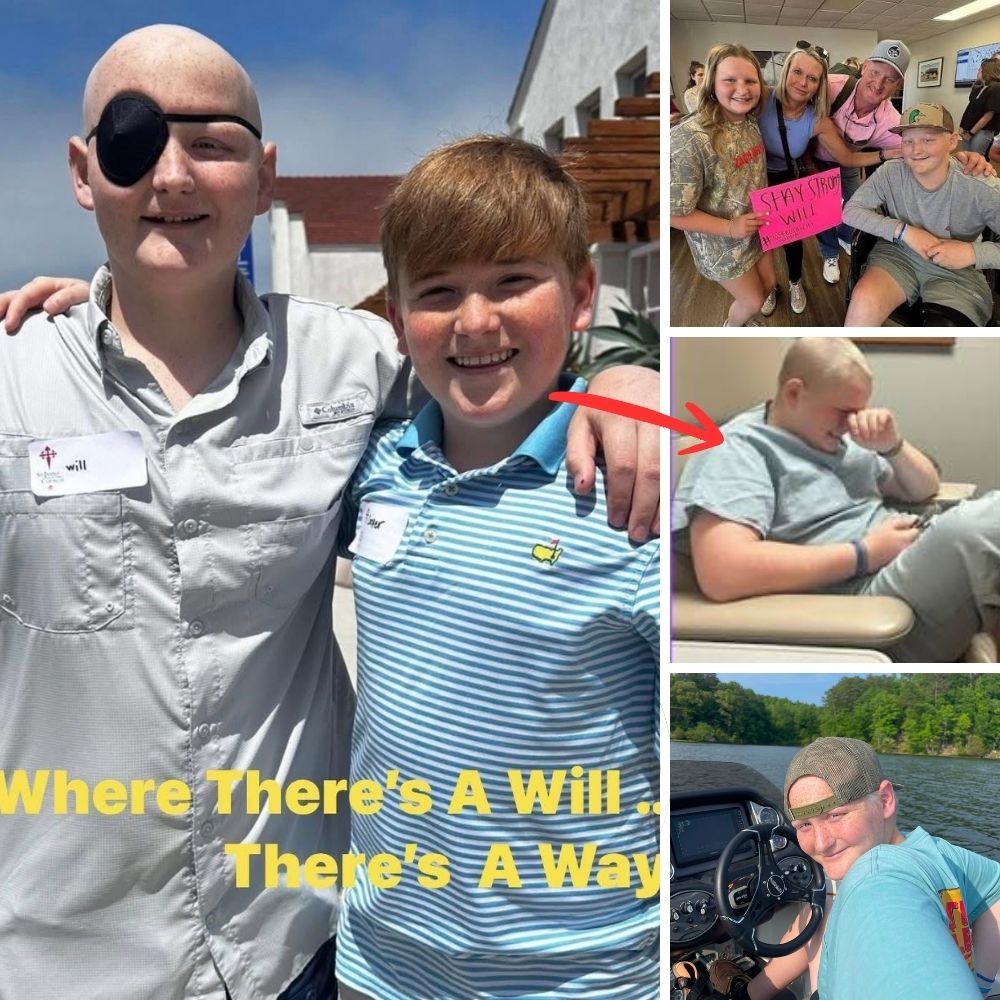
It felt physical.
Breathless.
Real.
Jason held him tightly.
“I’m sorry,” he said.
Will pulled back slightly.
“For what?”
“For not saving you.”
Will’s expression changed.
Not with anger.
With sadness.
“You were there.”
“It wasn’t enough.”
“It was to me.”
The Message Jason Needed to Hear
Jason looked at his son, searching for any sign that the dream was ending.
“I should have done more.”
Will shook his head.
“You did what dads do.”
“I couldn’t protect you.”
“You stayed when you couldn’t fix it.”
Jason began crying.
In waking life, he had spent weeks believing his helplessness made him a failure.
In the dream, Will offered another definition of fatherhood.
Protection was not always prevention.
Sometimes it was presence.
Jason had remained through the treatments, difficult conversations, and final hours.
He could not change the ending.
He had made sure Will never faced it alone.
The Sentence That Shook His World
The light around them appeared to grow brighter.
Jason sensed that their time was ending.
He reached for Will’s hands.
“Please don’t go yet.”
Will looked down, then back at his father.
“I didn’t come to make you hold on.”
“Then why did you come?”
“To tell you I’m still yours.”
Jason cried harder.
Will stepped closer and said the words that would remain with him long after waking:
“If there’s a next life, I’ll still be your son.”
Jason stared at him.
Will continued:
“I’d choose you again. Even knowing it would be short, I’d still choose our house, our family, and every day we had.”
The Meaning Behind the Words
Jason wanted to ask hundreds of questions.
Where are you?
Can you see us?
Were you afraid at the end?
Did you hear everything we said?
But the questions disappeared beneath the weight of Will’s message.
Jason had viewed his son’s short life primarily through tᩚraɢedy.
Fifteen years felt cruelly incomplete.
There should have been graduations, birthdays, arguments, reconciliations, and decades of ordinary family life.
Will’s words did not deny what had been lost.
They offered another perspective.
Their time together had been brief.
It had still been worth choosing.
To Jason, this was the most powerful part of the dream.
Will did not promise that loss had been part of a perfect plan.
He simply said that love had made the life meaningful despite its length.
The Final Warning
Will looked toward the distant horizon.
Jason felt panic return.
“Are you leaving?”
“I have to.”
“How do I find you again?”
“You don’t have to search everywhere.”
“Then where are you?”
Will touched Jason’s chest.
“Here, when you love Mom. Here, when you say my name. Here, when you help someone because you know what hurting feels like.”
Jason covered his son’s hand with his own.
Will smiled.
“But don’t turn every happy day into something you feel guilty about.”
Jason lowered his eyes.
Will knew.
Even inside the dream, his son seemed aware that Jason had begun treating moments of relief as betrayal.
“You’re allowed to live, Dad.”
“I don’t know how.”
“You didn’t know how to be my dad at first either.”
Jason laughed through his tears.
Will smiled wider.
“You learned.”
The Last Embrace
Jason pulled Will close again.
He tried to memorize everything.
The sound of his breathing.
The shape of his shoulders.
The way his hair felt beneath Jason’s hand.
“I love you,” Jason whispered.
“I know.”
“Tell me again.”
“I love you too.”
Jason felt the embrace loosen.
The field began fading.
He tried to hold tighter, but his hands passed through empty light.
Will stood farther away now.
He lifted one hand.
Then he repeated:
“I’d still be your son.”
Jason woke with tears covering his face.
The Room After Waking
For several seconds, Jason remained completely still.
The television screen was dark.
The house was silent.
His arms were positioned as though he were still holding someone.
Then he understood that he was awake.
The grief returned immediately.
But it felt different.
Usually, dreams about Will left Jason devastated because waking took his son away again.
This dream left something behind.
Jason could still feel the emotional weight of the embrace.
The words remained clear.
Not fragmented.
Not fading like most dreams.
He stood and went upstairs.
Brittney was awake when he entered the bedroom.
She saw his face and sat up quickly.
“What happened?”
“I saw him.”
Telling Brittney
Jason sat beside her and described the dream from beginning to end.
He told her about the field.
The missing cap.
Will’s healthy appearance.
The embrace.
When he repeated the sentence about another life, Brittney covered her mouth and began crying.
Jason worried the story would hurt her.
Instead, she reached for his hand.
“Did he seem peaceful?”
“Yes.”
“Was he in pain?”
“No.”
They sat quietly.
Neither claimed to know exactly what the dream meant.
It could have been grief creating the conversation Jason desperately needed.
It could have been memory reorganizing itself during sleep.
Or it could have been something neither of them could explain.
Brittney did not need certainty.
She needed the image of Will standing without pain.
Was It More Than a Dream?
When Jason eventually shared part of the experience with close family members, reactions varied.
Some believed the dream was a spiritual visitation.
Others thought it was the mind’s attempt to process unbearable grief.
Jason did not argue with either interpretation.
He understood that no one could prove what happened.
But proof was not the most important part.
The dream produced a real change in him.
Before that night, Jason’s grief was dominated by failure.
Afterward, he began remembering his role differently.
He had not failed to be Will’s father.
He had completed every day of fatherhood that life allowed him.
The relationship had not been invalidated because it ended too soon.
The First Change
The following morning, Jason opened Will’s bedroom door.
He entered without turning away.
The pain remained sharp, but he no longer felt that the room accused him.
He sat at the desk and placed the old photograph from the previous day in a frame.
Then he found a notebook.
On the first page, he wrote:
If there is another life, I will still be your son.
Beneath it, he added:
And in this life, I will always be your father.
The notebook became a place for memories.
Not only the final months.
Jason wrote about Will’s childhood jokes, mistakes, questions, and ordinary moments.
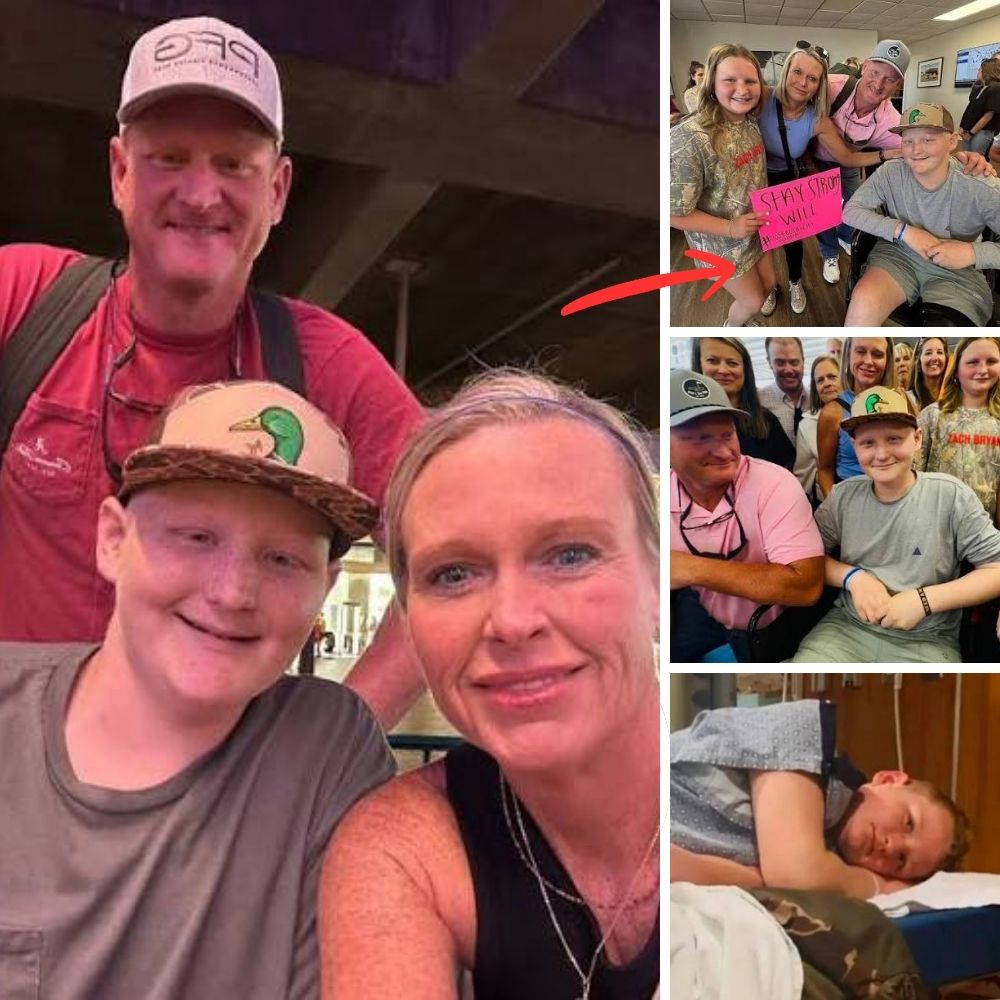
He wanted to preserve the person beyond the illness.
Learning to Say His Name
After Will died, people often became uncomfortable around the family.
Some avoided saying his name because they feared reminding Jason and Brittney of the loss.
The silence hurt more.
Jason wanted to hear about Will.
He wanted friends to tell stories he had forgotten.
He wanted teachers, nurses, and relatives to describe the boy they knew.
The dream gave Jason the courage to say this openly.
“You are not reminding me that he died,” he told one friend. “I already know. You are reminding me that he lived.”
The sentence changed how people approached the family.
Stories began arriving.
A teacher remembered Will quietly helping another student.
A nurse recalled him apologizing after becoming frustrated during a painful procedure.
A friend shared a voice message Jason had never heard.
Each memory created new pain and new warmth.
A Father’s Guilt Begins to Loosen
Jason’s guilt did not disappear after one dream.
Grief rarely changes that neatly.
He still replayed medical decisions.
He still wondered whether another treatment might have created more time.
But when those thoughts became overwhelming, he returned to Will’s words:
You were there.
It was enough to me.
Jason began distinguishing between responsibility and control.
He had been responsible for loving, protecting, and advocating for his son.
He had never possessed complete control over the illness.
Accepting that limitation was difficult.
It was also necessary.
Without it, Jason would spend the rest of his life punishing himself for being human.
The Message Shared Publicly
Months later, Jason allowed a short version of the dream to be shared publicly.
He did not reveal every detail.
Some moments belonged only to the family.
He wrote:
“Last night, I dreamed of my son. He was healthy, smiling, and free from pain. Before he left, he told me, ‘If there’s a next life, I’ll still be your son.’ I cannot explain the dream. I only know that, for the first time since losing him, I woke up feeling that our fifteen years together were not erased by the way they ended.”
The message reached millions.
Parents who had lost children responded with their own dreams.
Some had experienced vivid reunions.
Others had never dreamed of their loved ones and worried that the absence meant something.
Jason gently clarified that dreams were not measurements of love.
He did not believe his experience made his bond stronger than anyone else’s.
It was simply the form comfort took for him.
Why the Story Resonated
The dream touched people because it addressed a fear shared by many grieving parents.
Does the relationship end when the child diᩚєs?
Biologically, the physical connection is broken.
Emotionally, parenthood continues.
Jason still thought like Will’s father.
He still noticed things Will would have enjoyed.
He still imagined what advice he would give.
He still wanted to protect his memory.
A parent does not resign from love after a funeral.
The role changes.
The conversation becomes one-sided.
The responsibility becomes remembrance.
But the bond remains part of the person who survives.
The Difference Between Holding On and Carrying Forward
Before the dream, Jason believed honoring Will meant remaining as close as possible to grief.
He avoided laughter.
He resisted future plans.
He felt guilty whenever an hour passed without thinking about the loss.
Will’s message challenged that instinct.
Holding on meant refusing to accept change.
Carrying forward meant allowing love to influence the life that remained.
Jason began helping other fathers whose children were seriously ill.
He did not offer easy reassurance.
He listened.
He admitted that fear could not always be solved.
He told them that presence mattered even when solutions disappeared.
The work did not replace Will.
Nothing could.
It gave Jason’s continuing fatherhood somewhere to go.
The Dream’s Most Important Line
Many people focused on the promise about another life.
Jason treasured those words.
But over time, another part became equally important.
“I’d choose you again.”
Grief had convinced Jason that Will’s life had been defined by suffering.
The dream reminded him that it also contained family dinners, laughter, vacations, arguments, birthdays, school mornings, and quiet evenings at home.
The illness had been terrible.
It had not possessed every moment.
Will’s story was not only about dying young.
It was about being loved completely while he was here.
Faith Without Certainty
Jason never claimed the dream proved the existence of an afterlife.
He hoped there was more beyond dєatᩚh.
He hoped Will was somewhere beyond pain.
But he understood the difference between hope and evidence.
His faith became less about having perfect answers and more about remaining open to mystery.
Perhaps the dream came entirely from Jason’s mind.
If so, his mind had used Will’s voice to express a truth Jason could not accept from anyone else.
Perhaps it came from somewhere beyond him.
If so, Will had crossed a boundary only long enough to remind his father that love was not limited by physical absence.
Either interpretation carried meaning.
The Anniversary
On the first major anniversary after Will’s dєatᩚh, Jason returned to the field from the dream.
Not the actual location—he did not know whether such a place existed—but a quiet meadow outside town that resembled it.
He carried Will’s old baseball cap.
Brittney walked beside him.
They sat together as the sun lowered.
Jason placed the cap between them.
He did not ask for another dream.
He had learned not to turn the experience into a demand.
Instead, he spoke aloud.
“I’m still your dad.”
Brittney took his hand.
The wind moved gently through the grass.
For one moment, the scene resembled the place where Jason had last seen his son standing healthy and smiling.
A Son’s Love Beyond Absence
Will did not need to physically return for his love to continue shaping the family.
It lived in Jason’s greater patience.
In Brittney’s compassion for other grieving mothers.
In the stories friends continued to share.
In the courage to speak Will’s name without reducing him to illness.
The dream did not prove that love could literally pierce the afterlife.
It demonstrated something equally powerful.
dєatᩚh could end physical contact.
It could not undo the years that had already formed a father and son.
Jason would always be someone changed by raising Will.
That identity could not be buried.
The Promise Between Two Lives
The sentence from the dream became a private family promise.
“If there’s a next life, I’ll still be your son.”
Jason sometimes answered it aloud:
“And I’ll still choose to be your father.”
The words did not mean they rejected the present life.
They meant the relationship had been so meaningful that even knowing the pain of the ending, they would choose the love again.
This is one of grief’s most difficult truths.
To avoid the pain entirely, Jason would have needed to avoid knowing Will.
He would never choose that.
Fifteen years were not enough.
They were still infinitely more precious than no years at all.
The Father Who Woke Changed
Jason did not wake healed.
He continued grieving.
He still experienced days when the absence became physically overwhelming.
He still looked toward the doorway after hearing a familiar sound.
He still cried over the future Will never received.
But he was no longer convinced that his fatherhood had ended in failure.
The dream returned a piece of his identity.
He had been there.
He had loved.
He had stayed.
And according to the voice that sounded exactly like his son, that had mattered.
If There Is Another Life
No one can know with certainty what waits beyond dєatᩚh.
No one can prove whether a vivid dream is a spiritual reunion or the grieving mind’s attempt to survive.
Jason stopped needing to decide.
The experience had already done what it needed to do.
It allowed him to hold Will once more.
It gave his son a voice strong enough to interrupt guilt.
It transformed fifteen years from a story of time stolen into a relationship worth choosing again.
Most of all, it reminded Jason that the bond between father and son was not defined only by proximity.
Will was absent from the chair at the table.
He was absent from the bedroom and the family car.
But he remained inside the values, memories, and love that shaped everyone he left behind.
The dream ended.
The message did not.
“If there’s a next life, I’ll still be your son.”
For Jason Roberts, those words were not simply a promise about another world.
They were a reminder about this one.
He had been Will’s father.
He remained Will’s father.
And even after the final goodbye, that love still had a life of its own.
💔 STELLA PARTON BREAKS HER SILENCE — What She Said About Dolly’s Health Has Fans Looking Back
Dolly Parton’s Sister Breaks Silence What Really Happened - GMT - G1
Stella Parton was born May 4, 1949, the sixth of twelve children raised by Robert Lee and Avie Lee Parton in Sevierville, Tennessee — a household defined by noise, limited money, and almost no privacy, the kind of environment that produced strong, determined personalities.
Stella was one of them.
By seven, she was appearing alongside her older sister Dolly on a Knoxville television program; by her teens, she was writing her own songs, though marriage and motherhood pulled music to the margins of her life for a stretch.
The dream never fully disappeared.

In 1967, she recorded a gospel album with her mother and sisters, and later worked clubs in Washington, D.C., before founding her own record label in 1975 and releasing “I Want to Hold You in My Dreams Tonight,” which climbed to number nine on the country charts.
Long before any of that commercial success, Stella had already shown a willingness to take positions others avoided.
At 26, amid backlash against Australian singer Olivia Newton-John for winning recognition in country music, Stella recorded “Ode to Olivia” in her defense — a stand that offered her no career benefit and real risk of criticism, but one she took anyway simply because she believed staying silent was the wrong choice.
That instinct defined the rest of her career: hits like “The Danger of a Stranger” and “Steady as the Rain” (written by Dolly) built a genuine, independent following, including in the U.K., while Stella also worked in New York theater and spoke openly, often controversially, about poverty, domestic violence, and the treatment of women in the music industry.
She was named the Christian Country Music Association’s Female Vocalist of the Year in 2004.
Through all of it, she remained defined publicly, more often than not, as simply “Dolly’s little sister” — a label she spent five decades quietly proving didn’t tell the full story.
That same directness is why her comments in the fall of 2025 carried real weight.
Stella had never positioned herself as the family’s image manager or spokesperson; she was, by reputation, someone who believed difficult truths shouldn’t stay hidden indefinitely.
What she described wasn’t dramatic or accusatory — it was a portrait of a woman who had spent years prioritizing everyone else’s needs over her own.
The context mattered.
Carl Dean, Dolly’s husband of nearly sixty years, died in March 2025 at 82, after a long illness during which Dolly had devoted herself almost entirely to his care.
She later acknowledged that in the process, she’d neglected her own health significantly.
The loss reverberated through the whole extended family — the Partons had lost three brothers in the years surrounding this period, compounding grief that, for a family that had once crowded twelve children into a single small home, meant losing pieces of a shared childhood one after another.
Stella herself went seven years without releasing new music during this stretch, later describing the period simply as one shaped by sorrow, while still speaking about the importance of finding moments of laughter within it.
Looking back, one moment reads very differently in hindsight than it did at the time: in late September 2025, Dolly postponed her planned Las Vegas residency, citing health challenges — a rare cancellation for a performer whose six-decade career had included very few of them.
At the time, most fans treated it as a minor, temporary setback.
Stella’s later reflections suggested the signs had actually been building for some time, visible to family in ways the public smile made easy to miss.
That concern crystallized publicly not long after, when Dolly’s younger sister Frieda posted a simple request on Facebook asking fans to pray for Dolly.
What looked at first like an ordinary, well-meaning gesture spread rapidly, sparking widespread speculation about how serious Dolly’s condition actually was.
Dolly herself responded directly within days, appearing in a video from a Grand Ole Opry commercial shoot, insisting with her familiar humor that she wasn’t finished yet — the now widely remembered “I ain’t dead yet” moment that briefly quieted public concern.
In the months that followed, the pattern repeated: reassuring updates about kidney stones, dehydration, and treatment, paired with continued work on new projects, right up until Dolly Parton’s death on August 25, 2026, at 80.
Looking back across that full timeline — the postponed residency, the family’s public worry, Stella’s own account of a sister who consistently deprioritized her own wellbeing — it becomes easier to see what the people closest to Dolly understood well before the rest of the world did: that the warmth and resilience the public saw every time she appeared on camera came at a real, largely invisible cost.