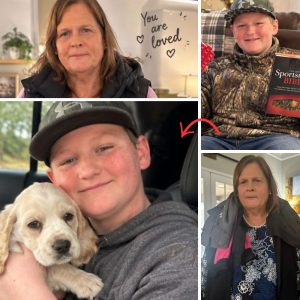
For three months, the bedroom door remained closed.
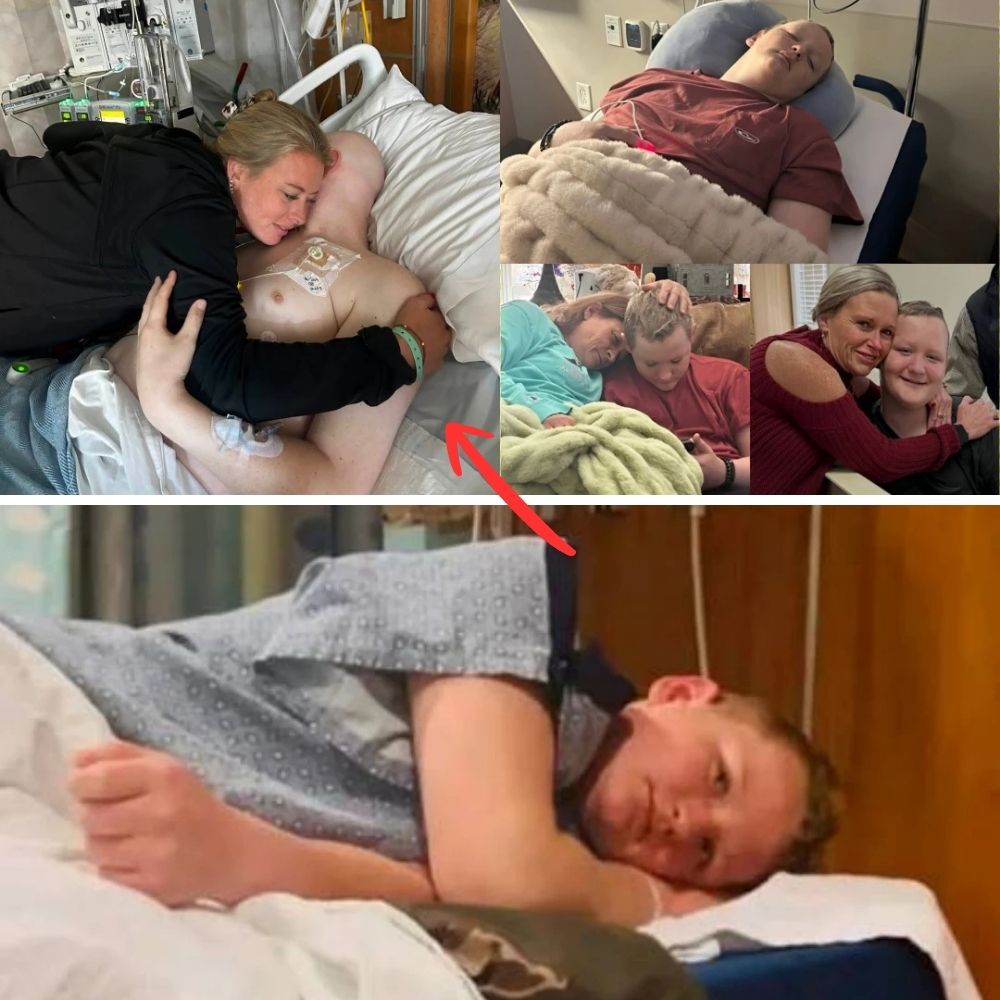
Behind it was a world that still belonged to 15-year-old Will Roberts—a place filled with the ordinary possessions of a teenager whose life had been interrupted by bone cancer. His muddy boots were where he had left them. A football waited untouched. A fishing hook rested among the small objects he had collected, while medicine bottles stood as quiet reminders of the illness he had fought with extraordinary courage.
Everything inside seemed to be waiting for Will to return.
But he would never walk through that door again.
One day before her son’s funeral, Brittney Roberts finally found the strength to enter his room for the first time since their final journey to California. For months, she had protected the room from change, almost as if keeping the door closed could preserve the last chapter of her son’s life.
Opening it meant facing what she had desperately tried to postpone: the unbearable reality that Will was gone.
The Door That No One Was Ready to Open
Grief does not follow a schedule. It does not arrive in a single moment, nor does it disappear after a funeral. It can live inside familiar sounds, empty chairs, unfinished conversations, and doors that remain closed because what waits behind them feels too painful to confront.
For Brittney, her son’s bedroom became such a place.
The family’s trip to California had carried enormous emotional weight. It represented hope, fear, determination, and the possibility that another treatment or medical intervention might give Will more time. Like many families facing childhood cancer, the Robertses had learned to live between appointments and test results, measuring life in hospital visits while trying to preserve moments of normality.
When they left Alabama, Will’s belongings stayed behind exactly as he had arranged them. There was no reason to organize the room. No one expected that its unfinished state would become permanent.
After the family returned without him, Brittney could not bring herself to go inside.
The closed door became a boundary between memory and reality. On one side was the family’s present—filled with mourning, funeral preparations, phone calls, visitors, and the exhausting responsibilities that accompany a devastating loss. On the other side was Will’s private world, apparently untouched by time.
For three months, that world remained sealed.
Then, with the funeral only one day away, Brittney placed her hand on the door and opened it.
A Room Frozen in Time
The first sight was painfully familiar.
Will’s boots were still marked with dried mud, evidence of a day outdoors and a life that had once been active and adventurous. To anyone else, they might have looked like boots that needed cleaning. To his mother, every stain told a story.
Nearby was his football, a reminder of open fields, competition, laughter, and the physical freedom that cancer had gradually taken from him. It represented the teenager Will had been before hospitals and medicine became part of his daily routine.
The fishing hook carried memories of quieter moments. Fishing requires patience—the ability to sit beside the water and believe something will eventually happen. For a family enduring cancer treatment, that kind of patience takes on another meaning. Hope becomes something held carefully, even when there is no guarantee of what will come.
Then there were the medicine bottles.
They were perhaps the most difficult objects to see. They reflected the reality of Will’s illness: the pain, the treatment schedules, the side effects, and the discipline required to continue fighting on the hardest days. Those bottles had once represented help and possibility. Now, they stood unused.
Brittney reportedly moved through the room slowly, afraid that touching anything might disturb the last physical arrangement her son had made. The smallest objects suddenly felt precious. Nothing was merely clutter anymore. Each possession had become evidence that Will had been there.
His room was not a museum, yet grief had transformed it into sacred ground.
The One Thing That Had Vanished
At first glance, almost everything was still present. The boots, football, fishing gear, clothing, and medicine remained where Will had left them.
Yet the most familiar part of the room was missing.
Will himself.
His voice no longer answered from behind the door. His laughter did not fill the space. There was no movement, no music, no conversation, and no teenager asking for privacy or promising to clean up later.
What had vanished was not a single possession. It was the life that had once connected every object in the room.
Without Will, the football was no longer something waiting for the next game. The boots were no longer preparing for another walk through the Alabama mud. The fishing hook would not be tied to a line by the same hands. The medicine bottles would never again be opened in hope of easing his pain.
The silence was what broke his mother’s heart.
A child’s bedroom usually changes constantly. Clothes move from chairs to floors. Sports equipment disappears and returns. Drawers open, doors close, and familiar arguments unfold over unfinished chores. But Will’s room had stopped changing.
It had become a photograph that could be entered.
For Brittney, that realization carried the full force of her loss. She was surrounded by everything that looked like her son’s life, while being confronted by the absence of the person who had made that life meaningful.
A Community Refuses to Let the Family Stand Alone
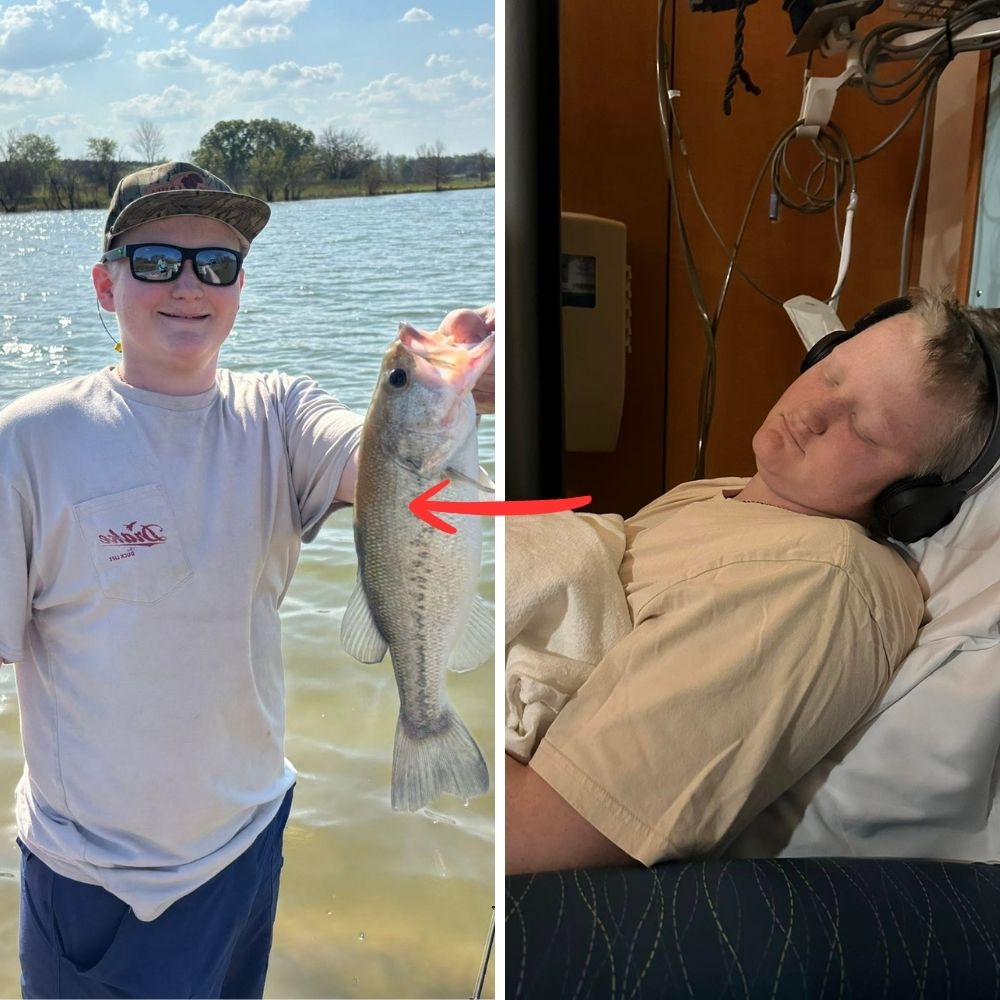
Outside the Roberts home, grief was spreading through the wider Sipsey Valley community. Will’s fight had affected far more than his immediate family. Friends, classmates, neighbors, teachers, coaches, church members, and people who had followed his illness were mourning alongside them.
As news of the family’s loss traveled through the area, thousands responded—not only with condolences, but also with prayer.
A community prayer gathering brought people together during one of the darkest hours the Roberts family had faced. Some attendees knew Will personally. Others knew him through stories of his courage. Still others came because they understood that no parent should have to bury a child without feeling the support of an entire community.
The gathering was marked by quiet embraces, bowed heads, tearful conversations, and long periods of reflection. Candles illuminated faces carrying the same mixture of sorrow and determination.
People did not come because they believed they could erase the family’s pain. They came because presence matters.
When grief becomes too heavy for one family to hold, a community can help carry it.
The Lesson Will Left Behind
During his battle with bone cancer, Will’s strength was not defined simply by how long he endured treatment. Courage was found in the way he continued to connect with others, face difficult days, and hold onto faith when the future was uncertain.
Those who gathered in Sipsey Valley were practicing something they believed Will had taught them: the power of prayer.
For them, prayer was more than a request for a miracle. It was a way of remaining close when medicine could do no more. It was a language for emotions that ordinary words could not contain. It allowed a grieving community to say, together, that Will’s life mattered and that his family would not be abandoned after his dєatᩚh.
The prayers offered that night were not limited by geography. Messages of support reportedly came from people far beyond Alabama—individuals who had never met Will but had been touched by his story.
Distance did not prevent them from participating. From homes, churches, hospital rooms, and quiet places around the country, people paused to remember a teenager and the family preparing to say goodbye to him.
More Than a Story About Cancer
It would be easy to describe Will only as a cancer patient. But illness was only one part of his life.
The belongings in his bedroom revealed a fuller picture. He was a teenager who wore muddy boots. He enjoyed football and fishing. He had interests, habits, unfinished plans, and people who loved him. Cancer shaped the final period of his life, but it did not define everything he was.
That distinction matters, especially when remembering children and teenagers lost to serious illness. Their stories should not be reduced to hospital beds, diagnoses, and final days. They were sons and daughters, classmates and friends. They made people laugh. They became impatient. They dreamed of places they wanted to visit and things they hoped to do.
Will was loved not because he fought cancer, but because he was Will.
His courage during treatment became part of his legacy. Yet the deeper legacy can be found in the relationships he formed and in the compassion now visible throughout his community.
The Difficult Days Ahead
The funeral would provide a formal opportunity to honor Will, but it could not bring the family’s mourning to an end.
After the service, there would still be an empty seat at the table. There would be holidays, birthdays, and familiar places that suddenly felt different. Brittney would continue walking past the bedroom door, sometimes entering and sometimes deciding that she could not.
There is no correct timetable for changing a lost child’s room. Some parents preserve everything for years. Others gradually distribute clothing and possessions to relatives or charitable organizations. Many keep a few meaningful items while allowing the space to evolve.
Whatever Brittney ultimately chooses, it will be a deeply personal decision. The room may remain unchanged for some time. That does not mean the family is refusing to move forward. It means love has left physical traces, and deciding what to do with those traces requires patience.
The community’s role will also continue after the funeral. Support is often strongest immediately following a tᩚraɢedy, but grieving families may need it even more when public attention fades. Meals, visits, messages, remembered anniversaries, and simple companionship can become lasting expressions of care.
A Light That the Closed Door Could Not Contain
For three months, Will’s room was locked away from the world. When the door finally opened, it revealed the painful stillness left behind by a life that ended far too soon.
But it also revealed something else.
The boots, football, fishing hook, and medicine bottles were not merely symbols of loss. They were fragments of a real childhood—a life filled with movement, interests, struggle, faith, and love. They reminded everyone that Will had existed beyond the story of his illness.
His physical presence was gone from the room, but his influence had not vanished.
It could be seen in the people gathering across Sipsey Valley. It could be heard in prayers spoken by strangers. It could be felt in the determination to support a mother facing the most painful goodbye of her life.
The room may have fallen silent, but the courage associated with Will’s name continues to speak.
And as the Roberts family prepares to lay their son to rest, they do so surrounded by a community offering the one promise grief needs most: you will not have to walk through this darkness alone.
💔 STELLA PARTON BREAKS HER SILENCE — What She Said About Dolly’s Health Has Fans Looking Back
Dolly Parton’s Sister Breaks Silence What Really Happened - GMT - G1
Stella Parton was born May 4, 1949, the sixth of twelve children raised by Robert Lee and Avie Lee Parton in Sevierville, Tennessee — a household defined by noise, limited money, and almost no privacy, the kind of environment that produced strong, determined personalities.
Stella was one of them.
By seven, she was appearing alongside her older sister Dolly on a Knoxville television program; by her teens, she was writing her own songs, though marriage and motherhood pulled music to the margins of her life for a stretch.
The dream never fully disappeared.

In 1967, she recorded a gospel album with her mother and sisters, and later worked clubs in Washington, D.C., before founding her own record label in 1975 and releasing “I Want to Hold You in My Dreams Tonight,” which climbed to number nine on the country charts.
Long before any of that commercial success, Stella had already shown a willingness to take positions others avoided.
At 26, amid backlash against Australian singer Olivia Newton-John for winning recognition in country music, Stella recorded “Ode to Olivia” in her defense — a stand that offered her no career benefit and real risk of criticism, but one she took anyway simply because she believed staying silent was the wrong choice.
That instinct defined the rest of her career: hits like “The Danger of a Stranger” and “Steady as the Rain” (written by Dolly) built a genuine, independent following, including in the U.K., while Stella also worked in New York theater and spoke openly, often controversially, about poverty, domestic violence, and the treatment of women in the music industry.
She was named the Christian Country Music Association’s Female Vocalist of the Year in 2004.
Through all of it, she remained defined publicly, more often than not, as simply “Dolly’s little sister” — a label she spent five decades quietly proving didn’t tell the full story.
That same directness is why her comments in the fall of 2025 carried real weight.
Stella had never positioned herself as the family’s image manager or spokesperson; she was, by reputation, someone who believed difficult truths shouldn’t stay hidden indefinitely.
What she described wasn’t dramatic or accusatory — it was a portrait of a woman who had spent years prioritizing everyone else’s needs over her own.
The context mattered.
Carl Dean, Dolly’s husband of nearly sixty years, died in March 2025 at 82, after a long illness during which Dolly had devoted herself almost entirely to his care.
She later acknowledged that in the process, she’d neglected her own health significantly.
The loss reverberated through the whole extended family — the Partons had lost three brothers in the years surrounding this period, compounding grief that, for a family that had once crowded twelve children into a single small home, meant losing pieces of a shared childhood one after another.
Stella herself went seven years without releasing new music during this stretch, later describing the period simply as one shaped by sorrow, while still speaking about the importance of finding moments of laughter within it.
Looking back, one moment reads very differently in hindsight than it did at the time: in late September 2025, Dolly postponed her planned Las Vegas residency, citing health challenges — a rare cancellation for a performer whose six-decade career had included very few of them.
At the time, most fans treated it as a minor, temporary setback.
Stella’s later reflections suggested the signs had actually been building for some time, visible to family in ways the public smile made easy to miss.
That concern crystallized publicly not long after, when Dolly’s younger sister Frieda posted a simple request on Facebook asking fans to pray for Dolly.
What looked at first like an ordinary, well-meaning gesture spread rapidly, sparking widespread speculation about how serious Dolly’s condition actually was.
Dolly herself responded directly within days, appearing in a video from a Grand Ole Opry commercial shoot, insisting with her familiar humor that she wasn’t finished yet — the now widely remembered “I ain’t dead yet” moment that briefly quieted public concern.
In the months that followed, the pattern repeated: reassuring updates about kidney stones, dehydration, and treatment, paired with continued work on new projects, right up until Dolly Parton’s death on August 25, 2026, at 80.
Looking back across that full timeline — the postponed residency, the family’s public worry, Stella’s own account of a sister who consistently deprioritized her own wellbeing — it becomes easier to see what the people closest to Dolly understood well before the rest of the world did: that the warmth and resilience the public saw every time she appeared on camera came at a real, largely invisible cost.