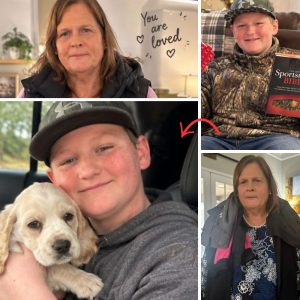
For eighteen months, the Harris family measured time differently than everyone else.
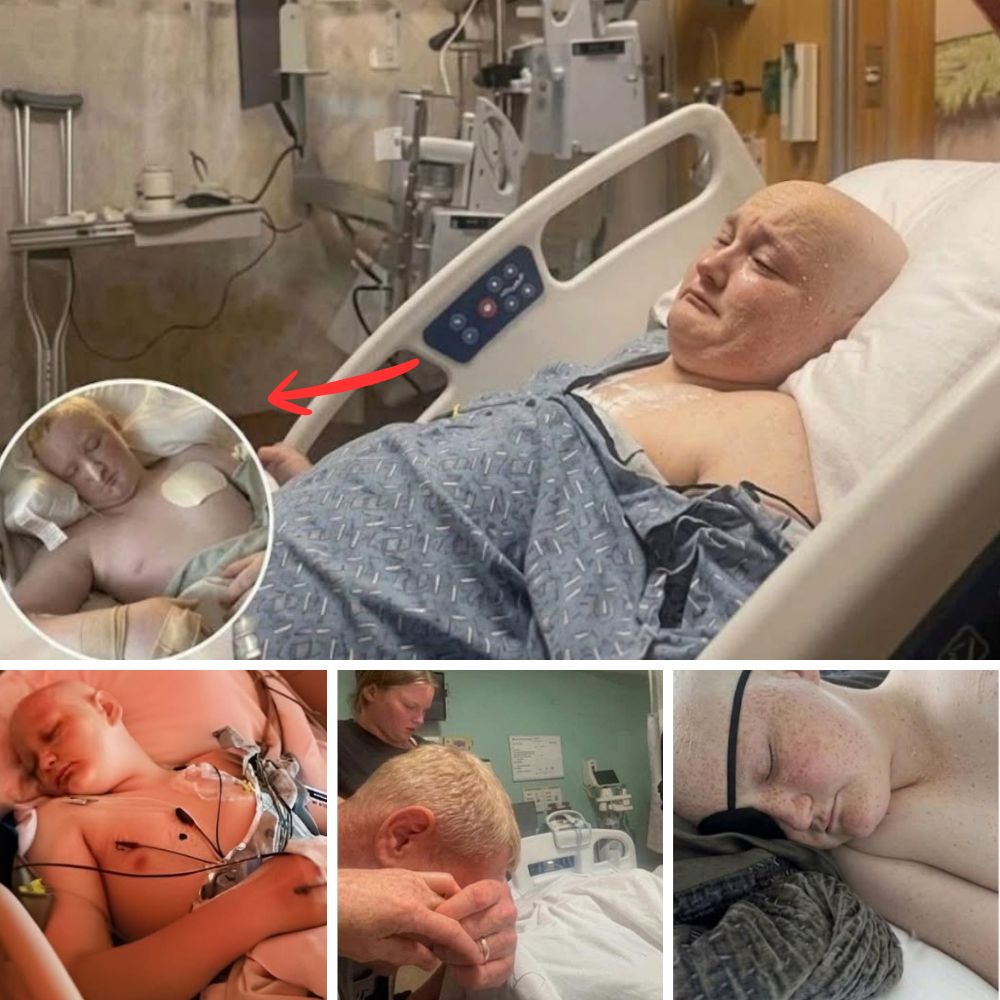
They no longer counted birthdays by candles or seasons by holidays.
Instead, they counted life through hospital admissions, treatment cycles, scan appointments, and long nights spent beside a hospital bed.
Every sunrise meant another opportunity to keep fighting.
Every sunset meant they had survived one more day together.
When their sixteen-year-old son, Mason, was diagnosed with an aggressive bone cancer, the future they had carefully imagined seemed to disappear overnight. Dreams of high school football games, college visits, and family vacations were suddenly replaced by infusion pumps, imaging studies, rehabilitation exercises, and difficult conversations with specialists.
No parent imagines life unfolding this way.
Yet the Harris family refused to let fear become the final chapter of their story.
Learning to Live Between Hope and Uncertainty
People often believe that families facing serious illness spend every moment either hopeful or hopeless.
The truth is much more complicated.
Hope and fear frequently exist side by side.
One hour brings encouraging news.
The next brings another difficult challenge.
Some mornings begin with optimism only to end in disappointment.
Other days unfold in exactly the opposite direction.
Mason’s parents eventually stopped expecting certainty.
Instead, they focused on remaining present.
They learned to celebrate small victories without assuming the journey was over.
Eighteen Months That Changed Everything
The months were filled with procedures, physical therapy, consultations, and countless moments of waiting.
Waiting became its own emotional burden.
Waiting for laboratory reports.
Waiting for imaging results.
Waiting for physicians to review new information.
Waiting for phone calls that could arrive at any moment.
Friends often asked how they endured so much uncertainty.
Mason’s father always answered the same way.
“We never looked eighteen months ahead.”
“We just tried to make today count.”
A Team Refusing to Give Up
Behind every hospital room is a much larger team than most people ever see.
Oncologists reviewed every development.
Radiologists carefully compared imaging.
Nurses noticed tiny changes that sometimes made enormous differences.
Pharmacists reviewed medication plans.
Physical therapists encouraged progress one step at a time.
Nutrition specialists adjusted meals as Mason’s needs changed.
No single person carried the family through those months.
An entire community did.
The Phone Call That Changed the Day
One quiet afternoon, Mason’s parents were asked to meet with members of his medical team.
They had attended many meetings before.
Some brought encouraging updates.
Others brought difficult realities.
Walking toward the consultation room never became easier.
This meeting felt different from the beginning.
The lead physician greeted them with a reassuring smile.
“We have reviewed every available option,” she said.
“And today we have encouraging news.”
No one interrupted.
No one rushed her.
Hope had taught them patience.
A New Opportunity
The physician explained that Mason now qualified for an additional treatment approach that the team believed was appropriate to pursue.
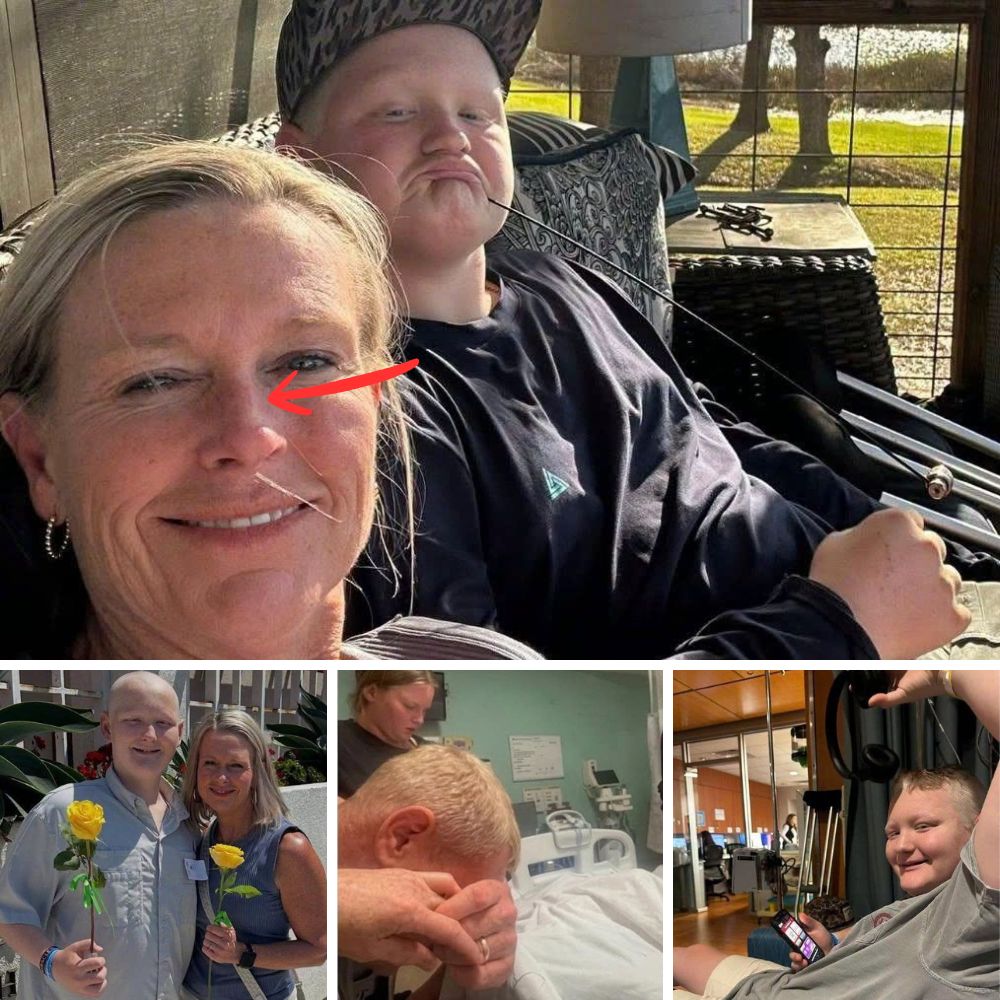
It was not described as a cure.
It came with no guarantees.
There would still be careful monitoring, possible side effects, and many difficult decisions ahead.
But it represented something invaluable.
Another opportunity.
Another path worth exploring.
Another reason to continue moving forward.
For months, the family had prayed simply for another chance.
Now they had one.
Tears of Relief
Mason’s mother later admitted that she did not remember every word spoken during the meeting.
She remembered only one overwhelming emotion.
Relief.
Not because every problem had disappeared.
Not because the journey was finished.
But because uncertainty had given way to a meaningful next step.
After weeks of wondering what came next, they finally had direction.
Sometimes direction is enough to restore hope.
Sharing the News
When Mason learned about the decision, he listened quietly.
“So…”
“We’re still going?”
His father smiled.
“We’re absolutely still going.”
Mason laughed.
“I wasn’t planning on stopping.”
The room filled with laughter that had been absent for far too long.
It wasn’t loud.
It wasn’t dramatic.
It was simply genuine.
For a few beautiful minutes, illness no longer dominated every conversation.
The family talked instead about favorite foods, movies they wanted to watch together, and a camping trip they hoped to take someday.
Those ordinary dreams suddenly felt possible again.
Faith Through the Longest Nights
Throughout the journey, Mason’s family found comfort in routines that never appeared in medical charts.
His mother wrote in a journal every evening.
His father read aloud from Mason’s favorite adventure novels.
Friends organized meal deliveries.
Neighbors cared for the family dog.
Teachers sent handwritten letters.
Classmates recorded short video messages filled with encouragement.
Each act reminded the Harris family they were never fighting alone.
Hope often grows strongest within community.
The Meaning of Progress
People frequently imagine progress as dramatic transformation.
The Harris family discovered that real progress is often quieter.
A treatment plan moving forward.
A physician offering cautious optimism.
An afternoon without severe discomfort.
A teenager finding the strength to smile.
These moments rarely become headlines.
Yet they become unforgettable for the families experiencing them.
Looking Toward Tomorrow
That evening, Mason asked his mother to open the window blinds.
The sun was setting beyond the hospital gardens, painting the sky with shades of gold and orange.
“It looks different today,” he whispered.
His mother smiled.
“The sky?”
“No.”
“The future.”
Neither pretended the road ahead would be easy.
There would still be treatments, setbacks, difficult conversations, and uncertain days.
But something important had changed.
The future no longer felt like a closed door.
It felt like a path still waiting to be explored.
Hope Is Never the End of the Story
Before leaving the hospital room for the night, Mason’s father wrote one sentence in the notebook he had carried since the day of the diagnosis.
“Today didn’t erase yesterday’s pain—but it reminded us why we never stopped believing in tomorrow.”
Those words remained tucked inside the notebook long after the hardest days had passed.
They became a reminder that courage is not measured by the absence of fear.
Faith is not measured by the absence of doubt.
Hope is not measured by guaranteed outcomes.
Instead, all three are revealed in the quiet determination to keep taking the next step, even when the destination remains unseen.
And sometimes, after months of waiting, praying, and refusing to surrender, the greatest gift a family can receive is not certainty.
It is simply another chance to keep moving forward—together.
💔 STELLA PARTON BREAKS HER SILENCE — What She Said About Dolly’s Health Has Fans Looking Back
Dolly Parton’s Sister Breaks Silence What Really Happened - GMT - G1
Stella Parton was born May 4, 1949, the sixth of twelve children raised by Robert Lee and Avie Lee Parton in Sevierville, Tennessee — a household defined by noise, limited money, and almost no privacy, the kind of environment that produced strong, determined personalities.
Stella was one of them.
By seven, she was appearing alongside her older sister Dolly on a Knoxville television program; by her teens, she was writing her own songs, though marriage and motherhood pulled music to the margins of her life for a stretch.
The dream never fully disappeared.

In 1967, she recorded a gospel album with her mother and sisters, and later worked clubs in Washington, D.C., before founding her own record label in 1975 and releasing “I Want to Hold You in My Dreams Tonight,” which climbed to number nine on the country charts.
Long before any of that commercial success, Stella had already shown a willingness to take positions others avoided.
At 26, amid backlash against Australian singer Olivia Newton-John for winning recognition in country music, Stella recorded “Ode to Olivia” in her defense — a stand that offered her no career benefit and real risk of criticism, but one she took anyway simply because she believed staying silent was the wrong choice.
That instinct defined the rest of her career: hits like “The Danger of a Stranger” and “Steady as the Rain” (written by Dolly) built a genuine, independent following, including in the U.K., while Stella also worked in New York theater and spoke openly, often controversially, about poverty, domestic violence, and the treatment of women in the music industry.
She was named the Christian Country Music Association’s Female Vocalist of the Year in 2004.
Through all of it, she remained defined publicly, more often than not, as simply “Dolly’s little sister” — a label she spent five decades quietly proving didn’t tell the full story.
That same directness is why her comments in the fall of 2025 carried real weight.
Stella had never positioned herself as the family’s image manager or spokesperson; she was, by reputation, someone who believed difficult truths shouldn’t stay hidden indefinitely.
What she described wasn’t dramatic or accusatory — it was a portrait of a woman who had spent years prioritizing everyone else’s needs over her own.
The context mattered.
Carl Dean, Dolly’s husband of nearly sixty years, died in March 2025 at 82, after a long illness during which Dolly had devoted herself almost entirely to his care.
She later acknowledged that in the process, she’d neglected her own health significantly.
The loss reverberated through the whole extended family — the Partons had lost three brothers in the years surrounding this period, compounding grief that, for a family that had once crowded twelve children into a single small home, meant losing pieces of a shared childhood one after another.
Stella herself went seven years without releasing new music during this stretch, later describing the period simply as one shaped by sorrow, while still speaking about the importance of finding moments of laughter within it.
Looking back, one moment reads very differently in hindsight than it did at the time: in late September 2025, Dolly postponed her planned Las Vegas residency, citing health challenges — a rare cancellation for a performer whose six-decade career had included very few of them.
At the time, most fans treated it as a minor, temporary setback.
Stella’s later reflections suggested the signs had actually been building for some time, visible to family in ways the public smile made easy to miss.
That concern crystallized publicly not long after, when Dolly’s younger sister Frieda posted a simple request on Facebook asking fans to pray for Dolly.
What looked at first like an ordinary, well-meaning gesture spread rapidly, sparking widespread speculation about how serious Dolly’s condition actually was.
Dolly herself responded directly within days, appearing in a video from a Grand Ole Opry commercial shoot, insisting with her familiar humor that she wasn’t finished yet — the now widely remembered “I ain’t dead yet” moment that briefly quieted public concern.
In the months that followed, the pattern repeated: reassuring updates about kidney stones, dehydration, and treatment, paired with continued work on new projects, right up until Dolly Parton’s death on August 25, 2026, at 80.
Looking back across that full timeline — the postponed residency, the family’s public worry, Stella’s own account of a sister who consistently deprioritized her own wellbeing — it becomes easier to see what the people closest to Dolly understood well before the rest of the world did: that the warmth and resilience the public saw every time she appeared on camera came at a real, largely invisible cost.