Lindsay Clancy Never Took The Stand—but Her First Words, Tears And Private Diary Entries Are Now Revealing A Haunting Glimpse Into Her Mind
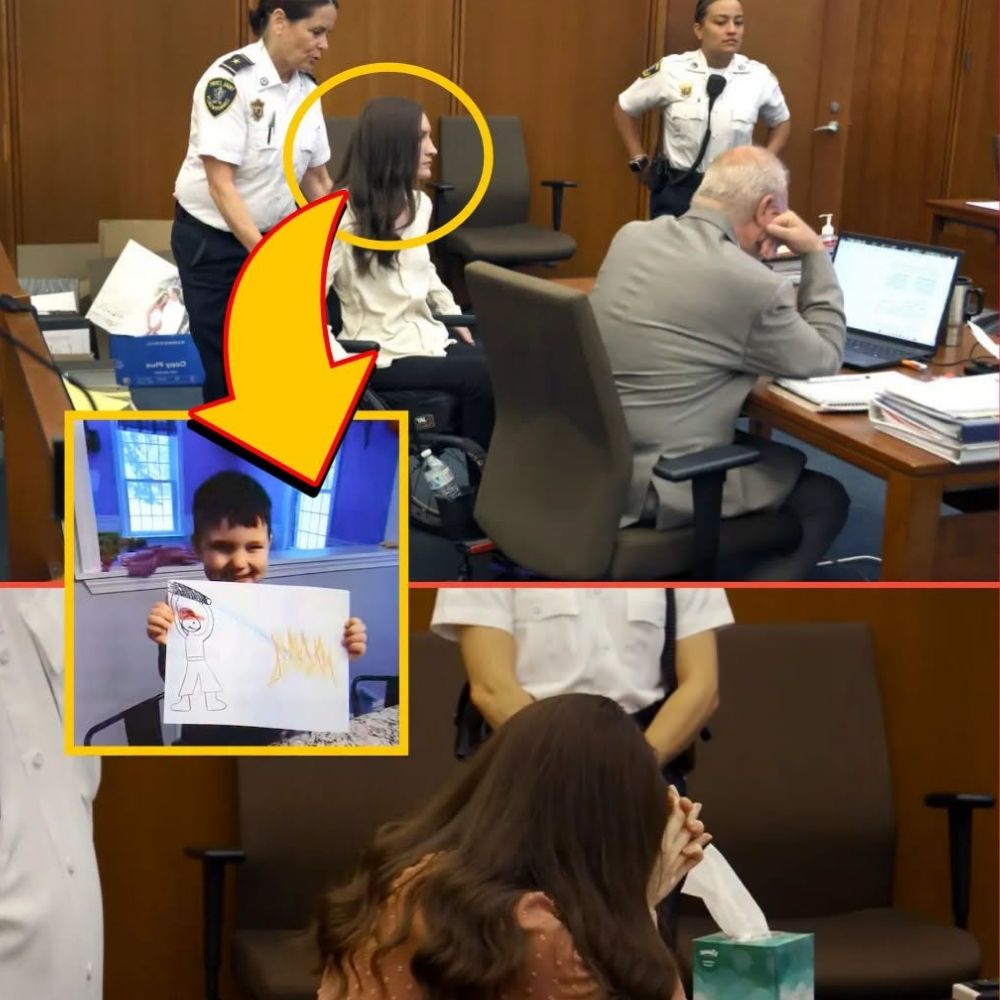
Lindsay Clancy has not taken the stand, but the Massachusetts mother accused of killing her three children communicated in multiple ways at her murder trial this week.
She vocally answered the judge’s questions about a legal issue, her first audible words in the trial. She sobbed and shook during difficult testimony about the autopsy of her infant son. And her diary entries about her parenting stresses and postpartum issues were read aloud in court.
Together, Clancy’s vocal, physical and written messages offered key insights into her perspective in the second week of her trial on three counts of murder in the killings of her children Cora, 5; Dawson, 3; and Callan, eight months.
This week’s proceedings in a Plymouth, Massachusetts, courtroom also featured testimony about her mєntal health status before and after the killings, her physical injuries from her sᩚuᩚiᩚcide attempt, and her friends’ and family’s concerns.
Prosecutors argue Clancy, 35, “acted intentionally, rationally and swiftly” when she fatally strangled her three children at their Duxbury home on 24 January 2023. Her defence attorneys argue she is not criminally responsible because she was in the midst of a psychotic episode stemming from postpartum mєntal illness.
Testimony began two weeks ago with opening statements and an emotional witness account from her husband, Patrick Clancy.
Here’s what we learned at Lindsay Clancy’s trial this week:
Defendant speaks, sobs and writes
With the jury outside of the room, Clancy answered several questions from the judge Tuesday about her understanding of a stipulation agreement, which is an acknowledgement of specific facts to save time in a trial. Judge William F. Sullivan repeatedly asked her if she understood her rights, and she responded with an even voice: “Yes, your honour.”
The topic was not particularly notable – basically agreeing the chain of custody of some evidence was proper – but it was the first time the public has heard her voice in this trial.
The jury saw her get emotional, too. On Thursday, Clancy loudly sobbed, shuddered and covered her face with her hands as a medical examiner testified about Callan’s autopsy.
Prosecutors displayed multiple pictures of Callan at the time of his autopsy to the parties and jury, though they were not shown on camera. The baby’s injuries were consistent with a ligature strangulation, and his cause of dєatᩚh was complications of mechanical asphyxia, the examiner testified.
Further, the jury heard her written messages in her diary. On Monday, attorneys read aloud some of her diary entries about her declining mєntal health while trying to care for her three children.
“It’s like I’m so desperate to get a mєntal break from taking care of everyone that my mind is trying to make something physically wrong with me,” she wrote.
She wrote she felt “guilty” and was struggling to sleep-train Callan.
“I want help. I want to be well,” she wrote.
Her mєntal health before the killings
On Friday, the court heard testimony from two psychiatrists who treated Clancy in the weeks and months before she killed her children.
Dr. Jennifer Tufts, a licensed psychiatrist, described her interactions with the defendant over roughly a dozen sessions from September 2022 to January 2023, and repeated adjustments to Clancy’s medication as she grappled with anxiety and trouble sleeping.
At their first session, Clancy told the psychiatrist she didn’t have any suicidal intent, homicidal intent or hallucinations, Tufts said. The psychiatrist’s records from the appointment indicated
Clancy said she was feeling overwhelmed, her children were challenging and she felt anxious leaving her baby.
The doctor met with Clancy on 3 October 2022, after Clancy asked her to facilitate an extension for her maternity leave, citing “postpartum anxiety/depression.”
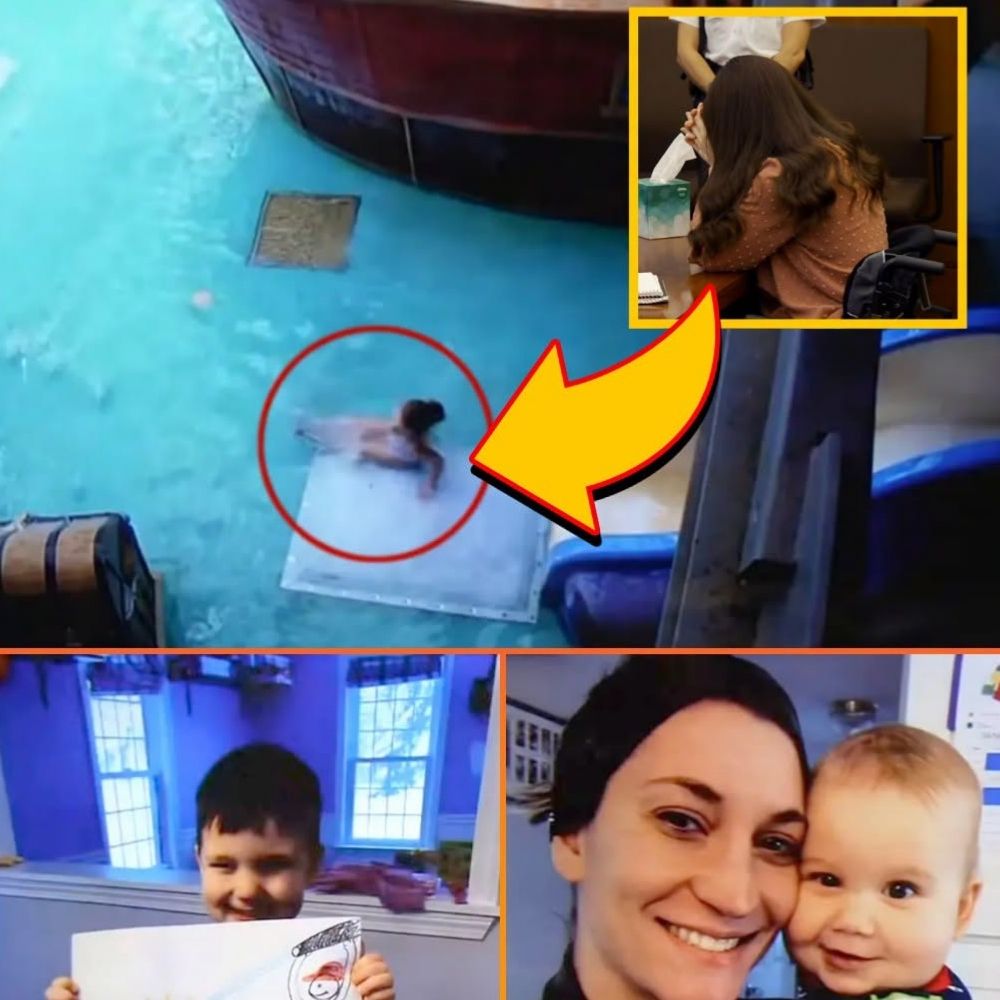
Clancy worked as a labour-and-delivery nurse.
“I don’t feel mentally well enough to return to taking care of patients with a baby at home that still won’t take the bottle,” Clancy wrote in a message to Tufts before the appointment, per the prosecution. “I know this will trigger my anxiety too much.”
By the start of December 2022, Clancy was seeing another medical provider in addition to Tufts and had tried “a few different medication combinations,” the psychiatrist testified. According to prosecutors, Tufts’ notes included a quote from Clancy, which said: “I think it’s my problem. I keep reaching out to different people and not sticking with the plan.”
At that time, Clancy reported having intrusive thoughts which she described as “a feeling like I’m going to die.” Still, she denied having thoughts of self-harm, according to Tufts.
By mid-December, Clancy was feeling very depressed, Tufts said. She had recently gone to the emergency room due to suicidal ideation and was planning on attending a partial hospitalisation program, as well as starting a new medication, she said.
In early January 2023, weeks before the killings, Clancy underwent a multiday stay at a psychiatric facility, where she was treated by another psychiatrist, Dr. Alia Goodheart, who also testified Friday.
Clancy then said she felt “numbness” and appeared anxious, but she displayed linear thinking and was goal-directed, Goodheart said. The psychiatrist diagnosed her with insomnia and worked to adjust her medication.
After several nights of sleep, Clancy asked to be discharged from the facility a day early “so she could be home with her family and her children,” Goodheart said.
“She was future-oriented, she was clearly invested in her children, she was a caring mother,” the psychiatrist said.
Days after her discharge from the in-patient facility, Clancy still felt “numb” and “flat,” Tufts testified.
“She wasn’t able to cry, but she said she was able to laugh a little bit and hadn’t been having recent thoughts of suicidal ideation,” the psychiatrist said, adding she again adjusted Clancy’s prescriptions.
In an email to Tufts on 11 January 2023, Clancy asked the psychiatrist’s opinion on ketamine therapy. “This has been going on for months now and I’m getting desperate for something that would work quickly to get me out of this depressed state,” Clancy wrote in part, according to prosecutors.
Clancy was still depressed on 16 January, the psychiatrist said, and they agreed on a plan to taper her off one medication and start taking a new antidepressant.
“She was doing what she needed to do to take care of her baby, though she subjectively felt like the bonding was forced with the baby,” Tufts testified.
Clancy met with Tufts the day before she killed her children.
“She said she was doing all right – a little more anxious, and the anxiety was described as the feeling of her heart racing,” the psychiatrist said.
Clancy said at that time she was not having any suicidal or homicidal ideation, Dr. Tufts said. Nothing Clancy said indicated she was a danger to anyone, the psychiatrist testified, and she never showed any signs of psychosis during any of their sessions.
Testimony is expected to resume Monday with the defence’s cross-examination of Tufts.
Her mєntal health afterward
Two forensic psychiatrists testified Monday that Clancy appeared clear-headed and rational in the days after the killings.
In a hospital evaluation two days afterward, Clancy could not speak because she was on a ventilator, so she asked for a paper and pen to write her responses to questions.
She wrote that she was “horrified” and asked for an attorney, Dr. Jhilam Biswas testified. She also wrote, “is my body broken,” “are my legs straight,” if she could have visitors and where her family was, according to Biswas. Clancy seemed anxious, but she understood the questions and did not show signs of psychosis or hallucinations, Biswas said.
Another psychiatrist, Dr. Sejal Shah, said Clancy was “calm and cooperative” during a psych exam one week after the killings. Clancy’s thought-process was “organised” and “goal-directed,” Shah said, and she agreed Clancy was an “honest” patient.
Clancy had ‘dark thoughts’
Clancy’s friends and family members spoke about her behaviour in the weeks before the killings.
In January 2023, days before she killed her children, Clancy said over text that a medication caused her to have “some dark thoughts,” her friend of nearly 30 years testified.
“She had shared that she had been taking a medication that caused her to have some dark thoughts but that she was going to, or had been, tapering off that medication and was trailing new ones that would remove those side effects and be more helpful and therapeutic to what she needed,” Amy Bevins said.
The tone of the conversation was “hopeful,” Bevins said, adding it seemed Clancy thought things were “moving in a positive direction.”
Her father-in-law, Christopher Clancy, said she seemed “very good” during a visit in mid-November 2022 but was “quiet” during Thanksgiving. At times she seemed blank, he testified, saying she sometimes had “a stare – just not totally interacting, almost like nervous.”
He saw Clancy and the family again shortly before Christmas 2022, he said, and was aware she was having “struggles” at the time.
“I knew she was having a hard time sleeping. I knew she just didn’t feel well. I knew she had gone to the emergency room where my wife was working,” he testified during cross-examination.
Elaine Rossi, a part-time nanny for the Clancy family, said Lindsay Clancy told her about having postpartum issues. Rossi said she saw prescription bottles in the house but she had no concerns about Lindsay with the children, calling her a “wonderful mom.”
Clancy brought her daughter, Cora, to the paediatrician just hours before the killings, and nothing seemed amiss, the paediatrician testified.
“I didn’t notice anything out of the norm,” Dr. Lindsay Rosshirt said. “(Cora) seemed perfectly well-behaved, and mom seemed appropriate as well.”
She said she did not remember any visible signs of postpartum issues in Clancy during their appointments and did not see a need to refer her to any resources.
Her physical injuries
Testimony early in the week focused on the extent of Clancy’s physical injuries and medical recovery after her sᩚuᩚiᩚcide attempt.
Prosecutors say after killing her children, Clancy cut her wrists and neck and jumped from a second-story window, leaving her partially paralysed. She was first taken to South Shore Hospital and then transferred to Brigham and Women’s Hospital in Boston for treatment.
Clancy had a thoracic spine injury from her fall, but the cuts on her neck and wrists were considered “superficial,” said Dr. Kelly McDonough, a physician at South Shore Hospital. The cuts on her wrists required several sutures, physician associate Eitan Negri said.
Once she was moved to Boston, Clancy went into cardiac arrest and had to be revived with CPR and chest compressions, ICU nurse Rachelle Amedee said. Clancy also received multiple blood transfusions, she said.
Superficial or not, those cuts were bloody, and prosecutors showed the jury the blood stains found in the family’s Duxbury home. A blood stain analyst testified about the drip stains, smear stains and transfer stains on the floor, mirror, nightstand and windowsill.
💔 STELLA PARTON BREAKS HER SILENCE — What She Said About Dolly’s Health Has Fans Looking Back
Dolly Parton’s Sister Breaks Silence What Really Happened - GMT - G1
Stella Parton was born May 4, 1949, the sixth of twelve children raised by Robert Lee and Avie Lee Parton in Sevierville, Tennessee — a household defined by noise, limited money, and almost no privacy, the kind of environment that produced strong, determined personalities.
Stella was one of them.
By seven, she was appearing alongside her older sister Dolly on a Knoxville television program; by her teens, she was writing her own songs, though marriage and motherhood pulled music to the margins of her life for a stretch.
The dream never fully disappeared.

In 1967, she recorded a gospel album with her mother and sisters, and later worked clubs in Washington, D.C., before founding her own record label in 1975 and releasing “I Want to Hold You in My Dreams Tonight,” which climbed to number nine on the country charts.
Long before any of that commercial success, Stella had already shown a willingness to take positions others avoided.
At 26, amid backlash against Australian singer Olivia Newton-John for winning recognition in country music, Stella recorded “Ode to Olivia” in her defense — a stand that offered her no career benefit and real risk of criticism, but one she took anyway simply because she believed staying silent was the wrong choice.
That instinct defined the rest of her career: hits like “The Danger of a Stranger” and “Steady as the Rain” (written by Dolly) built a genuine, independent following, including in the U.K., while Stella also worked in New York theater and spoke openly, often controversially, about poverty, domestic violence, and the treatment of women in the music industry.
She was named the Christian Country Music Association’s Female Vocalist of the Year in 2004.
Through all of it, she remained defined publicly, more often than not, as simply “Dolly’s little sister” — a label she spent five decades quietly proving didn’t tell the full story.
That same directness is why her comments in the fall of 2025 carried real weight.
Stella had never positioned herself as the family’s image manager or spokesperson; she was, by reputation, someone who believed difficult truths shouldn’t stay hidden indefinitely.
What she described wasn’t dramatic or accusatory — it was a portrait of a woman who had spent years prioritizing everyone else’s needs over her own.
The context mattered.
Carl Dean, Dolly’s husband of nearly sixty years, died in March 2025 at 82, after a long illness during which Dolly had devoted herself almost entirely to his care.
She later acknowledged that in the process, she’d neglected her own health significantly.
The loss reverberated through the whole extended family — the Partons had lost three brothers in the years surrounding this period, compounding grief that, for a family that had once crowded twelve children into a single small home, meant losing pieces of a shared childhood one after another.
Stella herself went seven years without releasing new music during this stretch, later describing the period simply as one shaped by sorrow, while still speaking about the importance of finding moments of laughter within it.
Looking back, one moment reads very differently in hindsight than it did at the time: in late September 2025, Dolly postponed her planned Las Vegas residency, citing health challenges — a rare cancellation for a performer whose six-decade career had included very few of them.
At the time, most fans treated it as a minor, temporary setback.
Stella’s later reflections suggested the signs had actually been building for some time, visible to family in ways the public smile made easy to miss.
That concern crystallized publicly not long after, when Dolly’s younger sister Frieda posted a simple request on Facebook asking fans to pray for Dolly.
What looked at first like an ordinary, well-meaning gesture spread rapidly, sparking widespread speculation about how serious Dolly’s condition actually was.
Dolly herself responded directly within days, appearing in a video from a Grand Ole Opry commercial shoot, insisting with her familiar humor that she wasn’t finished yet — the now widely remembered “I ain’t dead yet” moment that briefly quieted public concern.
In the months that followed, the pattern repeated: reassuring updates about kidney stones, dehydration, and treatment, paired with continued work on new projects, right up until Dolly Parton’s death on August 25, 2026, at 80.
Looking back across that full timeline — the postponed residency, the family’s public worry, Stella’s own account of a sister who consistently deprioritized her own wellbeing — it becomes easier to see what the people closest to Dolly understood well before the rest of the world did: that the warmth and resilience the public saw every time she appeared on camera came at a real, largely invisible cost.