Goldman Challenges DOJ Over Inconsistent Redactions in High-Profile Case
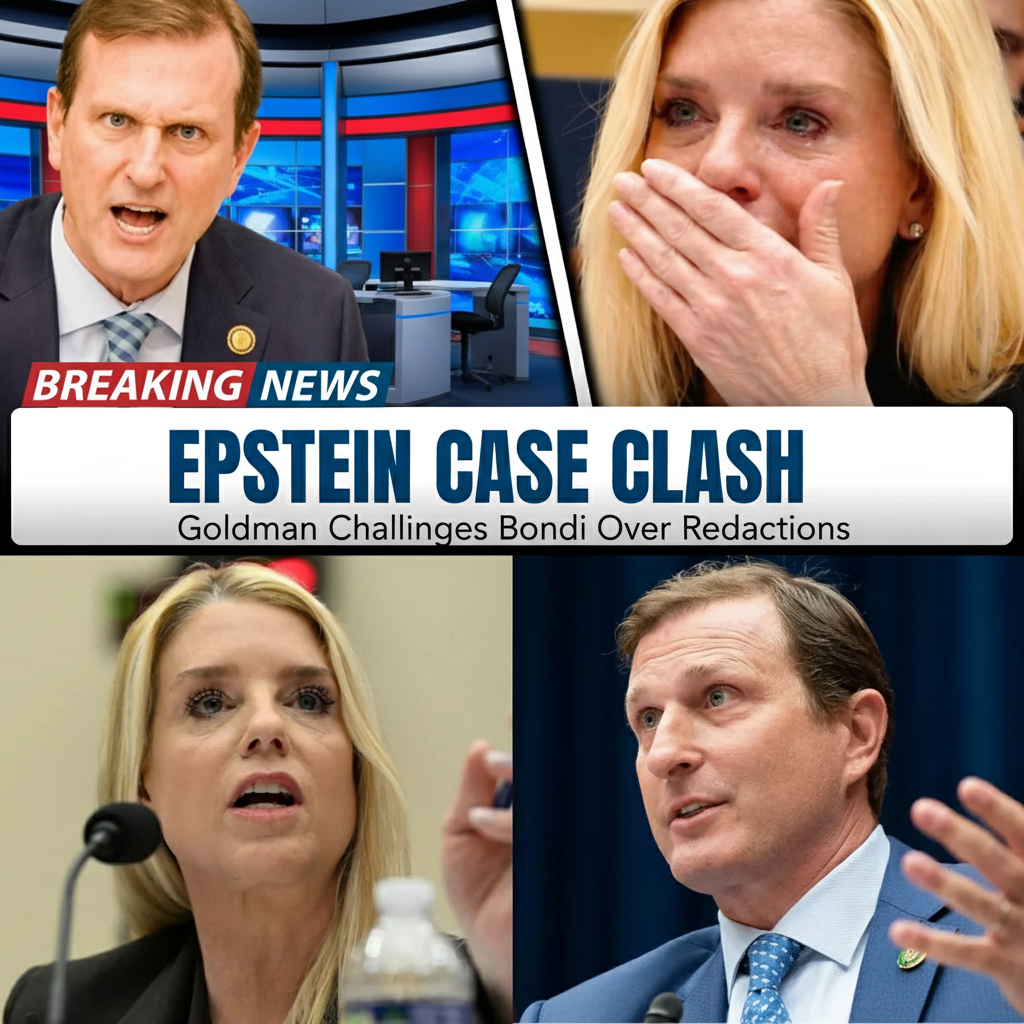
In a tense session at the House Judiciary Committee, Representative Dan Goldman (D-NY) presented forensic evidence suggesting intentional irregularities in the handling of the Jeffrey Epstein investigation files. Goldman, a former federal prosecutor, focused on a specific document titled the ‘Epstein Victim List,’ which contained thirty-two names. According to the evidence presented, thirty-one names were left unredacted while a single individual was protected.
The ‘Statistical Impossibility’
Goldman argued that the selective redaction was not a mathematical error but an intentional decision. “Someone looked at this list and decided to protect one person while exposing thirty-one others,” Goldman stated during the hearing. He suggested this move contradicts the Department of Justice’s stated mission of protecting survivor privacy.
Legal Privilege and Email Controversies
The confrontation escalated when Goldman introduced an email exchange between Jeffrey Epstein and Ghislaine Maxwell. While Attorney General Pam Bondi repeatedly cited legal privilege to block questioning, Goldman countered that no such privilege exists between co-conspirators. This exchange has raised further questions regarding the transparency of the records released under the Jeffrey Epstein Files Transparency Act.
Survivors Demand Meetings
In one of the hearing’s most impactful moments, Goldman addressed survivors present in the gallery. Despite claims from the Department of Justice that officials have met with all victims who requested an audience, every survivor in the room indicated they had been denied or ignored by the department. This revelation has sparked a broader debate over the treatment of witnesses and the integrity of the ongoing oversight process.
- Evidence of inconsistent name redactions.
- Disputes over the application of attorney-client privilege.
- Reports of a significant reduction in staff within the Public Integrity Section.
- Zero verified meetings with survivors despite department claims.
The hearing concluded with the formal entry of these documents into the permanent record, providing a roadmap for future inquiries into government transparency and witness credibility as the legal landscape continues to evolve.