For days after 15-year-old Will Roberts was laid to rest, his family had been learning how painfully different an ordinary morning could feel.

The house was still there. His belongings were still there. His favorite places had not changed.
But Will was gone.
Then, one quiet morning, something happened on the family’s balcony that left his mother, Brittney, struggling to explain what she had witnessed.
According to the family’s account, Charlie, Will’s surviving sister, was the first to notice the unusual visitor.
A brightly colored bird had landed on the balcony.
At first, there seemed to be nothing particularly extraordinary about it. Birds appear in residential yards and on balconies all the time. But Charlie immediately noticed something different. The bird appeared unfamiliar to the area, with striking colors that made it stand out against the quiet morning.
And then there was where it had chosen to land.
The bird had settled directly on a wooden chair that had once been one of Will’s favorite places.
For Brittney, that detail alone was enough to stop her in her tracks.
The chair was not simply another piece of furniture. It was one of those ordinary objects that had quietly become part of Will’s life — a place where he had sat, rested and spent pieces of time that his family never imagined would one day become precious memories.
After his funeral, those small reminders had taken on an entirely different meaning.
But what happened next was even harder for the family to dismiss as an ordinary encounter with wildlife.
The bird did not immediately fly away when people approached.
Instead, according to Brittney’s account, it remained remarkably calm.
Then it moved.
Slowly, the bird descended from the chair and onto the wooden floorboards of the balcony.
What happened next reportedly left the family watching in disbelief.
The bird began pecking at a narrow crack beneath the chair.
Once.
Then again.
And again.
It was not simply wandering across the balcony. According to the family, the bird appeared to focus repeatedly on the same small, hidden space beneath the chair.
Brittney and Charlie watched as the bird continued.
There was something almost deliberate about its movements.
Then, after repeatedly pecking at the narrow opening, the bird managed to dislodge something that had been hidden beneath the chair.
It was a personal keepsake belonging to Will.
And, according to the family, it was something they had long believed was lost.
For Brittney, the discovery carried an emotional weight that went far beyond the object itself.
In the aftermath of losing a child, families often find themselves holding onto the smallest things: a photograph, an old shirt, a handwritten note, a favorite toy, a familiar chair.
Objects that once seemed ordinary can suddenly become irreplaceable.
They become physical reminders of someone who can no longer walk through the door.
That is what made the bird’s unexpected behavior so deeply moving to Will’s family.
The bird had arrived at a moment when grief still hung heavily over the home. It had chosen Will’s chair. It had remained close despite human presence. And, according to the family’s account, it had somehow drawn attention to something hidden beneath it.
The family does not claim to know exactly why the bird behaved that way.
There may be a perfectly natural explanation.
Birds can be attracted to movement, sounds, insects, food or objects that catch their attention. A narrow crack beneath a chair could easily have contained something that attracted the animal.
Yet knowing that does not necessarily make the moment meaningless.
For people grieving someone they love, meaning is often found in places that cannot be scientifically explained.
A coincidence can become a memory.
A familiar song can suddenly feel like a message.
A photograph discovered at exactly the right moment can feel like a final gift.
And sometimes, a simple bird landing on an old chair can become a moment a family remembers forever.
For Brittney, the emotional significance was impossible to separate from the person who had once occupied that chair.
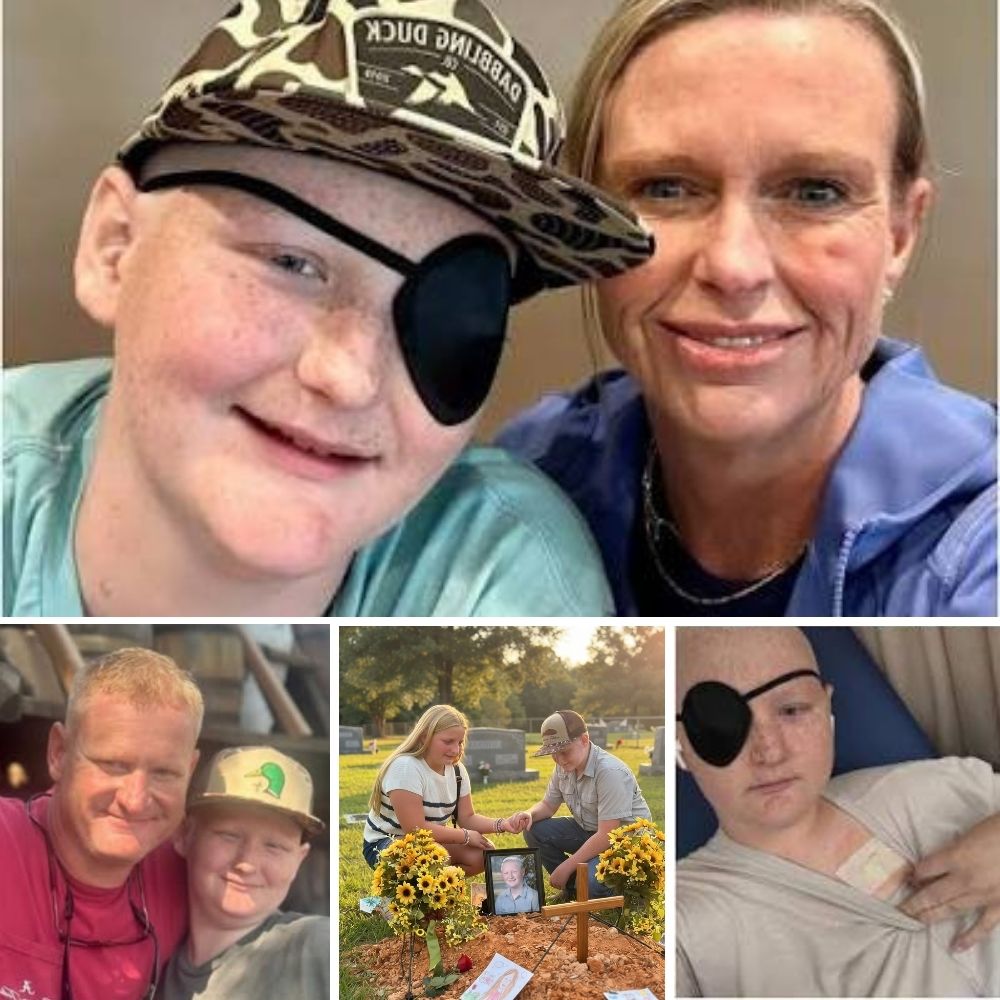
Will’s final months had been marked by an extraordinary battle with cancer, one that demanded strength from a teenager and from the family standing beside him. Through hospital stays, difficult treatments, frightening setbacks and moments of uncertainty, his loved ones continued to document his journey and ask others to pray for him.
After his dєatᩚh, that fight ended.
But the love surrounding him did not.
It remained in the house.
It remained in the people who spoke his name.
It remained in the places where he had sat, the belongings he had touched and the memories his family carried with them.
And on that morning, it appeared in one more unexpected form.
A colorful bird.
A wooden chair.
A hidden crack.
And a keepsake that had seemingly disappeared from the family’s lives.
Whether the bird’s actions were an extraordinary coincidence or simply an unusual piece of animal behavior is something no one can say with certainty.
But perhaps that is not the part that matters most.
What matters is what the moment meant to the people who experienced it.
For a grieving mother and a sister who had just said goodbye to someone they loved, finding a lost piece of Will in such an unexpected way offered something grief rarely gives: a brief moment of surprise in the middle of sorrow.
It gave them another reason to say his name.
Another reason to remember his smile.
Another piece of his life to hold onto.
And perhaps that is why the image of that bird sitting on Will’s chair will remain with them long after the bird has flown away.
Because sometimes, after someone is gone, the world feels unbearably quiet.
And then, without warning, something small happens.
A bird lands.
A memory returns.
And for one precious moment, the person you miss feels a little closer again.