Stunning Confrontation Rocks Senate Judiciary Committee
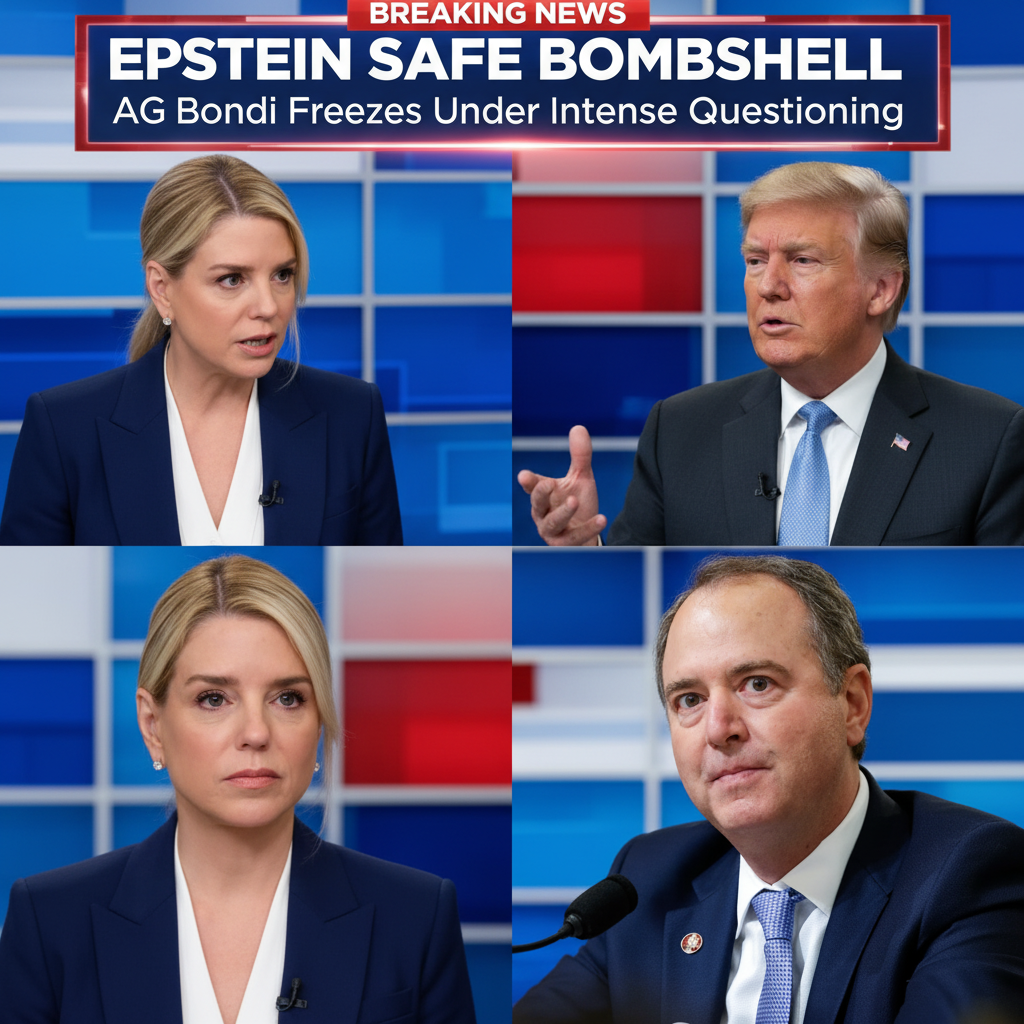
In a high-stakes session of the Senate Judiciary Committee, the atmosphere shifted from procedural oversight to forensic shock. The hearing, initially intended for routine Department of Justice (DOJ) oversight, took a dramatic turn when Senator Sheldon Whitehouse questioned Attorney General Pam Bondi regarding sensitive photographic evidence.
The Eleven-Second Silence
The core of the friction centered on reports of photographs allegedly discovered in Jeffrey Epstein’s safe. Senator Whitehouse pressed for details regarding images that reportedly depicted high-profile figures in compromising settings. The inquiry resulted in a visible 11-second freeze from the Attorney General, a moment of silence that hung heavily over the chamber before she responded with a fiery rebuttal.
Allegations of Redaction and Secrecy
Attorney General Bondi dismissed the questioning as a “partisan fishing expedition,” pivoting to accuse the legislative branch of weaponizing leaks to undermine federal law enforcement. However, the confrontation highlights a much larger struggle over the three million pages of investigative records currently held by the DOJ. While the administration claims to prioritize transparency, many lawmakers argue that critical evidence is being obscured by a wall of federal redactions.
Survivor Skepticism and the Path Forward
Critics, including committee members and survivors present in the gallery, pointed to a “ledger of inconsistencies.” They noted that while the department claimed an exhaustive review, many victims had reportedly never been contacted. The hearing exposed a profound fracture in the constitutional balance, leaving the public to wonder if the “whole truth” will ever emerge or if it has simply been moved to a deeper level of the government archive.
- Questions raised over alleged safe contents.
- Tension over redactions in 3 million pages of documents.
- DOJ accused of selective disclosure.