EXCLUSIVE: Inside the House of Horrors — How Officials Uncovered 16 ‘Feral’ Children Living in a Squalid 12×12 Room in Rural Ohio While Neighbors Had No Clue Anyone Was Even Inside
- Sixteen children aged 20 months to 18 years old were discovered locked away in a single 12-by-12-foot space inside a rotting, decaying home in Hamden, Ohio.
- First responders described the interior as so severely compromised by filth that floors were on the verge of collapsing beneath their feet.
- Four family members—including parents and grandparents—have been slammed with multiple felony child endangerment charges.
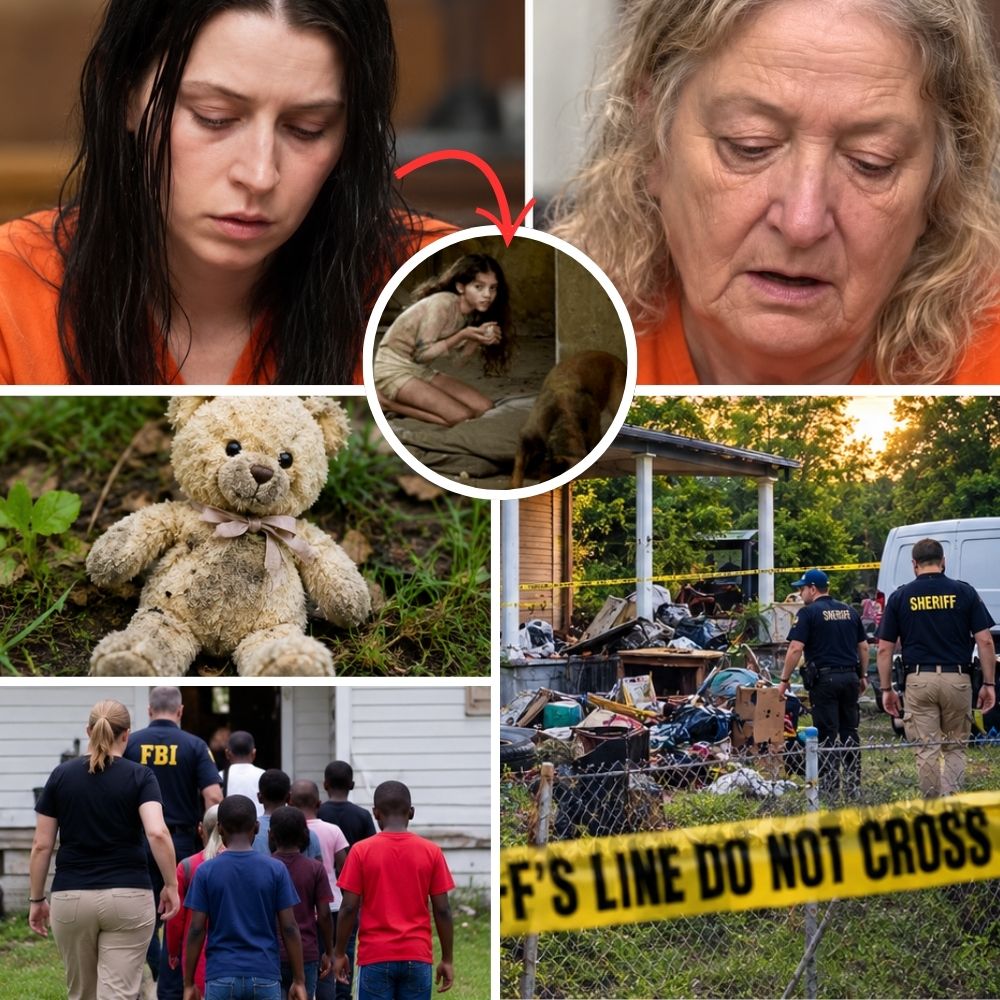
The horrifying reality of what took place behind the closed doors of a modest rural Ohio home is slowly coming to light, leaving investigators, hardened first responders, and a stunned public grappling with an unprecedented nightmare.
What began as an unrelated law enforcement operation quickly devolved into a heart-stopping rescue mission that saved 16 children from conditions so vile, officials bluntly stated that local livestock were kept in cleaner, more humane environments.
As new details emerge from inside the property located in the sleepy village of Hamden, Vinton County, chilling accounts paint a picture of isolation, profound neglect, and a terrifying secret kept hidden in plain sight for nearly two decades.
A Routine Warrant That Exposed an Unimaginable Nightmare
The harrowing discovery unfolded unexpectedly. Authorities executing a search warrant at the single-family residence stumbled upon a scene that completely shattered their expectations. Law enforcement officials candidly admitted they had zero inkling that any children—let alone a staggering 16 of them—were living inside the structure.
The raid, initially sparked by an unrelated investigation into indecent exposure incidents involving 36-year-old resident Gary Siders II, peeled back the layers of a deeply insulated household.
When officers stepped across the threshold, they were immediately hit by an overwhelming wave of decay. The house itself was in an advanced state of structural ruin. First responders noted that the flooring was so thoroughly rotted by filth and moisture that they had to tread carefully to avoid literally plunging through the floorboards.
Ohio Attorney General Andy Wilson expressed his profound shock during a public briefing, noting that the haunting odor lingered on him long after he stepped away from the doorway.
“I can still smell it,” Wilson told reporters, visibly shaken. “I cannot get the smell off of me or away from me right now.”
Wilson added a chilling assessment: had authorities arrived a mere 24 hours later, they likely would have been dealing with multiple tragic fatalities.
Life Inside the 12-by-12 Box
At the core of the horror was a cramped, enclosed space measuring roughly 12 feet by 12 feet. According to investigators, this tiny room served as the primary confinement area where the children—ranging in age from 20 months to 18 years old—spent the vast majority of their time.
The room and surrounding areas were heavily contaminated with human waste, discarded trash, and swarming insects. The children themselves were found in a catastrophic state of neglect, covered in filth and displaying behaviors that officials heartbreakingly described as resembling “feral animals”.
Vinton County Sheriff Ryan Cain did not mince words when describing the deplorable living conditions.
“Most of our livestock was kept in better conditions than the children,” Sheriff Cain stated. “Just a disgusting scene.”
Medical evaluations revealed the immense toll of their isolation. Many of the children exhibited severely stunted communication skills, with several unable to speak at all. Most shocking was an 18-year-old member of the household who, due to developmental delays and a complete lack of formal schooling, could not even write her own name. Investigators confirmed that none of the children were ever enrolled in local school districts, effectively erasing them from public view.
Four Family Members Behind Bars Facing Serious Prison Time
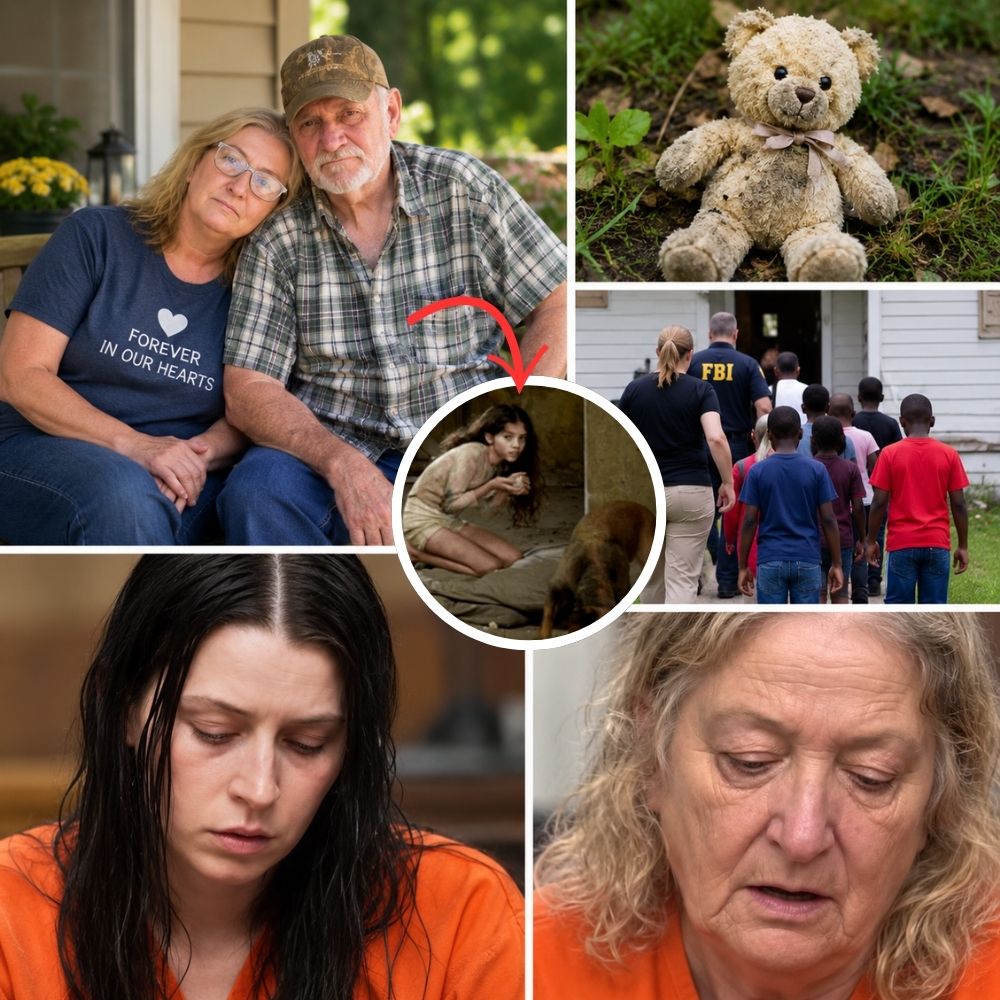
Swift legal action followed the June 30 raid. Four adults living at the residence were swiftly taken into custody and slapped with heavy criminal charges:
- Gary Siders Sr., 73 (Grandfather)
- Christina Siders, 67 (Grandmother)
- Gary Siders II, 36 (Father)
- Elizabeth Siders, 33 (Mother)
Each of the four defendants has been charged with 16 separate counts of felony child endangerment reflecting serious physical harm. During their initial court appearance, a judge entered not-guilty pleas on their behalf, setting bond at $300,000 for each individual.
Court records and legal counsel later confirmed that Elizabeth Siders is the biological mother of all 16 children, meaning she had been giving birth on a nearly annual basis over an 18-year span while the family managed to evade medical professionals, social services, and government tracking systems.
While prosecutors explicitly emphasized that the horrific ordeal is not a case of human trafficking, questions continue to mount regarding how a family could slide entirely off the grid for so long.
Neighbors Left Blind Sided
For residents living along the quiet, tree-lined road in Hamden, the revelation came as a complete bolt from the blue.
Neighbor Joseph Stewart, who has lived just three houses down from the property for six years, admitted he had no inkling that children were residing there. Despite the home being clearly visible from the street, Stewart noted he never saw youngsters playing in the yard or heard children’s voices echoing through the neighborhood.
Outside the home, an eerie tableau remained visible to passersby: a tangled graveyard of discarded children’s items—including broken bicycles, a plastic play table, faded beach pails, and empty infant carriers—piled haphazardly in the dirt. Investigators revealed that the family had previously drifted through multiple counties in Ohio, as well as stints in West Virginia and Wisconsin, habitually leaving behind messy properties and unanswered questions wherever they went.
The Road to Recovery
Following their extraction from the house of horrors, the 16 children were immediately rushed to various medical facilities across Ohio for urgent evaluations. While some have been treated and discharged, others required advanced hospitalization for critical care, with at least one child requiring intubation.
All 16 children have since been placed under the protective temporary custody of the Ohio Department of Job and Family Services, where specialists are working round the clock to address their profound physical, educational, and psychological trauma.
As prosecutors prepare their case and investigators comb through historical records to determine if warning signs were missed years prior, one central question continues to haunt the community:
How many more red flags were ignored, and how did a family of 18 manage to vanish in plain sight for nearly two decades?
DailyMail.com will continue to bring you live updates on this developing story.
💔 STELLA PARTON BREAKS HER SILENCE — What She Said About Dolly’s Health Has Fans Looking Back
Dolly Parton’s Sister Breaks Silence What Really Happened - GMT - G1
Stella Parton was born May 4, 1949, the sixth of twelve children raised by Robert Lee and Avie Lee Parton in Sevierville, Tennessee — a household defined by noise, limited money, and almost no privacy, the kind of environment that produced strong, determined personalities.
Stella was one of them.
By seven, she was appearing alongside her older sister Dolly on a Knoxville television program; by her teens, she was writing her own songs, though marriage and motherhood pulled music to the margins of her life for a stretch.
The dream never fully disappeared.

In 1967, she recorded a gospel album with her mother and sisters, and later worked clubs in Washington, D.C., before founding her own record label in 1975 and releasing “I Want to Hold You in My Dreams Tonight,” which climbed to number nine on the country charts.
Long before any of that commercial success, Stella had already shown a willingness to take positions others avoided.
At 26, amid backlash against Australian singer Olivia Newton-John for winning recognition in country music, Stella recorded “Ode to Olivia” in her defense — a stand that offered her no career benefit and real risk of criticism, but one she took anyway simply because she believed staying silent was the wrong choice.
That instinct defined the rest of her career: hits like “The Danger of a Stranger” and “Steady as the Rain” (written by Dolly) built a genuine, independent following, including in the U.K., while Stella also worked in New York theater and spoke openly, often controversially, about poverty, domestic violence, and the treatment of women in the music industry.
She was named the Christian Country Music Association’s Female Vocalist of the Year in 2004.
Through all of it, she remained defined publicly, more often than not, as simply “Dolly’s little sister” — a label she spent five decades quietly proving didn’t tell the full story.
That same directness is why her comments in the fall of 2025 carried real weight.
Stella had never positioned herself as the family’s image manager or spokesperson; she was, by reputation, someone who believed difficult truths shouldn’t stay hidden indefinitely.
What she described wasn’t dramatic or accusatory — it was a portrait of a woman who had spent years prioritizing everyone else’s needs over her own.
The context mattered.
Carl Dean, Dolly’s husband of nearly sixty years, died in March 2025 at 82, after a long illness during which Dolly had devoted herself almost entirely to his care.
She later acknowledged that in the process, she’d neglected her own health significantly.
The loss reverberated through the whole extended family — the Partons had lost three brothers in the years surrounding this period, compounding grief that, for a family that had once crowded twelve children into a single small home, meant losing pieces of a shared childhood one after another.
Stella herself went seven years without releasing new music during this stretch, later describing the period simply as one shaped by sorrow, while still speaking about the importance of finding moments of laughter within it.
Looking back, one moment reads very differently in hindsight than it did at the time: in late September 2025, Dolly postponed her planned Las Vegas residency, citing health challenges — a rare cancellation for a performer whose six-decade career had included very few of them.
At the time, most fans treated it as a minor, temporary setback.
Stella’s later reflections suggested the signs had actually been building for some time, visible to family in ways the public smile made easy to miss.
That concern crystallized publicly not long after, when Dolly’s younger sister Frieda posted a simple request on Facebook asking fans to pray for Dolly.
What looked at first like an ordinary, well-meaning gesture spread rapidly, sparking widespread speculation about how serious Dolly’s condition actually was.
Dolly herself responded directly within days, appearing in a video from a Grand Ole Opry commercial shoot, insisting with her familiar humor that she wasn’t finished yet — the now widely remembered “I ain’t dead yet” moment that briefly quieted public concern.
In the months that followed, the pattern repeated: reassuring updates about kidney stones, dehydration, and treatment, paired with continued work on new projects, right up until Dolly Parton’s death on August 25, 2026, at 80.
Looking back across that full timeline — the postponed residency, the family’s public worry, Stella’s own account of a sister who consistently deprioritized her own wellbeing — it becomes easier to see what the people closest to Dolly understood well before the rest of the world did: that the warmth and resilience the public saw every time she appeared on camera came at a real, largely invisible cost.