The End of an Era: Washington Signals Hardline Shift on Europe
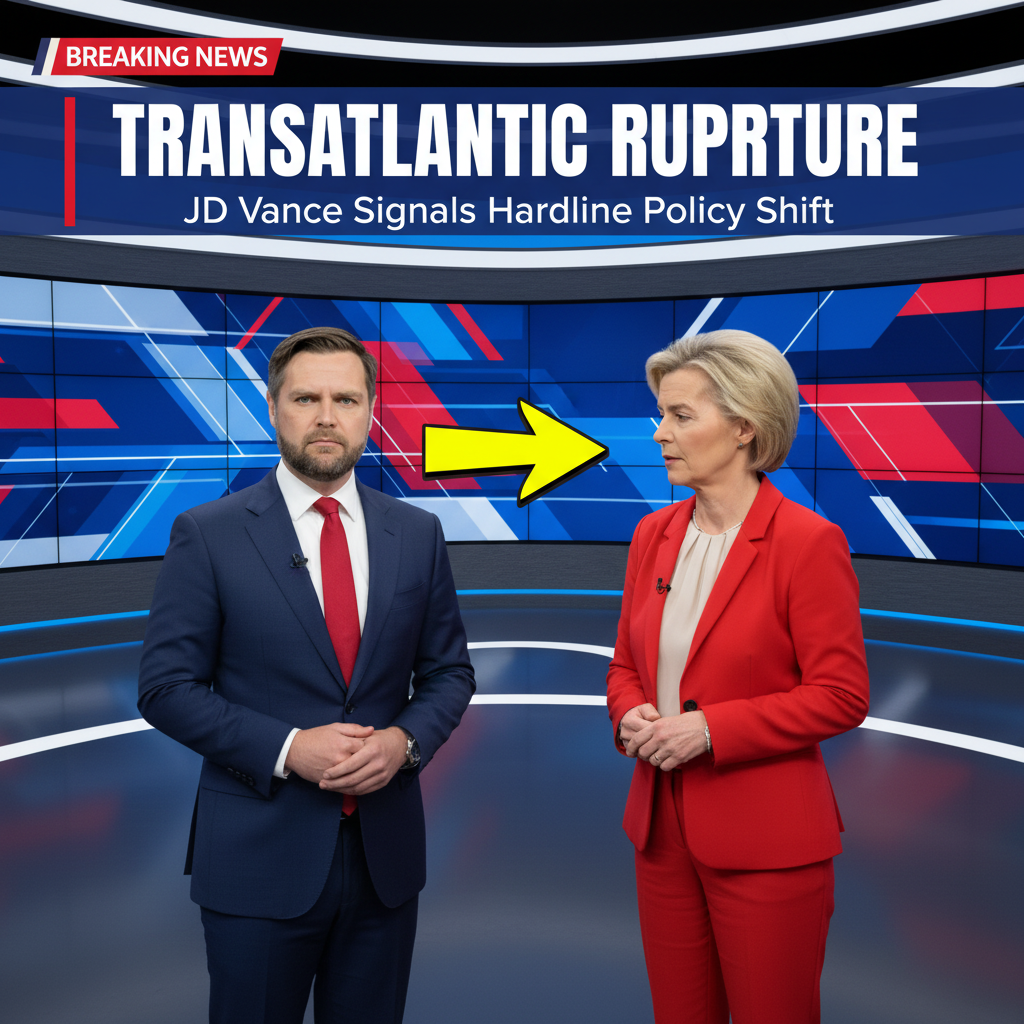
The fragile balance of the transatlantic alliance appeared to fracture this week after remarks attributed to JD Vance intensified an already volatile standoff between Washington and Brussels. Analysts are now recasting routine diplomatic friction as a profound recalibration of power between the United States and the European Union.
A New Transactional Doctrine
At the center of the shift is an unapologetically transactional view of global alliances. According to officials familiar with internal discussions, the White House has grown increasingly skeptical of an imbalanced relationship where American resources underpin European prosperity without sufficient reciprocity. The current administration is reportedly conducting a sweeping internal audit of three decades of economic and military cooperation. The new doctrine is simple: alliances must deliver measurable returns.
Economic Fallout and Market Uncertainty
The economic implications are already visible. Following a breakdown in talks regarding trade and defense spending, major European indices experienced sharp declines. Export-heavy sectors, particularly automotive and manufacturing, are bearing the brunt of the uncertainty. Key points of contention include:
- Significant trade imbalances between the U.S. and the EU.
- European defense spending falling short of commitments.
- Competing visions of industrial competition and regulation.
A Philosophical Divide
The confrontation highlights a deeper divide. While European policymakers emphasize multilateralism and social protections, the current U.S. administration prioritizes sovereignty, bilateral leverage, and economic interests. This clash of visions is no longer abstract; it is impacting supply chains and security frameworks in real time. As rhetoric hardens, the era of unquestioned transatlantic alignment appears to be coming to an end, potentially redefining global politics for a generation.