Exposing The “House Of Horrors” Fiction: How Detective-style Clickbait Exploits Social Media

In recent days, social media feeds have been buzzing with a haunting hook: “The house was still standing… but one critical piece of the story had been deliberately cut out.” The post lures readers into a sensationalized narrative about a supposed case in Hamden, where 16 children were allegedly found living in horrific conditions, complete with a mysterious missing item mailed to a local library. However, beneath this slick, Hollywood-style thriller veneer lies a stark reality: the entire story is completely fake, engineered solely to harvest clicks from internet users.
The proliferation of these sensationalized narratives on social platforms blurs the line between true crime and cheap fiction, weaponizing public curiosity for personal profit.
1. Deconstructing the “House of Horrors” Trend: The Anatomy of Online Clickbait
Posts utilizing this formula typically open with an alert emoji ( ), reference a specific geographic location (like Hamden), invent a fictional family name (such as the Siders family), and tease bizarre, high-stakes twists (a surgically removed piece of evidence, a library drop-off, or an overturned theory).
The Business Model: Creators and content farms use text-generation tools or open-ended creative writing to construct cliffhangers, purposely cutting the story short and dropping a familiar call-to-action: “Read more below in the comments.”
The Motive: When curious users click the link, they are directed to ad-laden websites, content farms, or phishing links. The creators profit directly from that traffic, entirely unbothered by whether their fabricated tales confuse or mislead the public.
In the case of the alleged “Siders family” investigation in Hamden, no law enforcement agency and no legitimate news outlet has ever recorded any such event. It is a pure fiction piece cobbled together from television tropes.
2. The Danger of Fabricating Severe Crimes
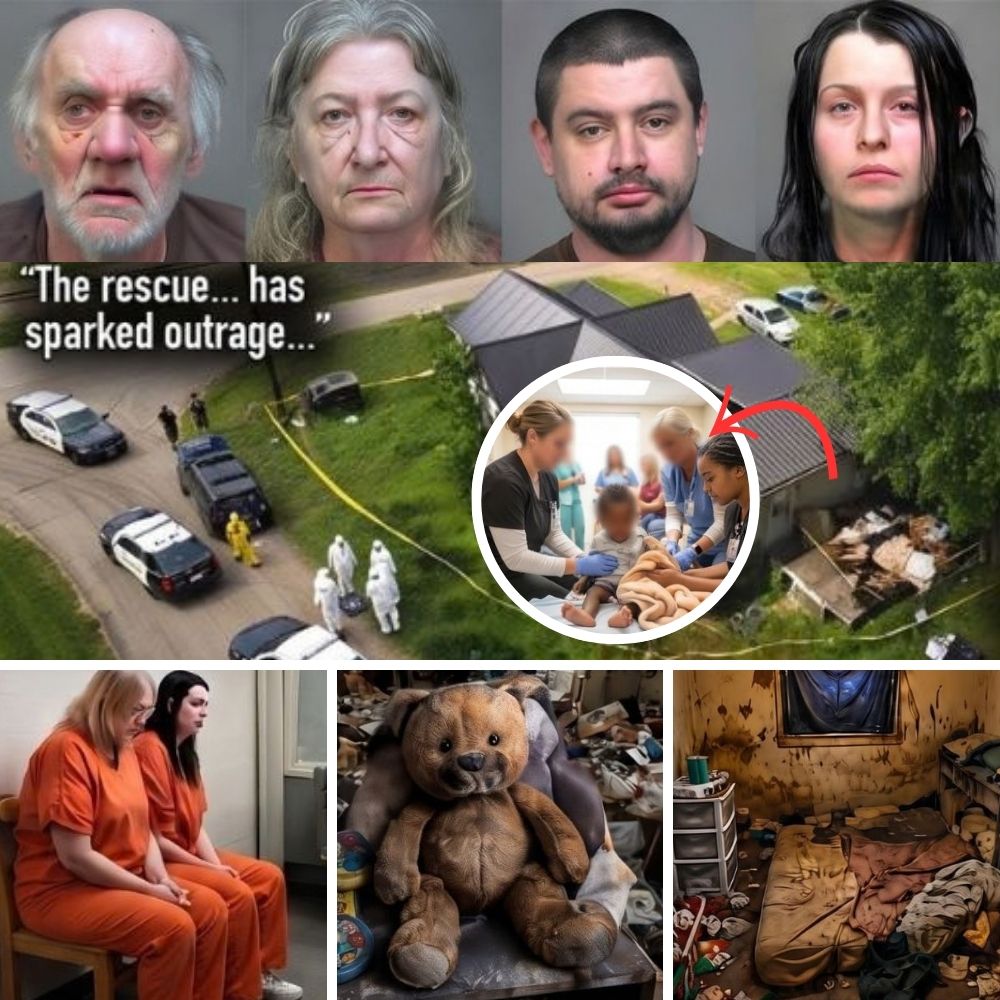
Inventing horrifying tragedies—such as child 𝘢bu𝘴e, unsolved murders, or sinister “houses of horrors”—carries deeply negative consequences:
Overshadowing Real Victims: When social media feeds fill up with fictional stories, public attention is diverted away from real instances of domestic violence, child 𝘢bu𝘴e, and societal issues that genuinely require awareness and reform.
Spreading Misinformation: Many users mistake these creative writing exercises for active, real-world criminal investigations, sharing them widely and accelerating the spread of fake news.
Desensitizing Genuine Trauma: Turning human suffering and dark criminal themes into a casual puzzle or a game for online entertainment lacks basic empathy and moral responsibility.
3. How to Identify and Avoid “True Crime Clickbait” Traps
To avoid falling victim to these manipulative tactics, social media users should cultivate critical thinking and keep a few key red flags in mind:
Check Verifiable Sources: If a monumental crime actually occurs (such as discovering 16 neglected children), major global news networks like BBC, Reuters, Associated Press, or local police departments will report on it with clear names, charges, and verifiable legal updates.
Beware of Sensationalized Tone: Overly dramatic phrasing designed to trigger strong emotional responses—such as “investigators were stunned,” “the truth was buried,” or “pure evil”—coupled with a prompt to click a comment link is almost always a hallmark of low-quality engagement bait.
Refrain from Interacting: Liking, sharing, or clicking links on these fabricated posts only fuels the cycle, rewarding bad actors for pushing junk content into public spaces.
Conclusion
The story regarding the Hamden residence, the Siders family, and the library book is nothing more than an illusion engineered for commercial gain on the internet. There is no overturned investigation and no dark secret hidden inside an old book.
In the digital age, where information travels instantaneously, maintaining a critical mindset, respecting the truth, and refusing to consume toxic fiction are the most effective ways to preserve a clean, healthy, and empathetic online environment.