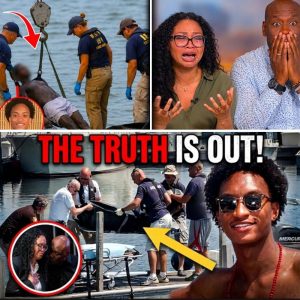
A Mississippi grand jury has declined to indict anyone in the dєatᩚh of 18-year-old Nolan Xavier Wells, concluding after an extensive review that there was no credible evidence of criminal conduct or racial motivation surrounding the teenager’s disappearance and dєatᩚh.
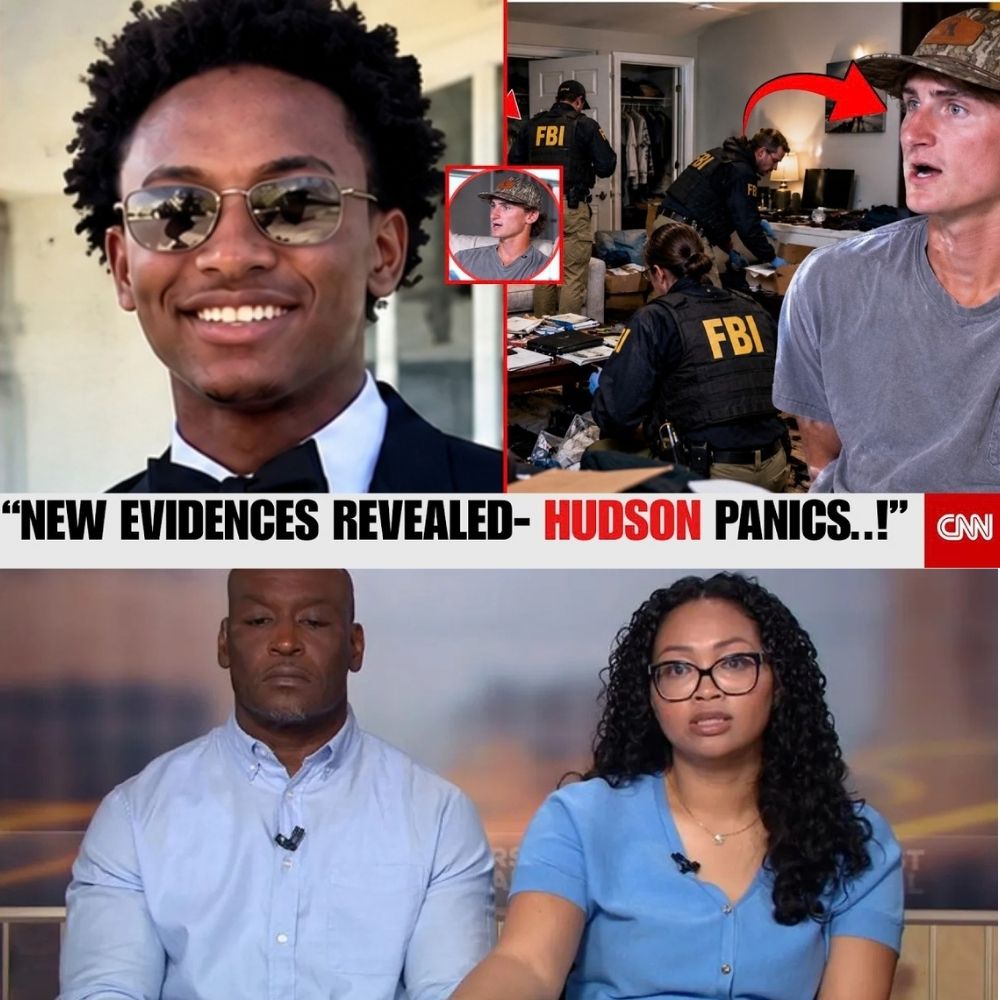
The decision comes more than two months after Wells disappeared during a Fourth of July outing to Horn Island, a barrier island off the Mississippi Gulf Coast.
His body was recovered from the water near the island on July 6, two days after he went missing.
The grand jury ultimately found that the position, condition, time of discovery and location of Wells’ body were consistent with drowning.
However, investigators have not established drowning as an unequivocal medical cause of dєatᩚh. Both the state examination and an independent autopsy arranged by Wells’ family had previously left the cause and manner of dєatᩚh undetermined.
The distinction has remained central to the case because the circumstances surrounding Wells’ disappearance generated widespread questions and intense public speculation.
NO INDICTMENT AFTER AN EXTENSIVE REVIEW
The Jackson County grand jury reviewed a large amount of evidence before reaching its decision.
According to the report, jurors heard testimony from 43 witnesses and examined physical evidence, digital records, police reports, photographs, videos, maps, cellphone information and GPS data.
The panel also reviewed evidence involving the boats that transported people to and from Horn Island on July 4.
After considering that material, the grand jury returned what is known as a “no true bill,” meaning there was not sufficient evidence to bring criminal charges against anyone in connection with Wells’ dєatᩚh.
The panel specifically found no credible evidence that people aboard the boats involved in the trip had committed criminal acts related to Wells.
The decision means that, at present, no one will face criminal charges over his dєatᩚh.
HOW NOLAN DISAPPEARED
Wells had traveled to Horn Island with friends as part of a larger Fourth of July gathering.
According to information reviewed by investigators, Wells remained on the island after the boat he arrived on left.
Friends told authorities that he had decided to stay behind and speak with a girl he had met during the gathering.
His friends returned toward the mainland without him.
Wells was last known to have been on or near the island during the afternoon of July 4.
His mother later reported him missing.
A search followed, and his body was discovered in the water near Horn Island on July 6.
The circumstances immediately prompted questions about why Wells had remained behind and what happened during the period between his disappearance and the discovery of his body.
THE GRAND JURY ADDRESSED THE BOAT ACCOUNTS
One of the major questions surrounding the case involved the people who had traveled with Wells.
Public attention focused heavily on three boats — the Triton, Palm Beach and Tideline.
Investigators examined GPS information, surveillance footage, cellphone data and statements from people associated with the boats.
The grand jury concluded that those individuals cooperated with the investigation and provided investigators with electronic devices, GPS information, video and other evidence.
The panel said it found no credible evidence that anyone aboard those boats had engaged in criminal conduct connected to Wells’ dєatᩚh.
The report also rejected several claims that had circulated publicly about the boats and the people aboard them.
NO EVIDENCE OF A PHYSICAL ALTERCATION
The grand jury found no evidence that Wells had been involved in a physical fight or argument on July 4.
That finding addresses one of the major questions raised during the public debate surrounding the case.
Investigators also reviewed testimony from a person who said they saw Wells slip awkwardly from the side of a boat around the time he was last seen.
The witness could not determine whether Wells struck his head during the fall.
According to the grand jury report, however, Wells continued socializing afterward and did not appear to be injured.
That testimony became part of the evidence considered by jurors when evaluating whether an accidental fall could have contributed to what happened.
THE BRUISING FOUND ON WELLS
The investigation did uncover bruising on the back of Wells’ head.
But the grand jury concluded that the injury was not fatal.
The panel also said it found no evidence of another fatal injury or an underlying organic disease that would explain his dєatᩚh.
What caused the head injury remained uncertain.
That uncertainty is one reason the exact sequence of events before Wells entered the water cannot be reconstructed with complete certainty from the available evidence.
WHY DROWNING BECAME THE LEADING EXPLANATION
The grand jury’s reference to drowning was based on the circumstances surrounding where and how Wells’ body was recovered.
The report did not say that a medical examiner had definitively established drowning as the cause of dєatᩚh.
Instead, the panel said the evidence was consistent with drowning and described that conclusion as one reached through the available evidence and elimination of other explanations.
That distinction matters because the medical examinations were complicated by the condition of the body.
The independent examination arranged by Wells’ family had also classified the cause and manner of dєatᩚh as undetermined pending further investigation.
TOXICOLOGY DID NOT PROVIDE A CLEAR ANSWER
Toxicology was another part of the investigation.
The grand jury report said the toxicology results were not particularly informative because decomposition affected the reliability of the samples available for testing.
The panel did note that Wells had no cocaine detected and found no evidence that he had used cocaine.
Investigators also determined that Wells had purchased alcohol using a fake identification card.
The grand jury said there was no evidence that an adult over the legal drinking age had provided alcohol to Wells or his friends on the island.
These findings did not establish intoxication as the cause of Wells’ dєatᩚh.
THE PHONE QUESTION
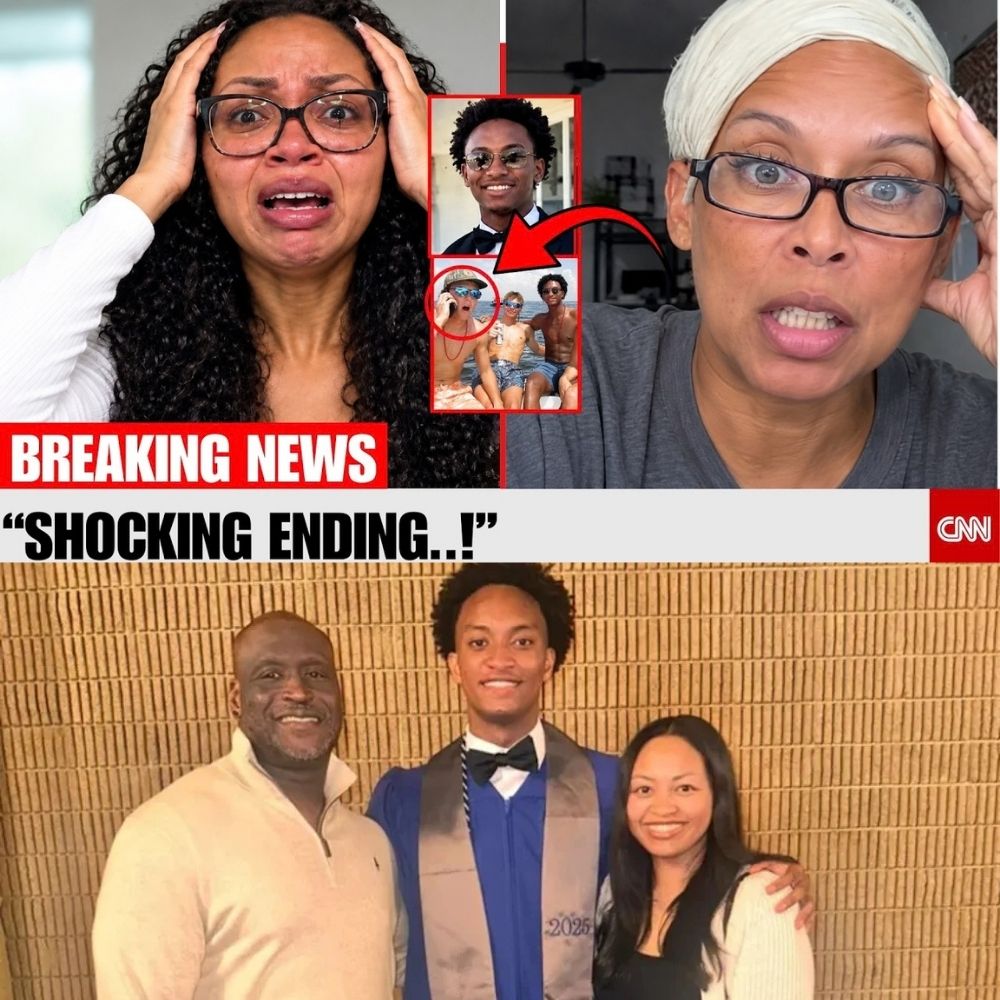
Another issue that attracted widespread attention was Wells’ cellphone.
His phone was later brought back to the mainland after his disappearance, while Wells himself remained missing.
Some public speculation focused on why his phone was not with him.
The grand jury, however, concluded that the phone’s movement was not inherently suspicious.
The report noted that people at Horn Island frequently moved between boats and sometimes left personal belongings, including phones, on boats belonging to friends.
Jurors also found that Wells’ phone was not the only phone that returned to the mainland without its owner.
Based on the evidence reviewed, the grand jury did not consider the phone’s location evidence of criminal conduct.
THE RACE QUESTION
Wells was Black, while some of the friends who accompanied him on the trip were White.
As the case attracted national attention, allegations emerged online that race may have played a role in his disappearance or dєatᩚh.
Those claims became a major part of the public discussion.
The Jackson County district attorney, Angel Myers McIlrath, said investigators found no evidence supporting the allegation that Wells’ dєatᩚh was racially motivated.
The grand jury reached the same conclusion after reviewing the evidence.
The panel found no credible evidence that racial motivation played a role in the events surrounding Wells’ disappearance or dєatᩚh.
THE DISTRICT ATTORNEY RESPONDS TO ONLINE SPECULATION
McIlrath strongly criticized the wave of online allegations that had surrounded the case.
In a statement released with the grand jury report, she said the public narrative about Wells traveling to an island with White friends and only those friends returning had been presented inaccurately.
She argued that the investigation showed Wells had been part of a much larger gathering and that the evidence did not support the criminal or racially motivated theories that had spread online.
Her comments were directed at claims about the investigation rather than at the family’s grief or questions about Wells’ dєatᩚh.
WELLS’ FAMILY STILL HAS QUESTIONS
The grand jury’s decision has not ended the family’s concerns.
Wells’ parents and their attorney, civil-rights lawyer Ben Crump, have questioned whether the available evidence fully explains how the 18-year-old ended up in the water.
Crump has continued to call for additional transparency, including access to investigative materials and a fuller explanation of the medical findings.
The family’s position differs from the conclusion reached by the grand jury.
While the jury found no credible evidence of criminal conduct, Wells’ family has said the decision leaves important questions unanswered.
AN INDEPENDENT AUTOPSY ALSO COULD NOT DETERMINE THE CAUSE
The family previously arranged an independent autopsy.
That examination did not establish a definitive cause or manner of dєatᩚh.
The independent findings therefore did not provide the clear medical answer the family had hoped for.
The state medical examination also failed to conclusively establish the cause.
Instead, the evidence available to investigators pointed toward drowning as a possible explanation while leaving some uncertainty about the exact circumstances.
The grand jury ultimately accepted that the circumstances were consistent with drowning but did not claim that every question surrounding Wells’ dєatᩚh had been medically resolved.
THE INVESTIGATION COULD BE REOPENED
Although the grand jury has declined to bring charges, the case is not necessarily closed forever.
Mississippi has no statute of limitations for homicide cases.
The grand jury report specifically states that if credible new evidence emerges indicating that Wells’ dєatᩚh was not accidental, the matter can be presented to another Jackson County grand jury.
That provision leaves open a path for the investigation to be revisited if significant new evidence becomes available.
For now, however, authorities say they have found no evidence warranting criminal charges.
WHAT IS KNOWN — AND WHAT REMAINS UNCERTAIN
The investigation has established several important facts.
Nolan Wells was 18 when he disappeared during a Fourth of July gathering at Horn Island.
He was last known to be on the island after his friends departed.
His body was recovered from the surrounding waters two days later.
Investigators found bruising on his head but determined it was not fatal.
They found no evidence of a fatal injury or organic disease.
The grand jury found no evidence of a physical altercation.
It also found no credible evidence of criminal conduct by the people who traveled to and from the island with him.
And it found no evidence that racial motivation played a role.
At the same time, the exact medical cause of Wells’ dєatᩚh has not been conclusively established.
The grand jury found the circumstances consistent with drowning, but the medical examinations had previously listed the cause as undetermined.
That leaves an important distinction between what investigators believe the evidence indicates and what has been medically proven.
A CASE THAT ATTRACTED NATIONAL ATTENTION
Wells’ dєatᩚh quickly became a national story because of the unusual circumstances surrounding his disappearance, the photographs and videos circulating online, and questions raised about the people who were with him.
The attention intensified as Wells’ family sought answers and outside advocates became involved.
But the grand jury’s review was designed to examine the evidence rather than the online theories.
Jurors ultimately concluded that the evidence did not support criminal charges.
For Wells’ family, however, the conclusion does not necessarily resolve every question about what happened during his final hours.
THE CASE NOW MOVES INTO A DIFFERENT PHASE
The grand jury’s decision marks the end of the current criminal review unless new evidence emerges.
No person has been indicted in connection with Wells’ dєatᩚh.
Authorities say they found no evidence of criminal wrongdoing or racial motivation.
The grand jury’s findings point toward drowning as a possible explanation based on the circumstances surrounding the recovery of Wells’ body.
But the precise cause and manner of dєatᩚh remain an important part of the unanswered story.
For the family, the search for clarity may continue outside the criminal process.
And if credible evidence eventually emerges that changes the understanding of how Wells died, Mississippi law leaves open the possibility of presenting the case to a grand jury again.
💔 STELLA PARTON BREAKS HER SILENCE — What She Said About Dolly’s Health Has Fans Looking Back
Dolly Parton’s Sister Breaks Silence What Really Happened - GMT - G1
Stella Parton was born May 4, 1949, the sixth of twelve children raised by Robert Lee and Avie Lee Parton in Sevierville, Tennessee — a household defined by noise, limited money, and almost no privacy, the kind of environment that produced strong, determined personalities.
Stella was one of them.
By seven, she was appearing alongside her older sister Dolly on a Knoxville television program; by her teens, she was writing her own songs, though marriage and motherhood pulled music to the margins of her life for a stretch.
The dream never fully disappeared.

In 1967, she recorded a gospel album with her mother and sisters, and later worked clubs in Washington, D.C., before founding her own record label in 1975 and releasing “I Want to Hold You in My Dreams Tonight,” which climbed to number nine on the country charts.
Long before any of that commercial success, Stella had already shown a willingness to take positions others avoided.
At 26, amid backlash against Australian singer Olivia Newton-John for winning recognition in country music, Stella recorded “Ode to Olivia” in her defense — a stand that offered her no career benefit and real risk of criticism, but one she took anyway simply because she believed staying silent was the wrong choice.
That instinct defined the rest of her career: hits like “The Danger of a Stranger” and “Steady as the Rain” (written by Dolly) built a genuine, independent following, including in the U.K., while Stella also worked in New York theater and spoke openly, often controversially, about poverty, domestic violence, and the treatment of women in the music industry.
She was named the Christian Country Music Association’s Female Vocalist of the Year in 2004.
Through all of it, she remained defined publicly, more often than not, as simply “Dolly’s little sister” — a label she spent five decades quietly proving didn’t tell the full story.
That same directness is why her comments in the fall of 2025 carried real weight.
Stella had never positioned herself as the family’s image manager or spokesperson; she was, by reputation, someone who believed difficult truths shouldn’t stay hidden indefinitely.
What she described wasn’t dramatic or accusatory — it was a portrait of a woman who had spent years prioritizing everyone else’s needs over her own.
The context mattered.
Carl Dean, Dolly’s husband of nearly sixty years, died in March 2025 at 82, after a long illness during which Dolly had devoted herself almost entirely to his care.
She later acknowledged that in the process, she’d neglected her own health significantly.
The loss reverberated through the whole extended family — the Partons had lost three brothers in the years surrounding this period, compounding grief that, for a family that had once crowded twelve children into a single small home, meant losing pieces of a shared childhood one after another.
Stella herself went seven years without releasing new music during this stretch, later describing the period simply as one shaped by sorrow, while still speaking about the importance of finding moments of laughter within it.
Looking back, one moment reads very differently in hindsight than it did at the time: in late September 2025, Dolly postponed her planned Las Vegas residency, citing health challenges — a rare cancellation for a performer whose six-decade career had included very few of them.
At the time, most fans treated it as a minor, temporary setback.
Stella’s later reflections suggested the signs had actually been building for some time, visible to family in ways the public smile made easy to miss.
That concern crystallized publicly not long after, when Dolly’s younger sister Frieda posted a simple request on Facebook asking fans to pray for Dolly.
What looked at first like an ordinary, well-meaning gesture spread rapidly, sparking widespread speculation about how serious Dolly’s condition actually was.
Dolly herself responded directly within days, appearing in a video from a Grand Ole Opry commercial shoot, insisting with her familiar humor that she wasn’t finished yet — the now widely remembered “I ain’t dead yet” moment that briefly quieted public concern.
In the months that followed, the pattern repeated: reassuring updates about kidney stones, dehydration, and treatment, paired with continued work on new projects, right up until Dolly Parton’s death on August 25, 2026, at 80.
Looking back across that full timeline — the postponed residency, the family’s public worry, Stella’s own account of a sister who consistently deprioritized her own wellbeing — it becomes easier to see what the people closest to Dolly understood well before the rest of the world did: that the warmth and resilience the public saw every time she appeared on camera came at a real, largely invisible cost.