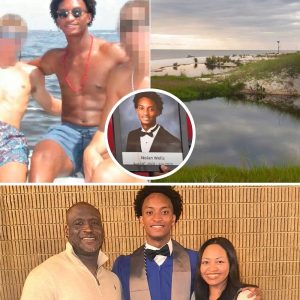
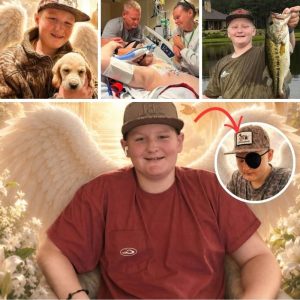
There are moments in life when every definition of love changes.
Most parents spend their lives promising to protect their children.
They promise to hold their hands through fear.
To stand between them and danger.
To fight every battle they possibly can.
To never let go.
But sometimes life places a mother before an impossible choice—one so heartbreaking that no parent should ever have to face it.
There comes a moment when holding on no longer protects the child.
Instead, it prolongs the suffering.
And in that unbearable moment, love asks something completely different.
It asks a parent to let go.
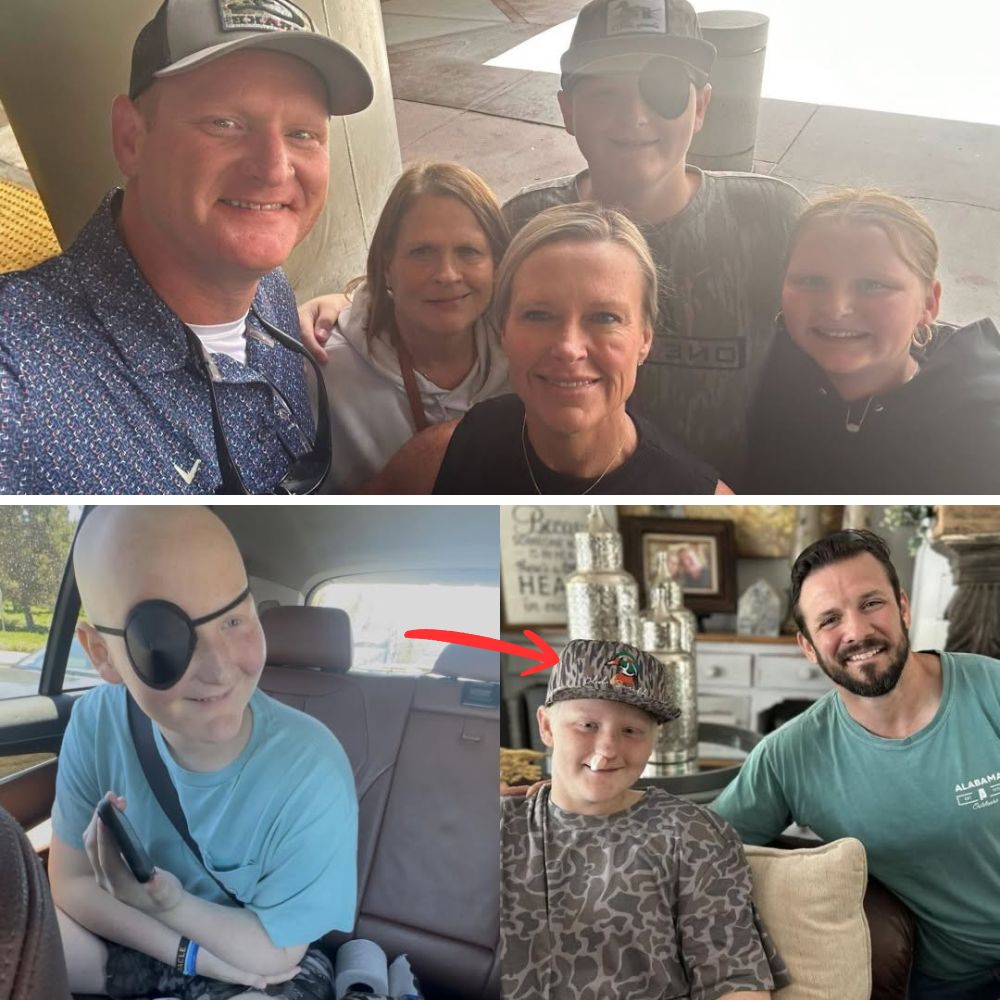
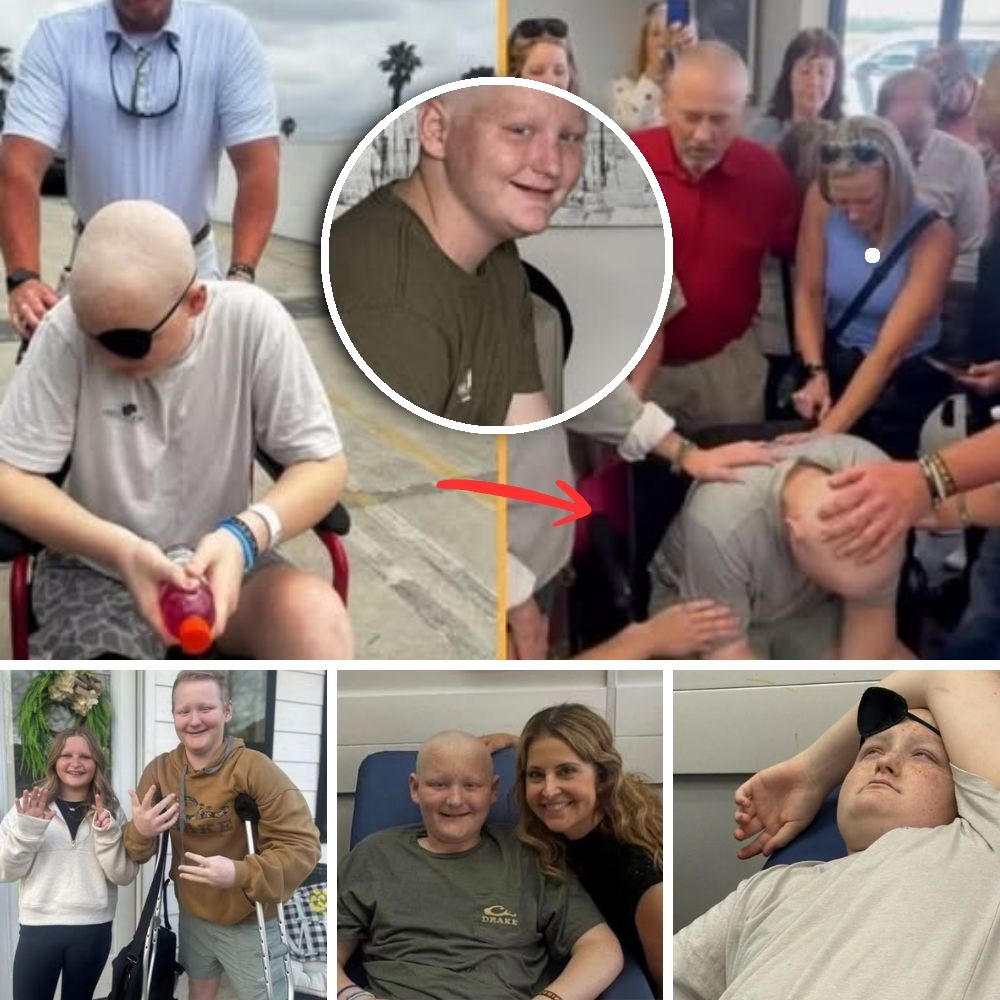
For Brittney Roberts, that moment arrived after eighteen exhausting months of watching her fifteen-year-old son, Will, fight Stage 4 bone cancer with extraordinary courage.
It became the longest night of her life.
And perhaps the purest expression of a mother’s love she would ever give.
Eighteen Months of Hope
When Will was first diagnosed, his family never imagined how dramatically life would change.
Calendars once filled with birthdays, school events, and family trips slowly transformed into schedules of chemotherapy, scans, medications, blood work, and hospital admissions.
Every encouraging report became a reason to celebrate.
Every setback became another mountain to climb.
Doctors searched tirelessly for treatments.
Researchers explored new possibilities.
Friends organized prayer circles.
Strangers from around the world followed Will’s story with hope.
His family never stopped believing another breakthrough might arrive.
Will never stopped believing either.
Even during the hardest treatments, he found ways to smile at nurses, encourage younger patients, and comfort his parents when they thought they were supposed to be comforting him.
His illness tested his body.
It never defeated his spirit.
The Conversation No Parent Wants
Eventually, the medical team reached a point every family fears.
The available treatments could no longer stop the disease.
The focus of care quietly shifted.
No longer from curing.
But from comforting.
The doctors spoke gently.
They explained that medicine had reached its limits.
Continuing aggressive interventions would not reverse what was happening.
Instead, they risked extending pain that could no longer be meaningfully relieved.
No parent prepares for those words.
No handbook explains how to respond.
There is only silence.
And tears.
And the overwhelming realization that love now requires a completely different kind of courage.
The Meaning of Letting Go
People unfamiliar with end-of-life care sometimes misunderstand what it means when a family decides to discontinue life-sustaining treatment.
They imagine surrender.
They imagine giving up.
Families who have walked that road describe something entirely different.
They are not choosing dєatᩚh.
They are recognizing that dєatᩚh is no longer preventable.
The choice before them is whether to continue interventions that can no longer restore health or to focus entirely on ensuring comfort, dignity, and peace.
For Brittney, the decision was never about ending hope.
It was about changing what hope looked like.
Hope was no longer another cure.
Hope became one final peaceful breath.
Hope became freedom from relentless pain.
A Mother Carrying the Pain Instead
Those who stood beside Brittney that night later remembered one thing more than anything else.
She never asked why this was happening to her.
She asked only one question.
“Is he hurting?”
That question defined every decision she made.
If Will suffered, she suffered with him.
If he smiled, the room felt brighter.
If he rested peacefully, she finally breathed again.
When she realized she could no longer remove his illness, she chose the only gift still within her power.
She refused to let him carry unnecessary pain any longer.
Instead, she accepted something no parent ever wants.
She would carry the heartbreak for the rest of her life.
So her son no longer had to.
The Quietest Room in the Hospital
As the family gathered around Will’s bedside, the intensive care unit seemed strangely still.
The hallway lights glowed softly.
Nurses walked quietly, giving the family every moment they needed.
No one rushed the conversation.
No one interrupted the silence.
Jason stood beside the bed, holding his son’s shoulder.
Brittney gently brushed Will’s hair away from his forehead just as she had done countless times since he was a little boy.
Some moments require no words.
Love fills the silence completely.
The Promise Every Mother Makes
When Will was born, Brittney made a promise she never spoke aloud.
She would protect him.
Every mother makes that promise.
She protected him from nightmares.
From scraped knees.
From childhood fears.
From disappointment whenever she could.
Cancer introduced an enemy she could not fight herself.
That truth became the hardest lesson of motherhood.
Sometimes protecting a child means fighting.
Sometimes protecting a child means knowing when the battle has become their burden instead of yours.
That realization shattered her heart.
Yet it also revealed the extraordinary depth of parental love.
More Than a Medical Decision
To outside observers, medical decisions often appear clinical.
Charts.
Equipment.
Medication.
Protocols.
Families experience something entirely different.
They see birthdays.
First steps.
School photographs.
Bedtime stories.
Christmas mornings.
Every memory rushes into the room simultaneously.
No decision is made in isolation.
It carries the weight of an entire lifetime shared together.
That is why these moments are never simply medical.
They are profoundly human.
The Last Gift
According to this fictional story, Brittney reached into her purse and removed a small cloth pouch.
Inside rested a tiny wooden angel that Will had carried through many hospital stays.
Its wings had become smooth after months of being held during difficult nights.
She gently placed it into his hand.
Not because she believed the object possessed magical power.
Because it represented every prayer she had whispered throughout his journey.
Every hope.
Every tear.
Every promise.
She wanted him to leave this world surrounded by reminders of how deeply he had always been loved.
“You Don’t Have to Hurt Anymore”
Leaning close, Brittney quietly whispered words no mother ever dreams of saying.
“You don’t have to hurt anymore.”
There was no dramatic music.
No extraordinary miracle.
Only unconditional love expressed in its most painful form.
Jason quietly held Will’s other hand.
Neither parent wanted the moment to end.
Neither wanted another second of pain for their son.
Two impossible truths existed together.
They loved him enough to wish he could stay forever.
They loved him enough to let him rest.
The Difference Between Love and Possession
Grief counselors often explain that love is not measured by how tightly we hold someone.
Sometimes it is measured by our willingness to place another person’s peace above our own deepest desires.
That distinction is impossible to understand until life demands it.
Brittney was not releasing her love.
She was releasing Will from suffering.
The love remained.
It always would.
The World Outside Continued Turning
Morning eventually arrived.
Cars filled the streets.
Coffee shops opened.
Children walked into classrooms.
The world continued exactly as it always had.
Inside one family’s heart, however, everything had changed forever.
People often assume grief is loud.
In reality, it usually becomes astonishingly quiet.
An empty bedroom.
An unused backpack.
A favorite mug still resting in the kitchen cabinet.
The silence becomes its own language.
What Will Left Behind
Will’s greatest legacy was never his illness.
It was his remarkable compassion.
During his long treatment, he reportedly continued worrying about other children who would begin similar battles after him.
He hoped future patients would benefit from better research and kinder treatments.
His concern reached beyond himself.
Even while suffering, he continued thinking about others.
That selflessness inspired everyone fortunate enough to know his story.
A Mother’s Lifetime Sentence
People sometimes ask grieving parents whether the pain ever disappears.
Many answer honestly.
No.
It changes.
It softens around the edges.
But it never truly leaves.
Brittney understood that before she walked out of the hospital.
She knew she would carry birthdays without Will.
Holidays without Will.
Ordinary Tuesday afternoons without hearing his voice.
She accepted all of it willingly.
Not because she wanted that future.
Because she wanted something even more.
Her son’s peace.
If someone had to carry the pain from that night forward, she silently decided it would be her.
Not him.
The Courage No One Celebrates
Society celebrates visible courage.
Athletes winning championships.
Firefighters entering burning buildings.
Doctors performing life-saving procedures.
There is another kind of courage that rarely receives applause.
The courage of parents who make impossible decisions out of love.
The courage to remain beside a child’s bed until the very last breath.
The courage to whisper goodbye while every part of your heart begs for one more moment.
That courage is invisible.
But it is extraordinary.
Love Beyond Goodbye
Love does not end when a heartbeat does.
It changes form.
It becomes photographs carefully protected inside albums.
Stories shared around dinner tables.
Quiet tears during birthdays.
Smiles when an old memory suddenly returns.
Will may no longer walk beside his family.
Yet every act of kindness inspired by his story allows part of his legacy to continue living.
When Letting Go Is Love
Perhaps that is the lesson hidden inside one mother’s impossible decision.
People often believe love means refusing to let go.
Sometimes the deepest love says something else entirely.
It says,
“I would carry this heartbreak forever if it means you never have to hurt again.”
That kind of love asks for nothing in return.
It receives no reward.
It simply sacrifices.
And in doing so, it becomes one of the purest expressions of parenthood imaginable.
Will Roberts’ journey reminds us that courage is not found only in those who fight illness.
It is also found in the parents who fight beside them, hold them through every painful night, and, when there is no battle left to win, find the strength to give one final gift.
The gift of peace.
The gift of freedom from pain.
The gift that only the deepest, most selfless love can ever give.
💔 STELLA PARTON BREAKS HER SILENCE — What She Said About Dolly’s Health Has Fans Looking Back
Dolly Parton’s Sister Breaks Silence What Really Happened - GMT - G1
Stella Parton was born May 4, 1949, the sixth of twelve children raised by Robert Lee and Avie Lee Parton in Sevierville, Tennessee — a household defined by noise, limited money, and almost no privacy, the kind of environment that produced strong, determined personalities.
Stella was one of them.
By seven, she was appearing alongside her older sister Dolly on a Knoxville television program; by her teens, she was writing her own songs, though marriage and motherhood pulled music to the margins of her life for a stretch.
The dream never fully disappeared.

In 1967, she recorded a gospel album with her mother and sisters, and later worked clubs in Washington, D.C., before founding her own record label in 1975 and releasing “I Want to Hold You in My Dreams Tonight,” which climbed to number nine on the country charts.
Long before any of that commercial success, Stella had already shown a willingness to take positions others avoided.
At 26, amid backlash against Australian singer Olivia Newton-John for winning recognition in country music, Stella recorded “Ode to Olivia” in her defense — a stand that offered her no career benefit and real risk of criticism, but one she took anyway simply because she believed staying silent was the wrong choice.
That instinct defined the rest of her career: hits like “The Danger of a Stranger” and “Steady as the Rain” (written by Dolly) built a genuine, independent following, including in the U.K., while Stella also worked in New York theater and spoke openly, often controversially, about poverty, domestic violence, and the treatment of women in the music industry.
She was named the Christian Country Music Association’s Female Vocalist of the Year in 2004.
Through all of it, she remained defined publicly, more often than not, as simply “Dolly’s little sister” — a label she spent five decades quietly proving didn’t tell the full story.
That same directness is why her comments in the fall of 2025 carried real weight.
Stella had never positioned herself as the family’s image manager or spokesperson; she was, by reputation, someone who believed difficult truths shouldn’t stay hidden indefinitely.
What she described wasn’t dramatic or accusatory — it was a portrait of a woman who had spent years prioritizing everyone else’s needs over her own.
The context mattered.
Carl Dean, Dolly’s husband of nearly sixty years, died in March 2025 at 82, after a long illness during which Dolly had devoted herself almost entirely to his care.
She later acknowledged that in the process, she’d neglected her own health significantly.
The loss reverberated through the whole extended family — the Partons had lost three brothers in the years surrounding this period, compounding grief that, for a family that had once crowded twelve children into a single small home, meant losing pieces of a shared childhood one after another.
Stella herself went seven years without releasing new music during this stretch, later describing the period simply as one shaped by sorrow, while still speaking about the importance of finding moments of laughter within it.
Looking back, one moment reads very differently in hindsight than it did at the time: in late September 2025, Dolly postponed her planned Las Vegas residency, citing health challenges — a rare cancellation for a performer whose six-decade career had included very few of them.
At the time, most fans treated it as a minor, temporary setback.
Stella’s later reflections suggested the signs had actually been building for some time, visible to family in ways the public smile made easy to miss.
That concern crystallized publicly not long after, when Dolly’s younger sister Frieda posted a simple request on Facebook asking fans to pray for Dolly.
What looked at first like an ordinary, well-meaning gesture spread rapidly, sparking widespread speculation about how serious Dolly’s condition actually was.
Dolly herself responded directly within days, appearing in a video from a Grand Ole Opry commercial shoot, insisting with her familiar humor that she wasn’t finished yet — the now widely remembered “I ain’t dead yet” moment that briefly quieted public concern.
In the months that followed, the pattern repeated: reassuring updates about kidney stones, dehydration, and treatment, paired with continued work on new projects, right up until Dolly Parton’s death on August 25, 2026, at 80.
Looking back across that full timeline — the postponed residency, the family’s public worry, Stella’s own account of a sister who consistently deprioritized her own wellbeing — it becomes easier to see what the people closest to Dolly understood well before the rest of the world did: that the warmth and resilience the public saw every time she appeared on camera came at a real, largely invisible cost.