For weeks, Room 417 had become a world of its own.
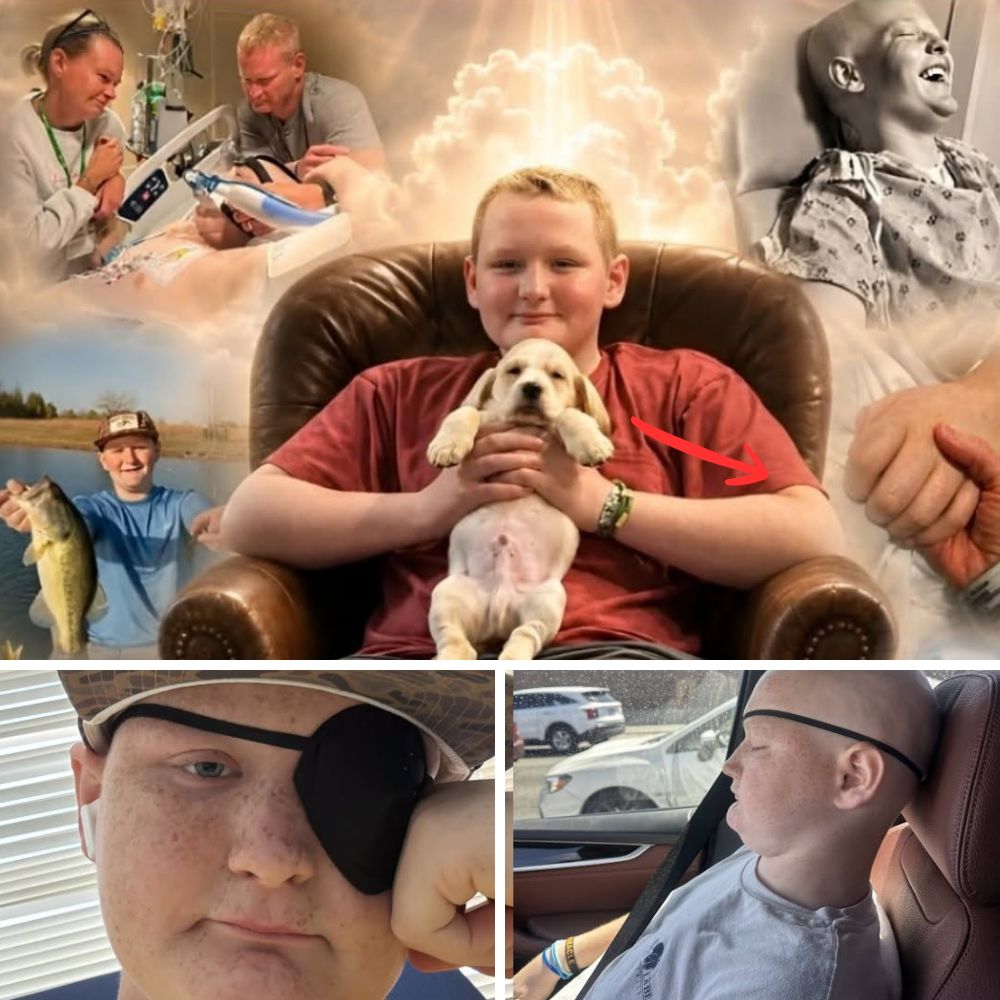
The hallway outside remained busy with nurses, physicians, therapists, and families moving from one room to another, yet inside that small space time seemed to pass differently.
Morning began with routine vital signs.
Afternoons blended into medication schedules, physical therapy sessions, and conversations with specialists.
Evenings became quieter, leaving only the gentle hum of medical equipment and the soft glow of the city lights beyond the hospital window.
For sixteen-year-old Ethan Marshall and his family, each day demanded patience they never imagined they would possess.
No one pretended the journey was easy.
Some mornings brought encouraging news.
Others required difficult adjustments to treatment plans.
Yet through every uncertain day, one promise remained unchanged.
No one would face the journey alone.
A Knock That Changed the Atmosphere
Late one Tuesday morning, a quiet knock interrupted the routine.
Ethan’s mother expected another member of the care team.
Instead, the door slowly opened to reveal someone the family had not seen in several weeks.
Standing there was Maya.
She carried no balloons.
No flowers.
No elaborate gifts.
Only a small paper bag and the brightest smile Ethan had seen in months.
“I asked if I could stop by,” she said.
“They finally said yes.”
The room instantly felt different.
Maya had once occupied the room across the hall.
The two teenagers had met during long afternoons in the recreation lounge, discovering they shared a love of strategy games, science-fiction movies, and terrible hospital cafeteria cookies.
Months earlier, they had promised each other something simple.
“Whoever gets good news first has to come back and tell the other.”
Today, Maya had come to keep that promise.
A Victory Shared
She sat beside Ethan’s bed and quietly unfolded a sheet of paper.
“My latest scans came back.”
Everyone waited.
She smiled.
“My doctors couldn’t find any signs of active disease.”
For a brief moment, no one spoke.
Then Ethan’s mother stood and hugged her.
His father wiped away tears before anyone noticed.
Ethan laughed.
“I knew you’d beat me at something.”
“You still owe me a rematch in dominoes,” Maya replied.
The room erupted with laughter.
It wasn’t loud.
It wasn’t dramatic.
But it was genuine.
Sometimes hope arrives not through speeches or headlines, but through another person’s joy.
More Than Good News
Maya explained that she could have celebrated at home.
Instead, she wanted her first stop after the appointment to be the pediatric unit.
“I remember what these rooms feel like,” she said.
“When you’re still waiting.”
“If today can remind someone that difficult seasons don’t last forever, then this is exactly where I wanted to be.”
The nurses listening from the doorway exchanged quiet smiles.
Moments like these reminded everyone why they had chosen their profession.
An Unexpected Game
From her paper bag, Maya pulled out a small domino set.
“You didn’t think I’d come empty-handed, did you?”
Within minutes, the hospital tray table transformed into a makeshift game board.
Ethan.
Maya.
His father.
One of the nurses joined between medication rounds.
Even the physical therapist stopped briefly to watch.
For nearly an hour, conversations shifted away from medicine.
Nobody discussed laboratory results.
Nobody mentioned appointments.
Instead, they debated domino strategies, shared embarrassing childhood stories, and laughed every time Ethan dramatically claimed someone had cheated.
For a little while, Room 417 no longer felt like a hospital room.
It felt like a living room filled with old friends.
A Quiet Moment
Later that afternoon, Dr. Lewis entered for his scheduled visit.
He reviewed Ethan’s chart, asked about his comfort, answered questions from the family, and carefully explained the next steps in treatment.
As he prepared to leave, Ethan’s mother hesitated.
“Doctor…”
“Would you mind staying for just a minute?”
He nodded.
The family joined hands around the bedside.
No cameras.
No audience.
No performance.
Simply a quiet moment of reflection.
Each person silently wished for strength—not only for healing, but also for wisdom, patience, and peace during the uncertain days ahead.
When the moment ended, Dr. Lewis smiled warmly.
“Whatever tomorrow brings,” he said, “you won’t face it without people who care.”
Kindness Continues to Arrive
As evening approached, another familiar face appeared at the door.
It was Ethan’s longtime basketball coach.
He wasn’t carrying medical advice.
He wasn’t there to discuss treatment.
He simply brought a scrapbook filled with photographs from years of school tournaments, birthday celebrations, camping trips, and team dinners.
Page after page reminded Ethan that life extended far beyond the walls of Room 417.
The future still held birthdays yet to celebrate.
Road trips yet to take.
Dreams still waiting to be pursued.
The Nurses Notice Something Different
One experienced nurse later reflected on that day.
“The medical equipment never changed.”
“The treatment plan didn’t suddenly become easier.”
“But something inside the room changed.”
She explained that hope is rarely measurable.
It doesn’t appear on laboratory reports.
It isn’t visible on imaging scans.
Yet everyone could feel it.
Families spoke more freely.
Patients smiled more often.
Staff members walked away carrying a little more optimism than they had brought into the room.
Sometimes emotional healing begins long before physical recovery is complete.
Ethan’s Lesson
Months later, Ethan was invited to speak with newly admitted teenagers.
One boy nervously asked,
“What helped the most?”
People expected him to mention a medication.
A procedure.
A breakthrough treatment.
Instead, Ethan answered differently.
“The people.”
“The friends who came back.”
“The nurses who remembered my favorite snacks.”
“The doctor who always explained things honestly.”
“My parents who refused to let me feel alone.”
“And the strangers who reminded me there was still kindness in the world.”
He paused before adding,
“Hope didn’t erase the hard days.”
“It simply made them easier to walk through.”
Beyond One Hospital Room
Looking back, Ethan’s family realized they would remember that Tuesday for the rest of their lives.
Not because everything suddenly became perfect.
It didn’t.
Challenges still lay ahead.
Appointments continued.
Recovery remained a gradual process.
But that single day reminded them that healing is about more than medicine alone.
It is also built through friendship.
Through compassion.
Through shared laughter over a game of dominoes.
Through honest conversations.
Through people who choose to celebrate their own victories by encouraging someone else.
Sometimes the greatest gift one person can offer another is not certainty about tomorrow.
It is the quiet assurance that no matter what tomorrow brings, they will not have to face it by themselves.
And in Room 417, on an ordinary Tuesday that became unforgettable, that assurance proved powerful enough to transform an ordinary hospital room into a place where hope felt not like a distant dream, but like a welcome guest who had finally found the door.
💔 STELLA PARTON BREAKS HER SILENCE — What She Said About Dolly’s Health Has Fans Looking Back
Dolly Parton’s Sister Breaks Silence What Really Happened - GMT - G1
Stella Parton was born May 4, 1949, the sixth of twelve children raised by Robert Lee and Avie Lee Parton in Sevierville, Tennessee — a household defined by noise, limited money, and almost no privacy, the kind of environment that produced strong, determined personalities.
Stella was one of them.
By seven, she was appearing alongside her older sister Dolly on a Knoxville television program; by her teens, she was writing her own songs, though marriage and motherhood pulled music to the margins of her life for a stretch.
The dream never fully disappeared.

In 1967, she recorded a gospel album with her mother and sisters, and later worked clubs in Washington, D.C., before founding her own record label in 1975 and releasing “I Want to Hold You in My Dreams Tonight,” which climbed to number nine on the country charts.
Long before any of that commercial success, Stella had already shown a willingness to take positions others avoided.
At 26, amid backlash against Australian singer Olivia Newton-John for winning recognition in country music, Stella recorded “Ode to Olivia” in her defense — a stand that offered her no career benefit and real risk of criticism, but one she took anyway simply because she believed staying silent was the wrong choice.
That instinct defined the rest of her career: hits like “The Danger of a Stranger” and “Steady as the Rain” (written by Dolly) built a genuine, independent following, including in the U.K., while Stella also worked in New York theater and spoke openly, often controversially, about poverty, domestic violence, and the treatment of women in the music industry.
She was named the Christian Country Music Association’s Female Vocalist of the Year in 2004.
Through all of it, she remained defined publicly, more often than not, as simply “Dolly’s little sister” — a label she spent five decades quietly proving didn’t tell the full story.
That same directness is why her comments in the fall of 2025 carried real weight.
Stella had never positioned herself as the family’s image manager or spokesperson; she was, by reputation, someone who believed difficult truths shouldn’t stay hidden indefinitely.
What she described wasn’t dramatic or accusatory — it was a portrait of a woman who had spent years prioritizing everyone else’s needs over her own.
The context mattered.
Carl Dean, Dolly’s husband of nearly sixty years, died in March 2025 at 82, after a long illness during which Dolly had devoted herself almost entirely to his care.
She later acknowledged that in the process, she’d neglected her own health significantly.
The loss reverberated through the whole extended family — the Partons had lost three brothers in the years surrounding this period, compounding grief that, for a family that had once crowded twelve children into a single small home, meant losing pieces of a shared childhood one after another.
Stella herself went seven years without releasing new music during this stretch, later describing the period simply as one shaped by sorrow, while still speaking about the importance of finding moments of laughter within it.
Looking back, one moment reads very differently in hindsight than it did at the time: in late September 2025, Dolly postponed her planned Las Vegas residency, citing health challenges — a rare cancellation for a performer whose six-decade career had included very few of them.
At the time, most fans treated it as a minor, temporary setback.
Stella’s later reflections suggested the signs had actually been building for some time, visible to family in ways the public smile made easy to miss.
That concern crystallized publicly not long after, when Dolly’s younger sister Frieda posted a simple request on Facebook asking fans to pray for Dolly.
What looked at first like an ordinary, well-meaning gesture spread rapidly, sparking widespread speculation about how serious Dolly’s condition actually was.
Dolly herself responded directly within days, appearing in a video from a Grand Ole Opry commercial shoot, insisting with her familiar humor that she wasn’t finished yet — the now widely remembered “I ain’t dead yet” moment that briefly quieted public concern.
In the months that followed, the pattern repeated: reassuring updates about kidney stones, dehydration, and treatment, paired with continued work on new projects, right up until Dolly Parton’s death on August 25, 2026, at 80.
Looking back across that full timeline — the postponed residency, the family’s public worry, Stella’s own account of a sister who consistently deprioritized her own wellbeing — it becomes easier to see what the people closest to Dolly understood well before the rest of the world did: that the warmth and resilience the public saw every time she appeared on camera came at a real, largely invisible cost.