Before hospital corridors, treatment schedules, and medical language became part of his daily life, Will was known for one thing above all else: he was almost impossible to catch once the ball reached his feet.
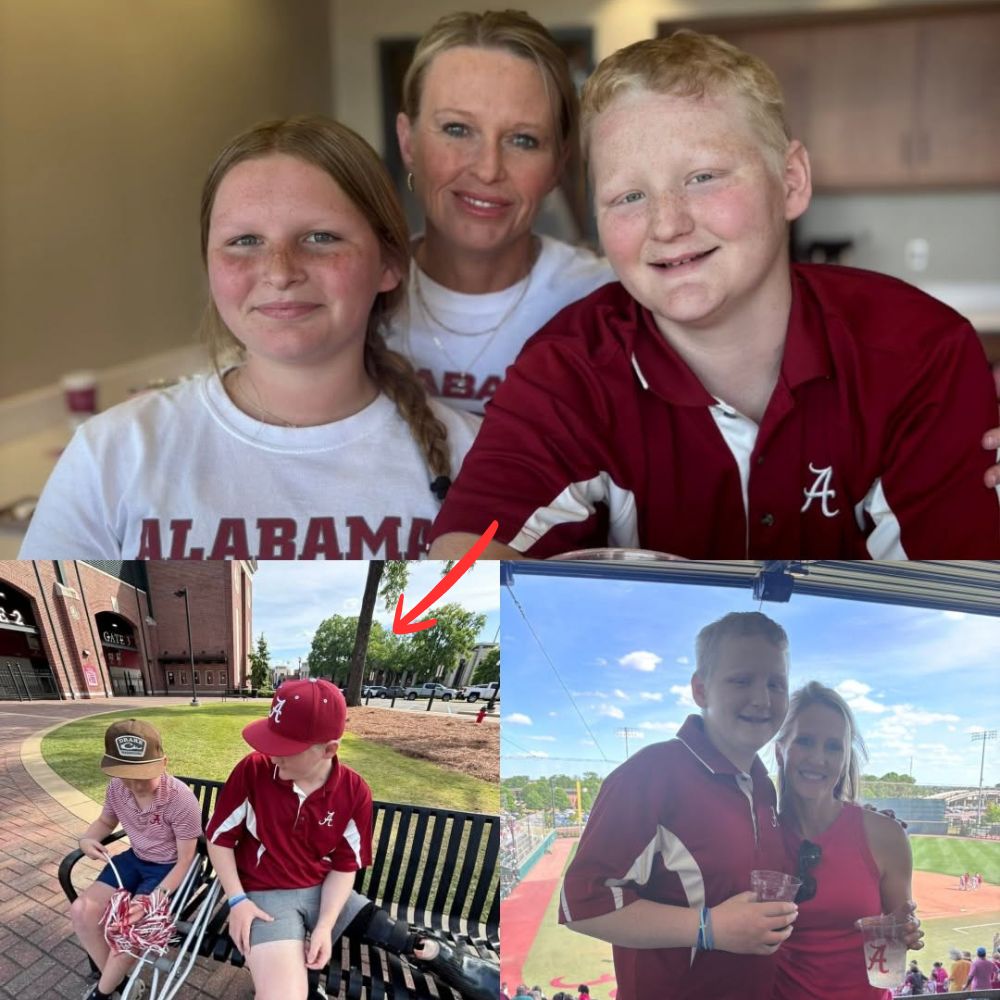
At fifteen, he played forward for his local youth soccer team, where his speed, confidence, and instinct around the goal made him one of the most exciting players to watch.
He was not the tallest athlete on the field.
He was not the loudest.
But when a defender gave him even half a step of space, Will turned that opening into opportunity.
He loved the moment before a shot—the split second when the goalkeeper shifted, the crowd held its breath, and everything depended on one decision.
Then illness entered his life.
It took his strength.
It changed his body.
Eventually, it cost him one of his legs.
Many people assumed the loss would also take his identity.
They were wrong.
A prosthetic leg changed the way Will moved, but it never changed the person he was. It did not erase his love of soccer. It did not silence his humor. And it never fully removed the smile that became a source of courage for everyone around him.
During a nineteen-month battle with a terminal illness, Will refused to describe himself as a victim.
He was still a player.
Still a teammate.
Still a son, a friend, an outdoorsman, and a teenager determined to live every day as fully as his body allowed.
The Boy Who Was Always Moving
Will’s childhood was built around movement.
If he was not on a soccer field, he was outside with friends, exploring wooded trails, planning hunting trips with his father, or finding some reason to stay away from the house until sunset.
He loved competition.
He loved being part of a team.
More than anything, he loved the freedom of running.
His mother often joked that the only time Will remained still was when he was sleeping.
Even then, she suspected he was probably dreaming about soccer.
On the field, he played with natural aggression. He chased loose balls other players had already given up on. He pressed defenders until they made mistakes. He celebrated his teammates’ goals as loudly as his own.
His coach once described him as the kind of player who made everyone else believe the game was still winnable.
That quality would later matter far beyond soccer.
The Pain That Would Not Go Away
The first sign of trouble appeared as pain in his leg.
At the beginning, no one panicked.
Young athletes experience soreness.
They collide with opponents, fall on hard ground, and return home with bruises they barely remember earning.
Will assumed he had strained a muscle.
He continued practicing.
The pain did not disappear.
Instead, it became more intense.
It followed him off the field.
It woke him at night.
Eventually, his parents insisted on further testing.
The scans revealed something far more serious than a sports injury.
The diagnosis changed the family’s life in a single conversation.
The illness was aggressive.
Treatment would need to begin quickly.
Will listened as the doctors explained chemotherapy, surgery, and the difficult months ahead.
His parents struggled to process the information.
Will asked whether he would ever play soccer again.
It was the first question that truly revealed what he feared losing.
The Decision No Child Should Face
Treatment began immediately.
There were long hospital stays, exhausting medication cycles, and days when Will could barely lift his head from the pillow.
Still, he kept a soccer ball near his bed.
Friends signed it.
Teammates wrote messages across its surface.
His coach added a sentence near the center:
“You are still part of this team.”
As the illness progressed, the doctors explained that removing the affected leg offered the best chance of controlling the disease.
The conversation was devastating.
Will had spent his entire childhood trusting his legs.
They carried him through defenders.
They allowed him to hunt, hike, run, and play.
Now he was being asked to imagine life without one of them.
He did not make the decision easily.
There were tears.
There was anger.
There were questions no doctor could answer with certainty.
Would he walk normally?
Would people stare?
Would he ever kick a ball again?
His father told him the truth.
“Life will be different.”
Will looked toward the soccer ball beside the bed.
“Different doesn’t mean over.”
That sentence became the family’s guiding belief.
Waking Up to a New Body
After surgery, Will experienced grief in a form few teenagers can understand.
He knew the leg was gone.
But for a time, his mind still expected it to be there.
He sometimes felt pain in a foot that no longer existed.
He would wake and instinctively try to move before remembering how much had changed.
The first time he looked beneath the blanket, he remained silent for several minutes.
His mother sat beside him without speaking.
There was no way to make the moment easier.
Finally, Will asked whether she was scared to look at him.
She reached for his hand.
“I’m looking at my son.”
He turned away and cried.
That was not weakness.
It was grief.
He was mourning a part of himself, a future he had imagined, and the physical freedom he once took for granted.
But even in those early days, the determination remained.
When a therapist arrived to discuss rehabilitation, Will asked when he could start.
Learning to Stand Again
Recovery demanded patience.
Will disliked patience.
Before the illness, if a coach explained a new drill, he wanted to master it immediately. Rehabilitation offered no shortcuts.
At first, standing required support.
Then came balance exercises.
Each movement that had once been automatic became a conscious decision.
He learned how to shift his weight.
How to protect the healing area.
How to strengthen muscles that now had to work differently.
The first attempts were frustrating.
He fell.
He became angry.
He sometimes refused to continue.
One afternoon, after losing his balance repeatedly, Will threw a towel across the room.
“I used to run faster than everyone.”
His therapist nodded.
“I know.”
“Now I can’t even stand.”
“Not yet.”
The phrase irritated him.
But it also challenged him.
Not yet did not mean never.
Will returned to the exercise.
By the end of the session, he stood for several seconds without assistance.
It was not a goal scored in front of cheering fans.
But to his family, it felt just as important.
Meeting His Prosthetic Leg
The prosthetic fitting introduced another stage of adjustment.
The device was carefully designed, measured, and modified to match his body.
Still, wearing it felt unnatural at first.
It was heavy.
It created pressure in unfamiliar places.
Walking required concentration.
Will named the prosthetic before he fully learned how to use it.
He gave it a humorous nickname that made the medical staff laugh.
That humor helped him reclaim control.
The leg was not something he wanted.
But if it was going to become part of his life, he would decide how to relate to it.
He decorated part of it with colors connected to his soccer team.
Later, teammates added their jersey numbers.
The prosthetic became more than medical equipment.
It became proof of survival.
Returning to the Sidelines
Will’s first return to a soccer match was emotional.
He was not ready to play.
Even walking across uneven ground remained difficult.
But when his team learned he wanted to attend, they arranged a place for him near the bench.
He arrived wearing team colors.
The moment the players saw him, they ran across the field.
Some hugged him carefully.
Others tried to hide tears.
His coach handed him a team jacket.
“You never left the roster,” he said.
During the match, Will shouted instructions, celebrated tackles, and argued with a referee from the sideline.
For the first time in months, he felt useful in a familiar way.
Cancer had taken him away from competition.
It had not taken away his understanding of the game.
When a teammate scored, Will lifted both arms and nearly lost his balance.
Someone reached to steady him.
He laughed.
“I’m fine.”
That became another phrase he used often.
Sometimes it was true.
Sometimes it was simply the answer he wanted the world to hear.
The First Kick
Weeks later, Will asked to try kicking a ball.
The medical team was cautious.
His balance remained limited.
His body was still recovering from treatment.
But under supervision, the family brought a ball to a quiet practice field.
Will stood several feet from the goal.
His father placed the ball on the grass.
For a long moment, the teenager stared at it.
Before the illness, he would have struck it without thought.
Now the movement required planning.
He positioned the prosthetic carefully and used his remaining leg to kick.
The first attempt barely moved the ball.
Will frowned.
He tried again.
The second kick traveled several yards.
The third rolled into the corner of the empty goal.
His family cheered.
Will looked embarrassed.
“It wasn’t exactly top corner.”
His father smiled.
“It crossed the line.”
That was all that mattered.
When the Illness Returned
For a time, the family allowed themselves cautious optimism.
Will became stronger.
He adapted to the prosthetic.
He attended more games.
He made plans.
But the disease had not finished.
New scans revealed progression.
The treatment options became more limited.
The family faced another devastating reality: the surgery had saved time, but it had not produced the future they had desperately hoped for.
Will understood more than adults sometimes realized.
He noticed the way doctors paused before answering.
He saw his parents step into hallways to speak privately.
He recognized the change in their expressions.
One night, he asked his mother whether the illness was going to take the rest of him.
She struggled to answer.
Will looked down at his prosthetic.
“It already took enough.”
She moved closer.
“It can’t take who you are.”
He remembered that sentence.
Later, he repeated it to younger patients.
Refusing the Victim Label
People often described Will as tragic.
He disliked the word.
He knew his situation was unfair.
He understood that losing a leg and facing terminal illness at fifteen was not something anyone should experience.
But he did not want pity to become his identity.
When visitors spoke too softly around him, he changed the subject.
When people cried before entering the room, he tried to make them laugh.
When someone called him inspiring, he often rolled his eyes.
“I’m just trying to have a decent day,” he once said.
That honesty mattered.
Will was not courageous because he never felt afraid.
He was courageous because fear did not become the only part of his life.
He still watched soccer.
He still planned hunting trips when his health allowed.
He still argued with friends.
He still became impatient with adults.
He remained a teenager.
Illness changed his circumstances.
It did not erase his personality.
The Hunting Trip That Almost Did Not Happen
One of Will’s greatest wishes was to return to the woods with his father.
The trip required careful planning.
The terrain had to be manageable.
Medication needed to be packed.
His energy was unpredictable.
Several relatives worried the journey would be too difficult.
Will insisted.
“I don’t want every memory to be in a hospital.”
That sentence ended the debate.
They traveled to a quiet hunting property before sunrise.
The air was cold.
Will moved slowly with his prosthetic and used additional support when necessary.
The trip was not physically easy.
But when he reached the place where he and his father had spent earlier seasons, his entire expression changed.
They sat together for hours.
They did not need to bring anything home.
The purpose was not the hunt.
It was the return.
His father later described that morning as one of the most important days of his life.
For a few hours, Will was not a patient.
He was simply his son.
The Smile That Became a Message
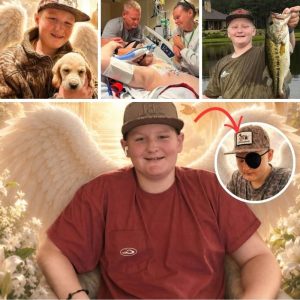
Photographs from the final months often showed Will standing with his prosthetic visible.
He did not hide it.
Sometimes he balanced on one leg and smiled directly at the camera.
Those images affected people because they contained two truths at once.
The loss was visible.
So was the joy.
His smile did not mean life was easy.
It meant hardship had not taken complete control.
Will understood that the image could help others.
He began telling younger patients not to feel ashamed of scars, medical devices, or physical changes.
“Everybody’s carrying something,” he said. “Some things are just easier to see.”
The prosthetic that once represented everything he had lost slowly became a symbol of what remained.
Adaptability.
Humor.
Defiance.
Life.
The Final Season
During the last stage of his illness, Will’s strength declined.
He could no longer attend every game.
Some days, even sitting upright required effort.
His teammates continued visiting.
They sent videos from practice.
Before important matches, they carried his jersey into the team huddle.
His number remained part of the lineup even when he could not be there physically.
Will watched whenever possible.
He offered criticism with the same confidence he had always shown.
“You’re standing too deep.”
“Pass earlier.”
“Stop trying to dribble through three people.”
His friends laughed.
Cancer had weakened his body.
It had not softened his competitive instincts.
More Than a Player
When Will eventually reached the end of his nineteen-month battle, the loss left a permanent space within his family and community.
The soccer team placed his jersey on the bench during its next match.
Players wore bands bearing his number.
Before kickoff, they observed a moment of silence.
Then his closest teammate carried a ball to the center of the field.
One side displayed Will’s name.
The other contained a sentence he had repeated throughout rehabilitation:
“Different doesn’t mean over.”
The team won that afternoon.
But the result was less important than the way they played.
They chased every ball.
They encouraged one another after mistakes.
They refused to surrender when they fell behind.
They played with the same energy Will had brought to the field before illness changed his life.
A Dream That Outlived the Body
Will never returned to competitive soccer in the way he had once imagined.
He did not score another official goal.
He did not complete the season he had planned.
But his relationship with the sport survived.
It became part of his recovery, his friendships, and his final months.
His dream changed form.
At first, he wanted to become the best player on the field.
Later, he wanted to prove he could stand again.
Then he wanted to help teammates appreciate the ability to play.
In the end, the dream was no longer about trophies.
It was about living with purpose despite circumstances he could not control.
Do Not Let Circumstances Define the Finish
Will’s story does not ask people to pretend suffering is beautiful.
There was nothing beautiful about childhood cancer.
There was nothing fair about losing a leg.
There was nothing inspirational about a family being forced to say goodbye to a fifteen-year-old boy.
The inspiration came from his response.
He allowed himself to grieve.
Then he learned to stand.
He acknowledged fear.
Then he returned to the sidelines.
He lost a part of his body.
But he refused to surrender his identity.
Most people move through life assuming there will always be more time.
Another season.
Another trip.
Another opportunity to say what matters.
Will did not have that luxury.
His life became shorter than anyone expected.
So he lived it visibly.
He laughed when he could.
He returned to the places he loved.
He supported the people around him.
And when the world looked at his prosthetic leg and saw limitation, he looked toward the soccer field and saw possibility.
That is the message his smile left behind.
Circumstances may change the path.
They may slow the journey.
They may take away dreams in their original form.
But they do not have the final authority to define a person’s courage, dignity, or capacity to love life.
Will was more than the illness that ended his story.
He was the forward who chased impossible passes.
The son who returned to the woods.
The teammate who cheered from the sideline.
The teenager who learned to stand again.
And the boy whose radiant smile beside a prosthetic leg reminded everyone that the human spirit can remain whole even when the body has been permanently changed.
His final lesson was not that people should ignore pain.
It was that pain should never be allowed to become the only truth.
There is still joy to protect.
Still love to give.
Still a field somewhere waiting for one more kick.
And as long as that remains true, no circumstance is powerful enough to define the limits of a life.
💔 STELLA PARTON BREAKS HER SILENCE — What She Said About Dolly’s Health Has Fans Looking Back
Dolly Parton’s Sister Breaks Silence What Really Happened - GMT - G1
Stella Parton was born May 4, 1949, the sixth of twelve children raised by Robert Lee and Avie Lee Parton in Sevierville, Tennessee — a household defined by noise, limited money, and almost no privacy, the kind of environment that produced strong, determined personalities.
Stella was one of them.
By seven, she was appearing alongside her older sister Dolly on a Knoxville television program; by her teens, she was writing her own songs, though marriage and motherhood pulled music to the margins of her life for a stretch.
The dream never fully disappeared.

In 1967, she recorded a gospel album with her mother and sisters, and later worked clubs in Washington, D.C., before founding her own record label in 1975 and releasing “I Want to Hold You in My Dreams Tonight,” which climbed to number nine on the country charts.
Long before any of that commercial success, Stella had already shown a willingness to take positions others avoided.
At 26, amid backlash against Australian singer Olivia Newton-John for winning recognition in country music, Stella recorded “Ode to Olivia” in her defense — a stand that offered her no career benefit and real risk of criticism, but one she took anyway simply because she believed staying silent was the wrong choice.
That instinct defined the rest of her career: hits like “The Danger of a Stranger” and “Steady as the Rain” (written by Dolly) built a genuine, independent following, including in the U.K., while Stella also worked in New York theater and spoke openly, often controversially, about poverty, domestic violence, and the treatment of women in the music industry.
She was named the Christian Country Music Association’s Female Vocalist of the Year in 2004.
Through all of it, she remained defined publicly, more often than not, as simply “Dolly’s little sister” — a label she spent five decades quietly proving didn’t tell the full story.
That same directness is why her comments in the fall of 2025 carried real weight.
Stella had never positioned herself as the family’s image manager or spokesperson; she was, by reputation, someone who believed difficult truths shouldn’t stay hidden indefinitely.
What she described wasn’t dramatic or accusatory — it was a portrait of a woman who had spent years prioritizing everyone else’s needs over her own.
The context mattered.
Carl Dean, Dolly’s husband of nearly sixty years, died in March 2025 at 82, after a long illness during which Dolly had devoted herself almost entirely to his care.
She later acknowledged that in the process, she’d neglected her own health significantly.
The loss reverberated through the whole extended family — the Partons had lost three brothers in the years surrounding this period, compounding grief that, for a family that had once crowded twelve children into a single small home, meant losing pieces of a shared childhood one after another.
Stella herself went seven years without releasing new music during this stretch, later describing the period simply as one shaped by sorrow, while still speaking about the importance of finding moments of laughter within it.
Looking back, one moment reads very differently in hindsight than it did at the time: in late September 2025, Dolly postponed her planned Las Vegas residency, citing health challenges — a rare cancellation for a performer whose six-decade career had included very few of them.
At the time, most fans treated it as a minor, temporary setback.
Stella’s later reflections suggested the signs had actually been building for some time, visible to family in ways the public smile made easy to miss.
That concern crystallized publicly not long after, when Dolly’s younger sister Frieda posted a simple request on Facebook asking fans to pray for Dolly.
What looked at first like an ordinary, well-meaning gesture spread rapidly, sparking widespread speculation about how serious Dolly’s condition actually was.
Dolly herself responded directly within days, appearing in a video from a Grand Ole Opry commercial shoot, insisting with her familiar humor that she wasn’t finished yet — the now widely remembered “I ain’t dead yet” moment that briefly quieted public concern.
In the months that followed, the pattern repeated: reassuring updates about kidney stones, dehydration, and treatment, paired with continued work on new projects, right up until Dolly Parton’s death on August 25, 2026, at 80.
Looking back across that full timeline — the postponed residency, the family’s public worry, Stella’s own account of a sister who consistently deprioritized her own wellbeing — it becomes easier to see what the people closest to Dolly understood well before the rest of the world did: that the warmth and resilience the public saw every time she appeared on camera came at a real, largely invisible cost.