THE “HOUSE OF HORRORS” VINTON COUNTY CRISIS: SURVIVORS’ RAGE AND THE OUTRAGE OVER SYMPATHY FOR ELIZABETH SIDERS
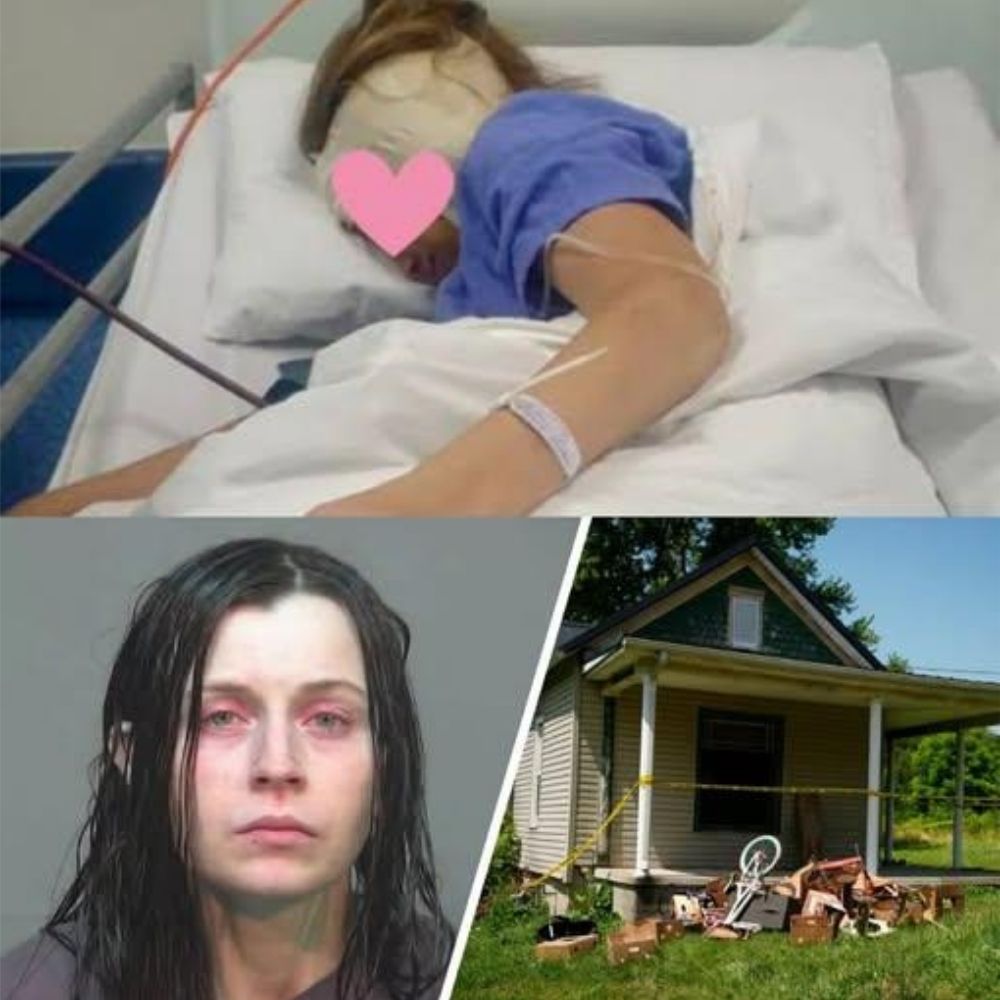
They were once hidden away from the world in a stifling, windowless room measuring less than 130 square feet, surrounded by mountains of trash, human waste, and swarms of insects. Now, from sterile hospital beds across Ohio, the young survivors of the Vinton County “house of horrors” are speaking out in absolute, unadulterated fury.
Outrage has erupted across legal circles and social media platforms after the defense team attempted to paint Elizabeth Siders—the 33-year-old mother facing a battery of horrific charges—as a “helpless child-bride” and a victim herself, deserving of sympathy rather than condemnation.
But the children, bearing deep physical and psychological scars, are refusing to let the narrative be rewritten.
“You feel sorry for her?! Who did this to our lives? Who is going to feel sorry for us?” one survivor cried out from a recovery ward. “She dumped every single ounce of her life’s resentment onto innocent children like us!”
FROM A 12-SQUARE-METER DUNGEON TO HOSPITAL LIGHTS
The case that has rocked the state of Ohio first began to unravel in late June 2026, when local law enforcement in the village of Hamden, Vinton County, executed a search warrant as part of an unrelated investigation. Officers were utterly unprepared for the nightmare waiting behind the doors of a dilapidated, rotting farmhouse whose floors practically caved beneath their boots.
Inside the claustrophobic space, authorities discovered a staggering 16 children ranging from toddlers (20 months old) to 18-year-olds. All of them were suffocating in squalor, coated in filth, and bitten by insects. Many had to be rushed to top-tier regional hospitals, with several requiring intubation and intensive emergency care.
The investigation soon uncovered a chilling reality: Elizabeth Siders was the biological mother to all 16 children. For nearly two decades, she had given birth almost annually while the household systematically isolated the victims from the outside world—denying them birth certificates, medical care, and even a single day of formal education.
“VICTIM” OR ARCHITECT OF ATROCITY?
In the Vinton County courtroom, as legal proceedings accelerated, defense attorney Thomas Stolly introduced a deeply controversial perspective.
Stolly revealed that Elizabeth married Gary Siders Jr. back in 2008 when she was just 15 years old and he was 18 in West Virginia—a state that permitted underage marriage at the time with parental consent. The defense attorney posed a provocative question to the public: Was his client, in fact, an initial victim of extreme familial control and grooming?
“When I walked into the jail cell to meet her, her first question wasn’t, ‘When can I get out?’ It was, ‘Are my children okay? Where are they?’” defense attorney Stolly told reporters.
However, this defense strategy triggered fierce backlash from the public and prosecutors alike.
Ohio Attorney General Andy Wilson firmly rejected any attempts to soften the narrative, telling the press: “What our investigators witnessed inside that home is the manifestation of pure evil. The conditions those children were forced to endure are utterly barbaric, and we remain haunted by what they suffered.”
A BITTER RECKONING: FIGHTING FOR JUSTICE
For neighbors living quietly around the Hamden area, the revelations feel like a lightning bolt. For years, no one suspected or caught a glimpse of the 16 children effectively erased from society’s view. The quiet, unassuming farmhouse nestled in the rural countryside had functioned as a prison camp for an entire generation.
Alongside Elizabeth Siders, three other family members—Gary Siders Jr. (husband), Gary Siders Sr. (father-in-law/grandfather), and Christina Siders (mother-in-law/grandmother)—have been arrested and face severe child endangerment charges. The impending hearings and potential sentences are drawing intense national scrutiny, exposing dangerous legal blind spots surrounding child marriage, domestic 𝘢bu𝘴e, and rural child welfare systems.
For the young survivors, while the physical and emotional road to healing stretches out endlessly before them, their opening words have rung clear across America: No amount of historical context or marital background can ever wash away the cruelty of abandonment and torture inflicted by the very people who brought them into the world.